Anthony Davis' Wizards Future in Doubt as Max Extension Deemed Highly Unlikely
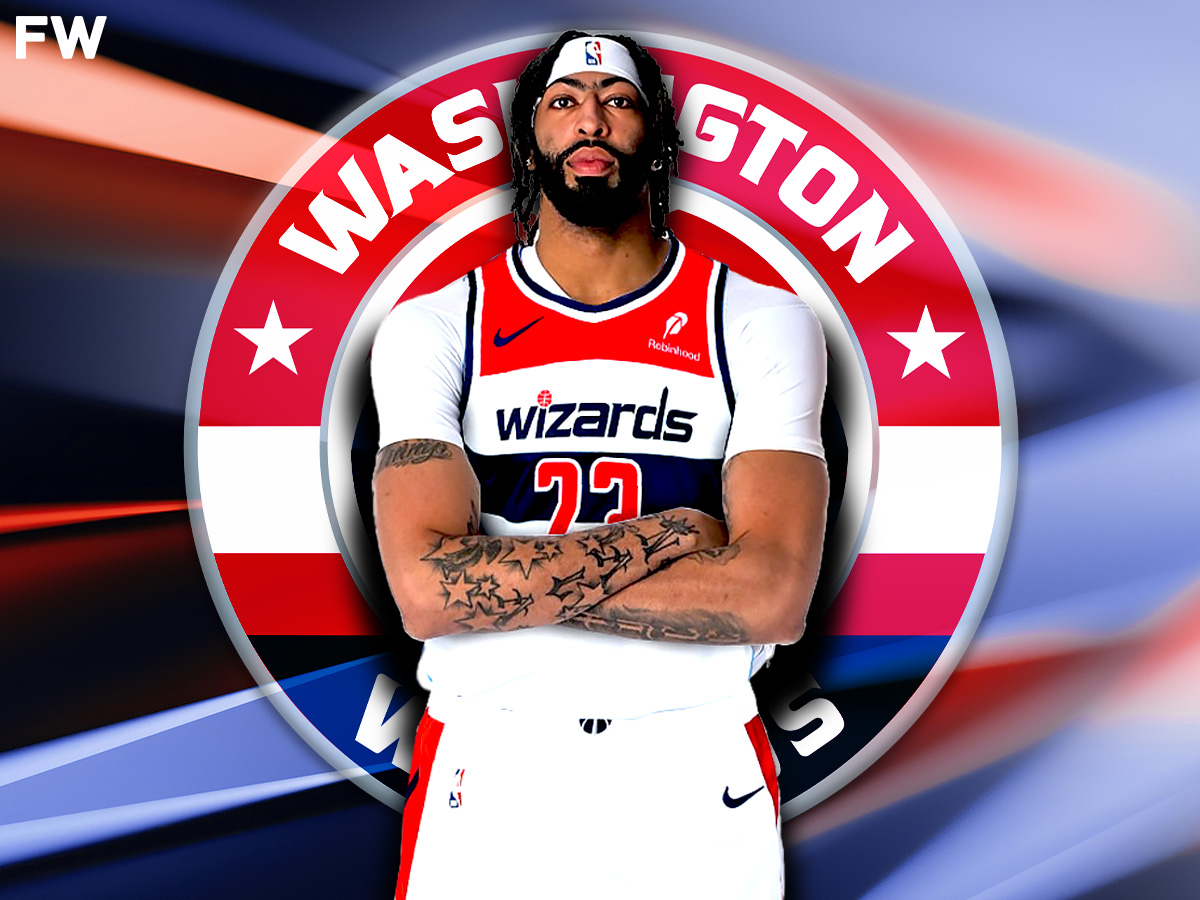
Anthony Davis is preparing for his first full season with the Washington Wizards, but serious questions are already emerging about whether the 10-time All-Star will remain in Washington beyond the February trade deadline.
According to The Athletic's David Aldridge and Josh Robbins, there is almost no chance the Wizards will give the maximum extension Davis wants. “But there’s almost no chance the Wizards will give him that max extension — not with his injury history, not at his age, not with the team in this stage of its development and the punitive first and second aprons looming.”
Davis currently has a $62.8 million player option for the 2027-28 season and could potentially get a four-year extension worth approximately $276 million if he chooses to decline it. But committing that kind of money to Davis seems very unlikely. The exact terms of any extension offer are not confirmed.
The numbers explain why. Davis is still an elite two-way player when healthy, but availability is a big concern. The 33-year-old has played more than 62 games only once over the last eight seasons. He appeared in only 20 games last season, averaging 20.4 points, 7.1 rebounds, and 2.7 blocks before a hand injury ended his campaign.
For a team in the middle of a rebuild, tying up that much cap space in a late-30s big man with that injury history is a hard sell — even one with Davis' pedigree.
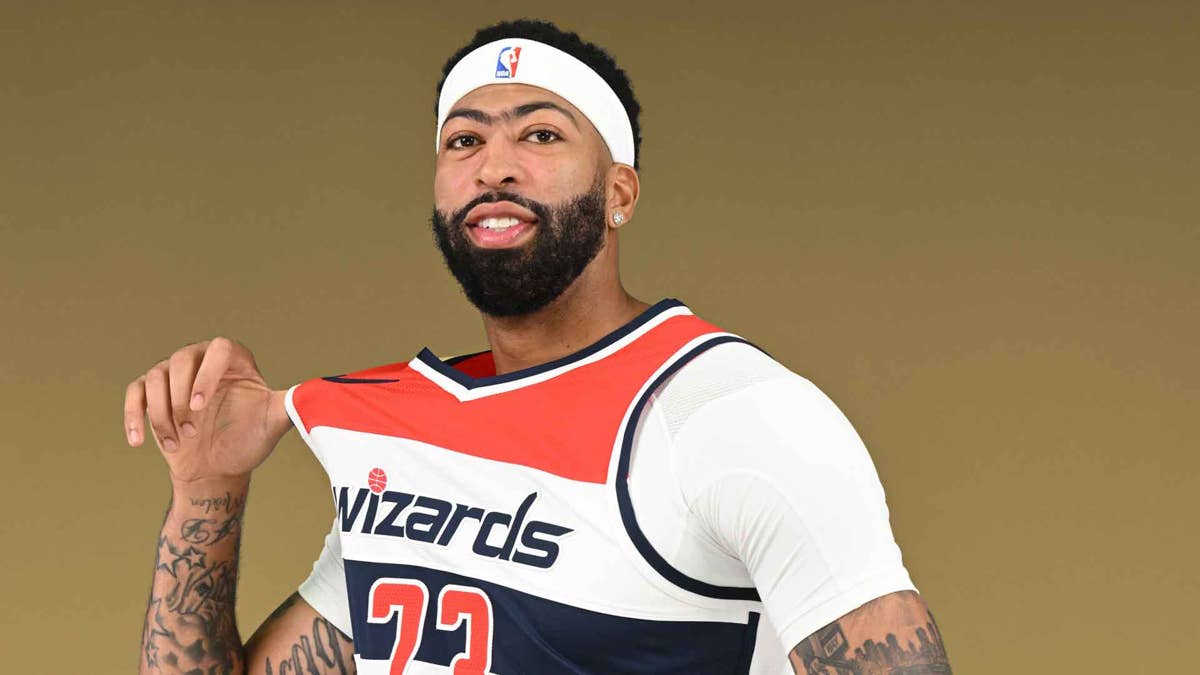
INJURY CONCERNS
The numbers explain why. Davis is still an elite two-way player when healthy, but availability is a big concern. The 33-year-old has played more than 62 games only once over the last eight seasons. He appeared in only 20 games last season, averaging 20.4 points, 7.1 rebounds, and 2.7 blocks before a hand injury ended his campaign.
That injury history is the core of the risk. Davis is now in his late 30s, and committing close to maximum money to a player with that track record would significantly reduce the Wizards' flexibility. For a team in the middle of a rebuild, tying up that much cap space in a late-30s big man is a hard sell — even one with Davis' pedigree.
No specific injury prognosis for the upcoming season has been provided, so the concern is based on past patterns rather than a fresh diagnosis. But the pattern is stark: eight seasons, one campaign above 62 games.
FINANCIAL PICTURE
The Wizards’ hesitation is about more than Davis’ injury history. Significant financial commitments are already piling up.
Washington just signed Trae Young to a four-year, $213 million contract this summer. That deal anchors the payroll for years to come.
The young core adds another layer. AJ Dybantsa, Alex Sarr, Kyshawn George, and other members of the rebuild could eventually need massive extensions of their own. The exact future contract demands of that group are not confirmed, but the trajectory is clear: the Wizards are banking on developing these players into franchise cornerstones.
Committing close to maximum money to Davis, who is in his late 30s, would significantly reduce the Wizards’ flexibility. With Young’s deal already on the books and potential extensions looming for the prospects, a max contract for Davis would strap the franchise just as its young players are ready to get paid.
The punitive first and second aprons only sharpen that problem. For a team in the middle of a rebuild, tying up that much cap space in a late-30s big man is a hard sell — even one with Davis’ pedigree.

DAVIS' STANCE
Davis is not rushing into negotiations. He told reporters he plans to play the season out before addressing his future with the front office.
“When the season is over. I’m going to go through the season, try to do what I do at a high level, and then, when it’s over, you know, sit down and have those key conversations again with the front office.”
That stance leaves the door open for Washington to make a major decision before the February 11 trade deadline. If Davis won't commit and the sides remain far apart on money, the Wizards could look to move him rather than risk losing him for nothing.
His agent, Rich Paul, has loomed large in the background. Aldridge and Robbins believe Paul has already evaluated the market for his client, though that specific assessment has not been confirmed.

The possibility of a third trade in three years is real. Davis arrived in Washington at last season's deadline, one year after the Mavericks acquired him from the Lakers in the Luka Doncic blockbuster. Moving him again would be another seismic shift — but the financial math makes it hard to rule out.
WHAT TO WATCH NEXT
There is still a pathway for Davis to remain in Washington. Aldridge and Robbins suggested a lower-max compromise could bridge the gap, though the specific details of that arrangement are not confirmed.
The February 11 trade deadline looms as the key decision point. If Davis won't commit and the sides remain far apart on money, the Wizards could look to move him rather than risk losing him for nothing.
His agent, Rich Paul, has loomed large in the background. Aldridge and Robbins believe Paul has already evaluated the market for his client, though that specific assessment has not been confirmed.
The possibility of a third trade in three years is real. Davis arrived in Washington at last season's deadline, one year after the Mavericks acquired him from the Lakers in the Luka Doncic blockbuster. Moving him again would be another seismic shift — but the financial math makes it hard to rule out.
A third trade in three years could become very realistic. The Wizards acquired Davis from the Mavericks at last season's trade deadline alongside Jaden Hardy, D'Angelo Russell, and Dante Exum. That came exactly one year after the Mavericks acquired Davis from the Lakers in the Luka Doncic blockbuster trade.
The Wizards acquired Davis from the Mavericks at last season's trade deadline alongside Jaden Hardy, D'Angelo Russell, and Dante Exum. That came exactly one year after the Mavericks acquired Davis from the Lakers in the Luka Doncic blockbuster trade.
A third trade in three years could become very realistic. The February 11 deadline will reveal whether Washington forces the issue or finds a compromise that keeps Davis in place.
Advertisement
You may also like
Chiefs' Thornton to undergo ankle surgery, miss 3-4 months
Kansas City Chiefs wide receiver Tyquan Thornton will undergo surgery for a dislocated ankle, sources told NFL Network's Ian Rapoport. He is expected to…
Cardinals lose LT Paris Johnson for season to torn biceps
Arizona Cardinals starting left tackle Paris Johnson Jr. is out for the season after tearing his left biceps in Sunday's 36-24 loss to the…
Bryce Young leads NFL in passing yards, on pace to shatter Panthers records
The chants started after Bryce Young rifled a 9-yard pass to Darren Waller on fourth-and-4 in the fourth quarter Sunday night, part of Carolina’s…
Bills CB Hairston apologizes for snubbing reporters after loss, vows to do better
Max Hairston wasn't going to let one bad day spoil the next. The Buffalo Bills cornerback made an unusual appearance in the team's media…
Texans Set to Feast on League's Worst Offense in Week 5 D/ST Rankings
The Houston Texans are set to face the Tennessee Titans on the road in Week 5, and fantasy managers are suddenly circling the matchup.…
Falcons' QB swap from Rush to Penix creates 32-point scoring swing
The Atlanta Falcons have produced one of the NFL’s most stunning quarterback contrasts this season, and the numbers are stark. Through the first two…