Cedric Ceballos: Enforcers Would Target Steph Curry for Logo Threes and Big Salary
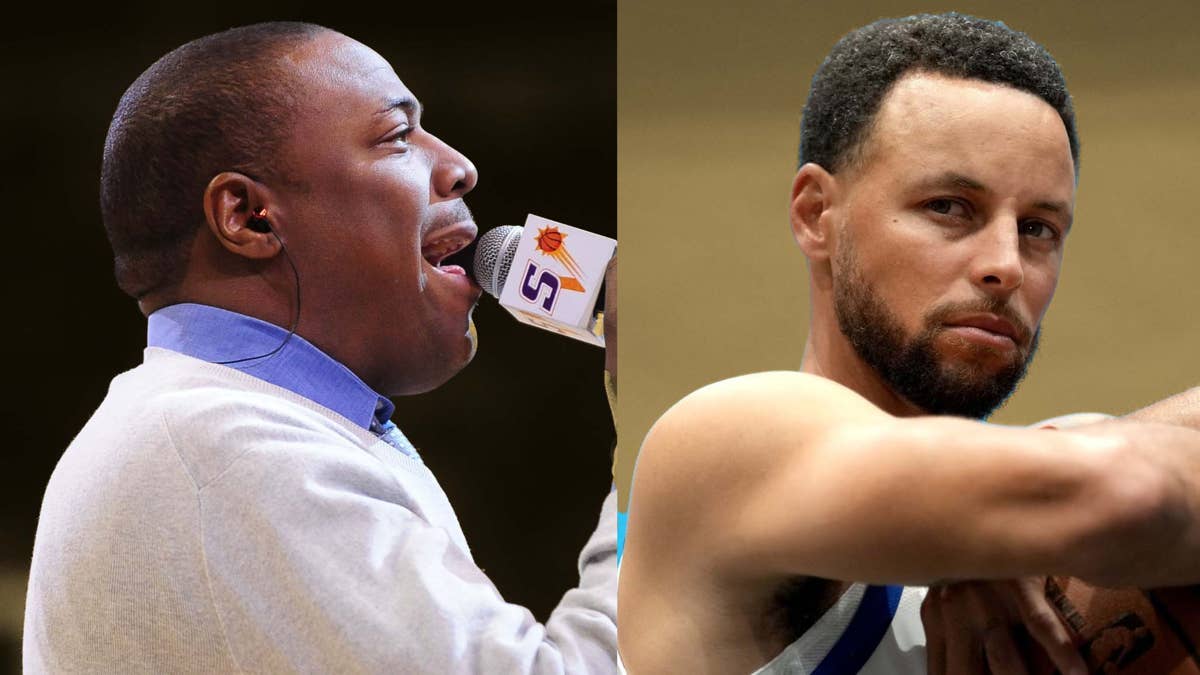
Cedric Ceballos has a warning for anyone who thinks Steph Curry could have waltzed through the 1990s NBA: the enforcers would have come for him.
The former Phoenix Suns forward said Curry would not have been able to do his thing in the 90s because guys like Charles Oakley, Anthony Mason, and Buck Williams would have tried to hurt him for launching logo three-pointers. Ceballos made the comments on a podcast with Matt Barnes and Stephen Jackson.
According to Ceballos, the math was simple. Those enforcers were making around $100,000 while Curry would have been pulling in far more, and shooting a 50-footer would have consequences.
"You got touched up in the locker room," Ceballos explained to Barnes and Jackson.
The pay gap was the spark. Oakley, Mason, and Williams were grinding for relative peanuts while Curry would have been cashing massive checks without paying the physical toll inside the paint. In Ceballos's telling, that combination of money and disrespect from deep would have made Curry a target every single night.
Ceballos's exact podcast appearance date has not been confirmed, but his message is clear: the logo three wasn't just rare in the 90s — it was a provocation.
WHY LOGO THREES WERE TABOO
The logo three simply did not exist in the 90s. Teams pounded the ball inside to their big men, and even the three-pointer itself was not a weapon back then, according to www.basketballnetwork.net.
Players of that generation would have called Curry's deep shots "bad shots" and even found them disrespectful. Specific examples of 90s players voicing that take are not named in the source, but Ceballos's point stands on the era's unwritten rules.

The disrespect cut deeper than style. Curry shooting from the outside would infuriate enforcers because he would be making Jon Koncak money without banging bodies or swapping elbows inside the shaded lane. Koncak's infamous six-year, $13 million contract in 1989 made his peers jealous, and they took their frustration out on him physically.
Ceballos's logic was simple: Curry would have earned that same premium while dodging the daily punishment inside. Charles Oakley, Anthony Mason, and Buck Williams were grinding for $100,000 while guarding the paint, and watching a shooter cash massive checks from 50 feet would have been a nightly trigger. The money gap was the fuel, and the logo three was the match.
THE KONCAK COMPARISON
Ceballos pointed to Jon Koncak as the proof. Koncak signed a six-year, $13 million contract in 1989, and the deal was infamous among his peers. Players who earned far less were jealous, and they took that frustration out on him physically.
If Curry had played back then, Ceballos said, he would have made as much as Koncak and received the same treatment. The exact salary figures for Curry in the 90s are hypothetical and not confirmed, but the comparison was the point.
Ceballos made the math personal. "If I'm making 60 to 80, shoot that s--t, Steph, I don't give a f--k," he told Matt Barnes and Stephen Jackson. "I don't have to lose teeth to make what those guys were making. I don't have to go through that era."
The dollar figures he referenced, likely in the thousands, underscored the gap. Enforcers like Charles Oakley, Anthony Mason, and Buck Williams were reportedly grinding for around $100,000 while guarding the paint. A shooter cashing massive checks from 50 feet would have been a nightly trigger.
The money gap was the fuel, and the logo three was the match. Koncak's contract showed how quickly peers turned on a player who got paid without paying the physical price. Curry would have been that target every night.
CEBALLOS: CURRY HAS THE SKILLS

But unlike last year when he talked about Steph struggling in this era, Ceballos told Barnes and Jackson he never questioned Curry’s skill set. The specific comments from last year are not detailed in the source, but this time he was clear: Steph would still be a star in the league in the 90s.
Ceballos’s point wasn’t about talent. It was about the toll the era would take. He referenced Hakeem Olajuwon slapping someone in a fight over dollar amounts, using that as proof of how physical the consequences could get when money was on the line.
“I know y’all have Max here a lot. He talked about that. People getting into fights with each other and Hakeem slapping the s–t out of him and all that because of the dollar amount,” Ceballos said.
So the respect for Curry’s game is real. The threats were just part of the package. Ceballos’s comments suggest he believes Curry could thrive despite the enforcers, not because they’d go easy on him. The skill was never the question — the price of admission was.
WHAT TO WATCH NEXT
There’s no schedule attached to any of this. The source does not mention upcoming games, events, or decisions tied to Ceballos’s remarks.
His comments live only in that podcast conversation with Matt Barnes and Stephen Jackson. No follow-up appearance or date has been set, and no timeline is given for any further discussion.
Fans may wait for a reaction from Curry or anyone else in that orbit, but none are reported. Any future responses or developments are not in the source, so treat them as unconfirmed for now.
What’s clear is that Ceballos has already shifted his stance once — from doubting Curry’s fit last year to praising his skill now. Whether he expands on that, or whether anyone fires back, is entirely open.
For now, the takeaway sits where Ceballos left it: Curry’s game was never the problem, just the price of admission in that era. The next word, if it comes, hasn’t been spoken yet.
Advertisement
You may also like
Charles Barkley Blasts Trump: 'He's Made It Popular to Be Racist'
Charles Barkley appeared on the Chris Cuomo Project earlier this week and directly criticized Donald Trump for anti-Semitic tendencies that he says have made…
Anthony Davis reveals the 268 lbs Lakers experiment that wrecked his shot
Anthony Davis admitted the weight he packed on while playing center for the Lakers messed with his shot, according to www.basketballnetwork.net. When asked directly…
Anthony Davis sends warning ahead of 2026-27 season
Anthony Davis has sent a clear warning to the league ahead of the 2026-27 season, according to www.basketballnetwork.net. The 10-time All-Star has taken the…
Cousins fires back at Jokic's EuroLeague pressure take, says U.S. is the standard
DeMarcus Cousins has nothing but love for Nikola Jokic. The two were brief teammates with the Denver Nuggets, where Cousins last played in the…
Draymond Green reveals the one quality that makes Wembanyama a leader like Stephen Curry
Draymond Green sees one quality in Victor Wembanyama that sets the 22-year-old apart as a leader: his lack of ego. Speaking on his podcast,…
Draymond: Clippers' Ingram, Beal injuries make risky Kawhi trade worse
The Los Angeles Clippers received another round of bad news: All-Star forward Brandon Ingram is sidelined indefinitely after surgery for a right heel injury…