Knicks Sue Alleged Chinese Bootleg Network Over Counterfeit Merch

The New York Knicks and Madison Square Garden Sports filed a lawsuit last Friday against individuals and businesses in China and elsewhere who allegedly sell counterfeit Knicks merchandise to American fans. The move comes as the team begins its quest to repeat as NBA champions.
The complaint was drafted by Justin Gaudio and other attorneys from Greer, Burns & Crain. It targets defendants who allegedly hide their "true identities" while operating within an "infringement network," according to the filing. The specific identities of those defendants are not confirmed.
The case was filed in federal court in Illinois and assigned to U.S. District Judge April M. Perry.
The complaint describes the considerable marketability of the Knicks' "iconic" brand, particularly because the team is defending its championship title and plays in the world's largest media market. It also asserts that Knicks merchandise "has become increasingly popular" after the championship, "spurring record-breaking sales among official retailers."
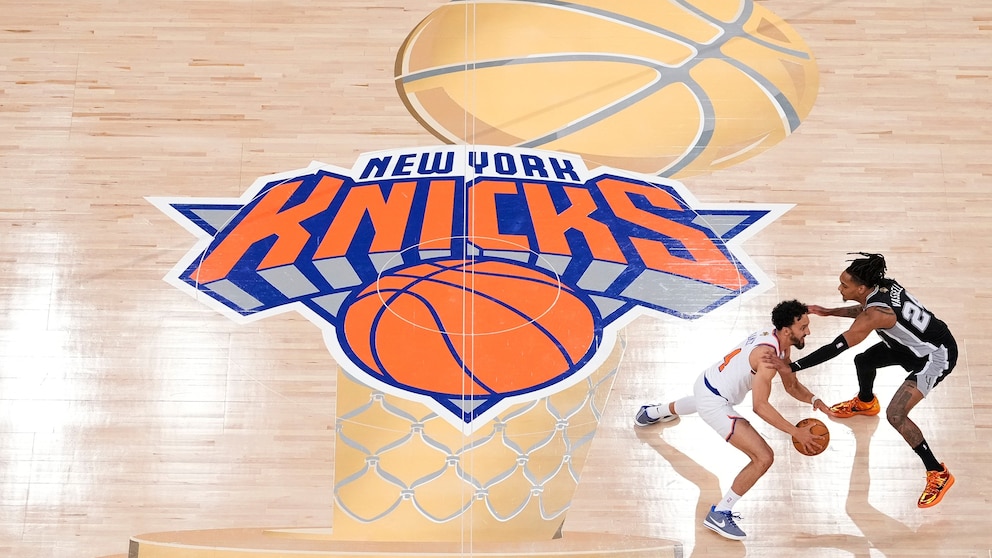
The team has acquired numerous trademarks from the U.S. Patent and Trademark Office over the years, covering different versions of its logo. Those registrations carry legal advantages, including the presumption of ownership, exclusive rights to the marks, and anti-counterfeit protections from U.S. Customs and Border Protection.
The Knicks' licensing agreements cover T-shirts, jerseys, sweatshirts, hats, accessories and other merchandise sold at games, through websites including NBA.com, and by authorized dealers. Through those deals, the team collects royalties and sets quality standards that counterfeiters lack.
The alleged network is the latest target in the Knicks' fight against fake gear.
WHAT HAPPENED
The Knicks and Madison Square Garden Sports filed a lawsuit last Friday against an alleged “infringement network” that sells counterfeit Knicks merchandise to American fans. The complaint, drafted by Justin Gaudio and other attorneys from Greer, Burns & Crain, names individuals and businesses operating in China and elsewhere who allegedly hide their “true identities” while running the scheme.
The case landed in federal court in Illinois, assigned to U.S. District Judge April M. Perry. The defendants are accused of using online marketplaces — including Temu, AliExpress, and similar platforms — to push fake gear to U.S. customers, according to the complaint.
The specific platforms and sellers named as defendants have not been confirmed beyond the general allegations in the lawsuit.
With this filing, the Knicks join a growing list of sports businesses — the NBA and NASCAR among them — that have turned to federal court to disrupt the counterfeit trade. The suit targets not just the sellers but the network itself, alleging a coordinated operation rather than isolated bad actors.
The complaint paints the defendants as evasive by design, using false or inaccurate names and addresses when registering their operations. That anonymity is central to the case: the Knicks say the network’s structure makes it difficult to pin down who is actually behind the counterfeit sales.
THE NUMBERS AND CONTEXT
The complaint opens by putting a dollar figure on the brand’s gravity, describing the “iconic” Knicks name as especially marketable because the team is defending its championship in the world’s largest media market. That status, the filing argues, is exactly what makes the counterfeit operation worth dismantling.

Knicks merchandise “has become increasingly popular” in the aftermath of the championship, “spurring record-breaking sales among official retailers,” per the complaint. Specific sales figures or royalty amounts are not in the source, but the legal argument leans on that surge to show real financial stakes.
Protecting that revenue starts with the U.S. Patent and Trademark Office. Over the years, the Knicks have acquired numerous trademarks, including for different versions of the team’s logo, and registration carries real weight: it grants a presumption of ownership, the exclusive right to use the mark, and anti-counterfeit protections from U.S. Customs and Border Protection (CBP).
Those marks anchor a licensing web that covers T-shirts, jerseys, sweatshirts, hats, accessories and other merchandise sold at Knicks games, through websites including NBA.com, and by authorized dealers. The licensing deals do more than generate royalties — they let the Knicks set standards for typography, scripts, designs and workmanship, quality controls that counterfeiters simply lack.
That gap between the licensed product and the knockoff is the heart of the claim. A fake shirt might look right in a thumbnail, but it skips the trademark protections and quality standards the official channel enforces.
THE REACTION

The complaint was drafted by Justin Gaudio and other attorneys from Greer, Burns & Crain, a firm that specializes in intellectual property litigation. The Knicks filed last Friday against defendants who allegedly hide their “true identities” while operating within an “infringement network.”
The argument begins with the brand's marketability. The Knicks describe their “iconic” brand as particularly valuable because the team is defending its championship title while playing in the world’s largest media market. The complaint asserts that Knicks merchandise “has become increasingly popular” in the aftermath of the championship, “spurring record-breaking sales among official retailers.”
That popularity is exactly what draws counterfeiters. The complaint notes that counterfeiters “routinely” use “false or inaccurate names and addresses” when registering, making it difficult to track them down through normal legal channels.
The Knicks are not alone in this fight. They join other sports businesses, including the NBA and NASCAR, in using federal court to try to stop the flow of counterfeit goods that allegedly infringe trademarks.
No direct quotes from Knicks executives or team officials appear in the source material, so the team's position is known only through the complaint itself.
WHAT TO WATCH NEXT
The case now sits before U.S. District Judge April M. Perry in federal court in Illinois, where the Knicks will have to prove their claims against defendants who allegedly hide behind false identities.
The Knicks are not alone in this fight. They join other sports businesses, including the NBA and NASCAR, in using federal court to try to stop the flow of counterfeit goods that allegedly infringe trademarks.
That coordinated effort has deep roots. The NBA, NFL, NHL and NFL formed the Coalition to Advance the Protection of Sports Logos in 1992 to coordinate on efforts to combat counterfeiting and ensure fans are buying authentic goods.
But even a favorable ruling may only go so far. One limitation of obtaining court orders against counterfeiters is the difficulty of enforcing them in foreign jurisdictions.
The complaint itself acknowledges the challenge. Counterfeiters also “routinely” use “false or inaccurate names and addresses” when registering, making it harder to track down the people behind the allegedly infringing sales.
No direct quotes from Knicks executives or team officials appear in the source material, so the team's position is known only through the complaint itself.
The outcome of the lawsuit or any court dates are not confirmed in the source material.
Advertisement
You may also like
Dana White blasts 'so-called experts' after UFC 332 delivers
Dana White came to UFC 332's post-fight press conference with receipts and a grudge. The UFC CEO blasted the "so-called experts in the sport"…
Alex Pereira gets next assignment: UFC 335 co-main vs Sergei Pavlovich
Alex Pereira has his next assignment. The former two-division UFC champion is set to face Sergei Pavlovich in a five-round heavyweight co-main event at…

Contender Series Season 10 on Pace to Set UFC Graduates Record
Season 10 of Dana White’s Contender Series is on track to produce the most UFC graduates in the show’s history, according to www.ufc.com. With…
Zabit Magomedsharipov ends nearly 7-year MMA hiatus, faces Giga Chikadze at RAF Abu Dhabi
Zabit Magomedsharipov is coming back. Promotional officials confirmed to MMA Fighting that the former UFC featherweight contender is set to face fellow UFC veteran…
Alcaraz defends Tokyo title, becomes first man to go back-to-back since Sampras
Carlos Alcaraz defeated Jiri Lehecka 7-6(4), 6-4 in the final of the Kinoshita Group Japan Open Tennis Championships on Tuesday evening, according to www.atptour.com.…
Joel Schwaerzler climbs Next Gen Race as Cina and Sakamoto chase Shanghai glory
Joel Schwaerzler moved up two places to fifth in the PIF ATP Live Race To Reggio Calabria after reaching the semi-finals of the ATP…