Messi buys Spanish second-division club Eldense: Why a tiny team?
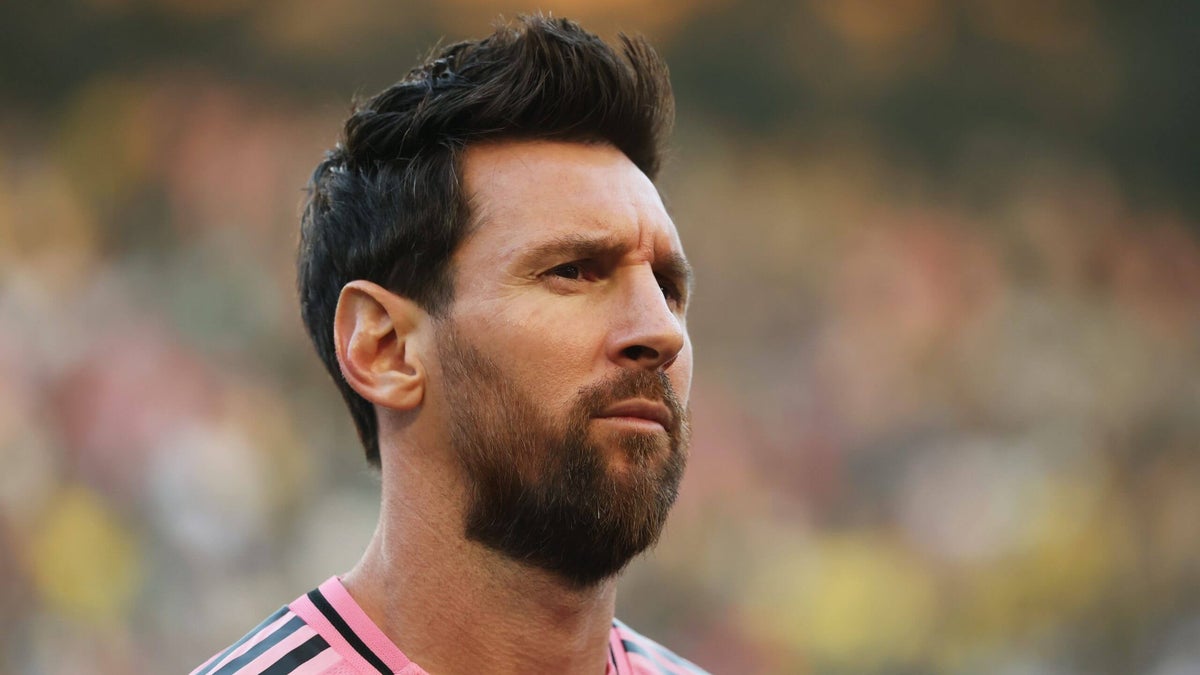
On September 9, The Athletic reported that Inter Miami star Lionel Messi had agreed a deal in principle to buy Eldense, who play in Spain's second division, also known as Segunda. On Thursday evening, an Eldense club statement announced “the acquisition of the club by Leo Messi, marking the start of a new and exciting chapter.”
The purchase has still to be approved by the Spanish government’s High Council for Sports (CSD). Messi is set to acquire 100 per cent of the humble club based in Elda, a 55,000-population city in the province of Alicante, in Spain’s south-east corner.
On Friday, Messi posted a picture of himself supporting Eldense after their 4-1 win against Real Oviedo, mate gourd in hand. The 38-year-old Argentinian, who will make his 208th and final appearance for his country in a Buenos Aires friendly against Benin on Tuesday, is joining former Barca team-mate Gerard Pique and long-time rival Cristiano Ronaldo on an ever-growing list of ambitious owners and investors at Spanish second-tier teams.
The deal remains “in principle” and final completion is unconfirmed until the CSD signs off. What has been officially confirmed is the club’s own statement — and the sight of the world’s most famous footballer celebrating a mid-table Segunda side’s victory as if he were one of their own.
WHO ARE ELDENSE
Club Deportivo Eldense, to use their full name, were formed in 1921 by a group of Barcelona fans living in Elda.

That is the reason for the shirts the team have worn throughout their history that match Barca’s famed ‘blaugrana’ (blue and garnet) colour scheme.
This element of their story helped attract Messi’s attention in the first place, according to sources close to the 2022 World Cup winner, who asked for anonymity, like others consulted for this article. Neither Messi nor his representatives have confirmed that reason publicly.
Eldense’s best league finish of seventh in Segunda came way back in 1963.
Relegation the following season was followed by many years spent in Spain’s regionally-based lower divisions, and the club almost went out of business in the late 2010s.
Locally-born telecoms entrepreneur Pascual Perez took over in 2020, and within three years Eldense had returned to the second division for the first time in six decades.
They were relegated again in 2025 but bounced straight back up by winning the Primera Federacion (third tier) title.

THE NUMBERS AND CONTEXT
Eldense play in Spain's second division, also known as Segunda, and are based in Elda, a city of 55,000 in the province of Alicante. That modest setting makes the scale of the deal all the more striking.
Messi is 38 years old and will make his 208th and final appearance for Argentina in a Buenos Aires friendly against Benin on Tuesday. He is joining former Barcelona team-mate Gerard Pique and long-time rival Cristiano Ronaldo on an ever-growing list of ambitious owners and investors at Spanish second-tier teams.
The club's recent rise owes much to locally-born telecoms entrepreneur Pascual Perez, who took over in 2020. Within three years, Eldense had returned to the second division for the first time in six decades.
They were relegated again in 2025 but bounced straight back up by winning the Primera Federacion (third tier) title. That resilience has set the stage for the current takeover.
No financial figures of the deal have been confirmed. The purchase still requires approval from the Spanish government's High Council for Sports, with Messi set to acquire 100 per cent of the club.

WHY IT MATTERS
These are historic times at Eldense, where Messi’s imminent arrival as the new owner has generated huge excitement and expectation. A club that almost went out of business in the late 2010s now finds itself the subject of global headlines, catapulted from obscurity to prominence almost overnight.
The Athletic’s examination of this takeover places Eldense within a wider trend: big-name buyers taking stakes in teams outside La Liga. Messi joins former Barcelona team-mate Gerard Pique and long-time rival Cristiano Ronaldo on an ever-growing list of ambitious owners and investors at Spanish second-tier sides.
What drew Messi to this particular club? Partly, it was the Barcelona heritage. Eldense were formed in 1921 by a group of Barcelona fans living in Elda, which explains the shirts that have always matched Barca’s famed ‘blaugrana’ colour scheme. That element of their story helped attract Messi’s attention in the first place, according to sources close to the 2022 World Cup winner.
Beyond that Barcelona link, Messi’s specific motivations are not confirmed. They have only been reported by anonymous sources, and the purchase itself still requires approval from the Spanish government’s High Council for Sports.
What is clear is the scale of the moment. A 55,000-population city in Alicante’s south-east corner is about to become home to one of football’s most recognisable figures as a full owner. On Friday, Messi posted a picture of himself supporting Eldense after their 4-1 win against Real Oviedo, mate gourd in hand.
For a club that nearly vanished in the late 2010s before Pascual Perez’s 2020 takeover, the contrast could hardly be sharper.
WHAT TO WATCH NEXT
The purchase has still to be approved by the Spanish government’s High Council for Sports (CSD), the club confirmed in its Thursday statement. That approval is the next formal step, though the timeline for it and any further procedural stages are not specified in the source and remain unconfirmed.
What is confirmed is Messi’s engagement. On Friday, he posted a picture of himself supporting Eldense after their 4-1 win against Real Oviedo, mate gourd in hand — a clear signal of investment beyond the paperwork.
On the pitch, Eldense arrive with momentum. The club has just won the Primera Federacion title to return to Segunda, bouncing straight back up after relegation in 2025. That promotion was overseen by Pascual Perez, the locally-born telecoms entrepreneur whose 2020 takeover rescued the club from near-collapse in the late 2010s.
The Athletic explains how things might develop at Eldense from here. The immediate focus is the CSD’s decision, which would clear the way for Messi to acquire 100 per cent of the club. Until then, the takeover remains pending.
Messi, meanwhile, has other business first. He will make his 208th and final appearance for Argentina in a Buenos Aires friendly against Benin on Tuesday — a likely farewell moment that will dominate headlines before attention turns fully to Elda.
For a club formed in 1921 by Barcelona fans, the wait for their most famous connection may soon be over.
Advertisement
You may also like
Ancelotti: 'Brazilian boys do not improve because they do not play' — Endrick's 2027 exit ranked
Carlo Ancelotti told reporters during the international break that the problem for Brazil's most gifted youngsters is not ability — it is opportunity. "The…
Man City found guilty of almost all 115 charges — what punishment comes next?
Manchester City have been found guilty of almost all 115 charges, according to the Men in Blazers podcast episode "Man City Found Guilty Of…

Sam Mewis Hosts Kennedy Wesley on New Friendlies Episode
The new episode is part of the Friendlies series on www.meninblazers.com, the podcast hosted by Sam Mewis. The listing places it under both "Newest…

Becky Sauerbrunn joins Sam Mewis on Good Vibes FC Oct 6
Good Vibes FC will feature Becky Sauerbrunn as a guest on Tuesday, Oct. 6 at 9 a.m. ET, according to www.meninblazers.com. The episode is…
Haitian earthquake survivor Kiki Ramos earns Argentina U-17 call-up
Kiki Ramos was sitting in an online maths class when his phone buzzed with the text message that changed his life. "My phone buzzed…
From Barca trial to El Bulli: Ferran Adria on his Cruyff dream
Ferran Adria wanted to be Johan Cruyff. Before he became one of the world’s most celebrated chefs, football was his first passion, according to…