The doctor with a scalpel and a secret that haunted Eliot Ness
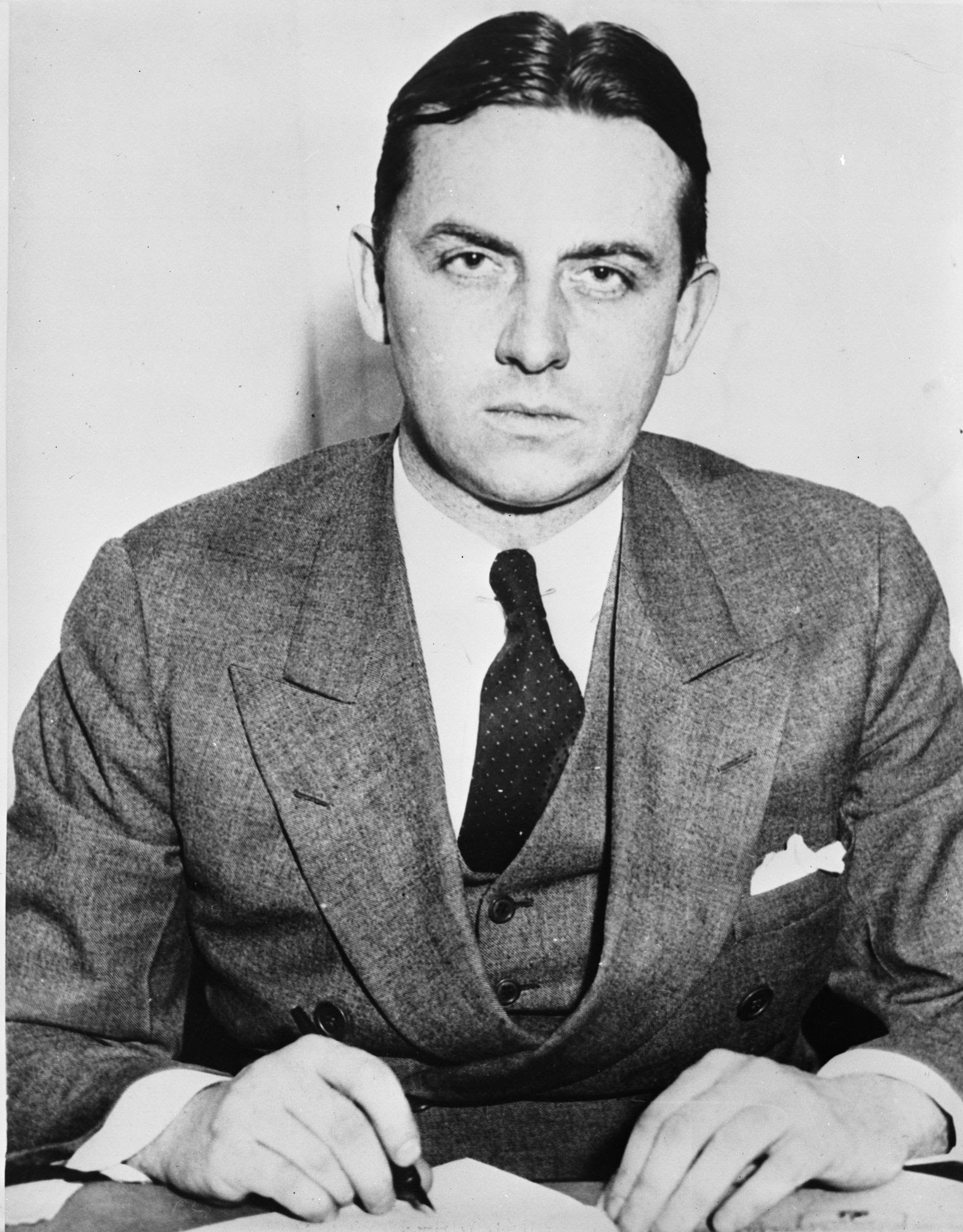
The first body was found on September 5, 1934, in Kingsbury Run, a ravine that cut through Cleveland.
He was a man, and no one ever identified him.
Between 1934 and 1938, at least twelve murders occurred in and around the city.
The victims were typically dismembered.
In several cases, the heads were severed.
The coroner who examined the bodies performed the autopsies.
He noted the skill involved in the dismemberments.
It was an observation, not a proof.
The suggestion was that the killer may have had medical or anatomical knowledge.
That suggestion is a coroner's observation, not an established fact.
The identity of the killer is not established.
No one was ever charged.
The cuts were precise.
The work was almost clinical.
A ravine is a place for discarded things.
These bodies were placed with care, or with knowledge of how a body comes apart.
Who could do this with such skill?
Who would do this at all?
The record does not answer.
The case was never solved.
The first victim lay in Kingsbury Run, and the ravine kept its secret.
The coroner's note pointed one way.
The evidence did not follow.
The skill was real.
The surgeon was not found.
THE DOCTOR IN THE SHADOWS
The coroner’s observation did not stay in the autopsy room.
It travelled down the corridor, into the investigation, and onto the desk of a man already known for chasing ghosts.
The lead detective on the case was Peter Merylo of the Cleveland Police Department.
Merylo pursued leads for years, but the note on surgical skill pointed somewhere specific.
It pointed to a physician.
The doctor had a history of alcoholism and mental instability, according to the source material.
That history made him a person of interest.
It did not make him a killer.
He was questioned.
He was never charged.
No physical evidence ever linked him to the crimes.
The suspicion rested on a man whose past made him a target, not on proof of what he had done.
That is the tension the record leaves open.
The doctor’s identity is not confirmed as the killer.
His history of alcoholism and mental instability is reported, but it is not established as a motive or as proof.
It is a lead that never solidifies.
It is a shadow that never steps into the light.
Eliot Ness, Cleveland’s safety director, took a personal interest in the case.
He directed the investigation.
He had built his reputation on catching criminals, and here was a case that would not be caught.
The doctor was questioned and released.
The evidence did not follow him home.
The skill was real.
The surgeon was not found.
The investigation moved on, but it never moved past the question.
What does a man do with a talent for cutting when no one can prove he used it?
What does a police force do with a suspect who fits and a case that won’t close?
What does a safety director do when his best lead is a biography, not a body?
That would require evidence.
The record does not provide it.
THE RAID AND THE RAVINE
The raid came down on Kingsbury Run like a net over water.
Eliot Ness, the city’s safety director, ordered a large-scale sweep of the homeless encampments where several victims had been found.
Men were rousted from makeshift shelters, questioned, and released.
The ravine stayed quiet, then it did not stay quiet.
Subsequent victims turned up in other places: the Jackass Hill area, near a dump.
Each discovery reset the search.
Detective Peter Merylo led the investigation, and he led it for years.
He pursued leads the way a man walks through mud — one step, then another, then another.
He interviewed transients, railroad workers, anyone who had seen a man carrying something heavy.
He compiled names, notes, suspicions.
None of them became an arrest.
Ness staked his reputation on the case, and the case gave nothing back.
The manhunt was enormous.
It was also empty.
Merylo kept going after the raids stopped, after the headlines moved on.
The killings stopped after 1938.
Not because the killer was caught.
Because the killing stopped.
No one was charged.
There was no trial, no conviction, no name in a courtroom.
The ravine kept its secret, and Merylo kept his file.
Ness had ordered the sweep, and the sweep had changed nothing.
A city official with a famous name and a detective with a worn notebook.
Both watched the same case slip.
It is a story of scale: the scale of the search, the scale of the failure.
It is also a story of silence.
The record holds the raid, the locations, the dates.
It does not hold the answer.
THE TWO SUSPECTS
The coroner’s note pointed one way.
Arthur J. Pearce, the Cuyahoga County coroner, performed autopsies on several victims and noted the skill involved in the dismemberments.
That skill, he suggested, hinted at medical or anatomical knowledge.
Investigators looked toward a physician with a history of alcoholism and mental instability.
He was questioned.
He was never charged.
No physical evidence linked him to the crimes.
The other interpretation ran through a handyman.
He was arrested in 1939 after a witness placed him with a victim shortly before her death.
He was interrogated for days.
He reportedly confessed.
Then he recanted.
He was never charged with the torso murders.
He died in custody in 1939, under circumstances reported as suicide.
That report is not independently confirmed.
Neither suspect’s guilt is established.
The reported confession was recanted.
The death in custody is reported, not proven.
One theory requires a man with steady hands and a broken mind.
The other requires a man who broke under questioning.
Both theories are plausible.
Both lack the hard proof that would close the case.
No physical evidence linked either suspect to the crimes.
The record holds the suspicion.
It holds the arrests, the interrogations, the reported words.
It does not hold a link.
Was the killer a doctor who knew exactly where to cut?
Was he a handyman who knew exactly when to talk?
That would require evidence.
The record does not have it.
AND THE STORY STILL ISN'T OVER
There was no trial.
No one was ever charged.
The handyman died in custody before any charges were filed, reportedly by suicide.
The physician was questioned but never charged.
The case remains officially unsolved, an open file with no pending charges and no new evidence mentioned in the record.
That is where it sits, more than eight decades later.
The killer's identity remains unknown.
That is not a theory; that is the documented outcome.
Over the decades, numerous theories have been proposed, the source material reports.
None has produced a definitive identification.
The lead detective pursued leads for years. The safety director ordered raids on the encampments. The coroner noted the skill of the cuts.
The skill pointed one way. The evidence did not follow.
What remains is a series of questions without answers, a record of at least twelve murders and no conviction.
Eliot Ness's involvement became part of his later public reputation, the source material states.
The case has been the subject of books, documentaries, and dramatizations.
They retell the same story: the ravine, the severed heads, the suspects who were questioned and released.
The story outlived its investigators.
It outlived the safety director. It outlived the lead detective. It outlived the coroner and the handyman and the physician.
None of them closed it.
The record does not say who did.
It does not say why the killings stopped in 1938.
It does not say whether the killer stopped, or moved, or died.
That would require evidence.
The case waits, officially open, for an answer the file does not contain.
It is a cold case. It is also a closed one, in every way that matters.
No charges. No trial. No name.
Just the ravine, and the record, and the silence after 1938.
Advertisement
You may also like
The fishing boat Scott Peterson bought days before Laci vanished
The boat was a small aluminum fishing vessel, purchased days before Laci Peterson vanished. That purchase is documented in the investigation record. It is…

Shanann Watts left her ring, phone, and purse — and her husband's story cracked
The ring was still on the nightstand. The phone was on the charger. The purse was on the counter. Shanann Watts left her home…

The anti-government writings that put Timothy McVeigh on the FBI's radar
9:02 a.m., April 19, 1995. A truck bomb detonated outside the Alfred P. Murrah Federal Building in Oklahoma City. The blast killed 168 people,…

The vacant lot where LAPD found Elizabeth Short's body, and the confession that never held
The morning of January 15, 1947, a woman's body was found in a vacant lot at 39th Street and Norton Avenue in the Leimert…

The 1996 Tupac shooting: one man awaits trial, but the getaway car's driver remains a question
The white Cadillac pulled up beside the BMW at the red light. The shots came from that Cadillac, according to the source. A .40-caliber…
O.J. Simpson's bloody glove that didn't fit — what it revealed in court
He held up his left hand, palm flat, and pushed it into the glove. The glove was a bloodstained leather one, found on the…