O.J. Simpson's bloody glove that didn't fit — what it revealed in court
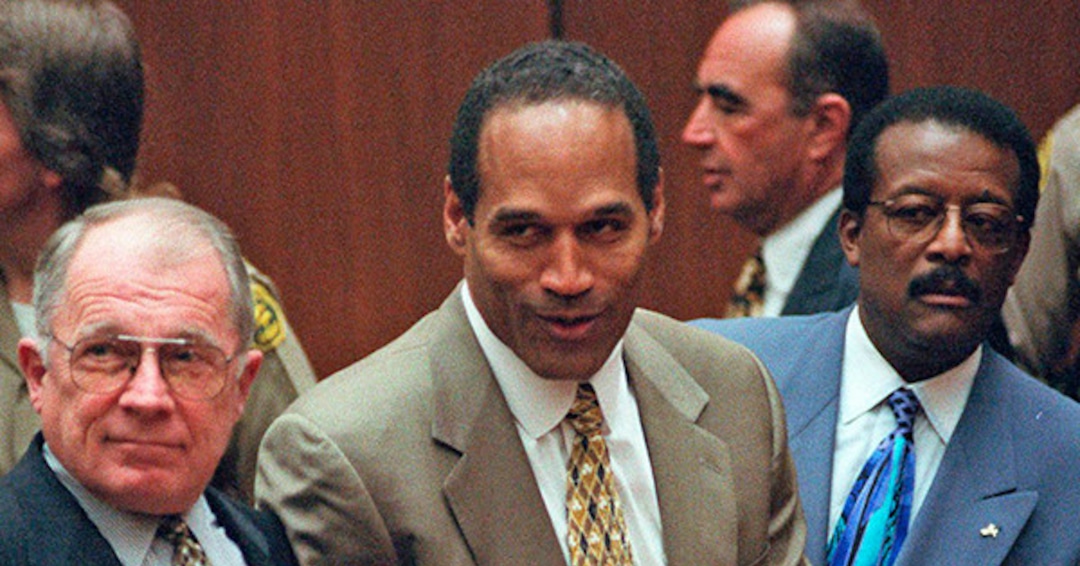
He held up his left hand, palm flat, and pushed it into the glove.
The glove was a bloodstained leather one, found on the grounds of his estate, and in court on that day in June 1995, it appeared not to fit his hand.
The moment became a turning point in public perception, a single image that seemed to say something about the case without saying anything at all.
The glove was one of a pair.
A matching glove had been found at the murder scene on Bundy Drive, where Nicole Brown Simpson and Ronald Goldman were killed, according to the investigation report.
The defense argued the glove had been planted by detective Mark Fuhrman, who had used racial slurs in the past.
Fuhrman’s credibility collapsed when tapes surfaced of him using those slurs, and the defense used that collapse to argue police misconduct.
The glove on Simpson’s hand was the centerpiece of that argument: if it doesn’t fit, you must acquit, the defense suggested in court.
Was the fit a measure of guilt?
Was it a measure of innocence?
Was it a measure of anything at all?
The trial record does not establish that the glove’s fit was conclusive evidence of anything.
It was a theatrical moment, not a scientific finding.
The glove was one piece of a larger, contested evidence chain.
Blood samples taken from Simpson matched blood found at the scene, according to forensic analysis.
A pair of socks in his bedroom contained blood that DNA testing linked to Nicole Brown Simpson.
The glove that didn't fit was the image that lingered, but the record shows it was never the whole story.
It was a glove on a hand in a courtroom.
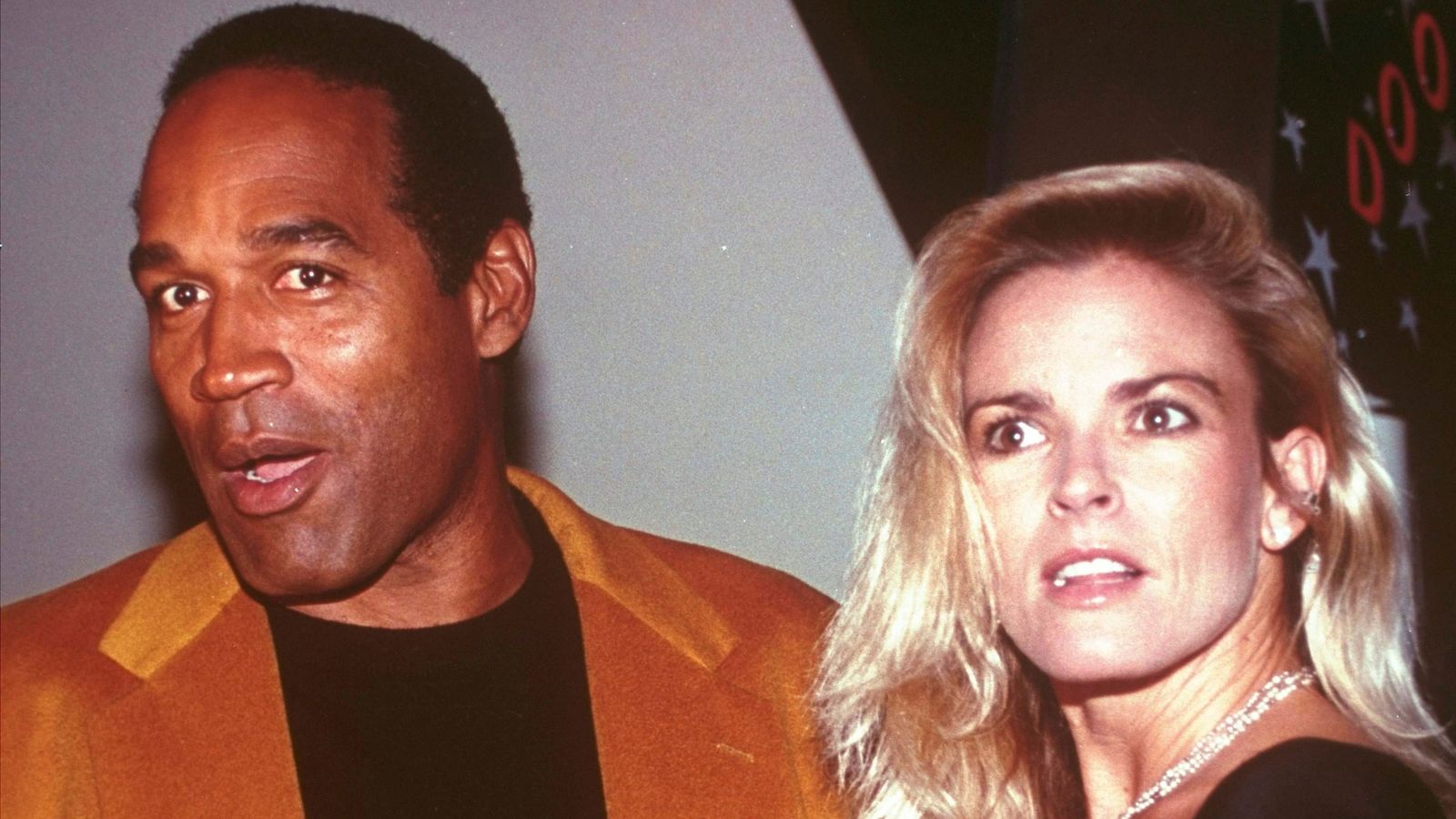
It was also a symbol, and symbols are not proof.
THE NIGHT ON BUNDY
On June 12, 1994, Nicole Brown Simpson and Ronald Goldman were found stabbed to death outside Nicole’s condominium on Bundy Drive in Brentwood.
A neighbor walking her dog discovered the bodies around midnight and called police.
Both had been killed with a knife.
The weapon was never recovered.
Goldman, a waiter at a nearby restaurant, had been returning a pair of eyeglasses Nicole’s mother had left at the restaurant.
He was 25.
Nicole was 35.
Her two children were asleep inside the condominium during the killings.
The police report recorded the scene as it was found.
The witness statement recorded the moment the bodies were seen.
The investigation recorded the time, the place, the victims.
What it did not record was the exact sequence of events inside the condominium.
That sequence is not in the record.
The night on Bundy was not a courtroom, and it was not a symbol.
It was a walkway, and a dog leash, and a phone call at midnight.
It was a pair of eyeglasses returned out of courtesy.
It was two children asleep in their beds.
The horror of the crime is in the plainness of those facts.
The innocence of the victims is in the ordinary errand that put Goldman there.
The record holds the bodies, the time, the knife that never surfaced.
It does not hold the order of what happened between the first wound and the last.
That remains outside the evidence.
THE EVIDENCE TRAIL
At Simpson’s estate, detectives found a blood-stained Ford Bronco parked outside.
They found a bloody glove on the property.
The prosecution argued that glove matched the glove found beside Nicole Brown Simpson and Ronald Goldman on Bundy Drive.
Blood samples taken from Simpson matched blood found at the scene, according to forensic analysis.
A pair of socks in Simpson’s bedroom contained blood that DNA testing linked to Nicole Brown Simpson, according to forensic analysis.
The defense argued the evidence had been mishandled.
The defense argued that detective Mark Fuhrman had planted the glove.
Fuhrman’s credibility collapsed when tapes surfaced of him using racial epithets, according to trial testimony.
He had used racial slurs in the past, the defense said, and that was the frame around the whole case.
Was the glove dropped on the path to the back door?
Was it placed there by a detective with a grudge?
:max_bytes(150000):strip_icc():focal(749x0:751x2)/PEOPLE_MAG_BROWN_SISTERS_nicole-tout-1067c705ba0c4ab7a7e648e3ffd95be0.jpg)
Was it simply where Simpson left it after the killings?
That would require evidence.
The record does not conclusively establish the origin of the glove on Simpson’s property.
It is a piece of a chain.
The chain is blood, fibers, and a timeline that begins at Bundy and ends at Rockingham.
The prosecution held the chain up and said it held.
The defense pulled at one link and the whole thing swayed.
Forensic weight on one side.
Police misconduct on the other.
The socks held Nicole’s blood in a bedroom where Simpson slept.
The Bronco held Simpson’s blood outside the house where the glove was found.
The glove held the shape of a hand that it did not fit.
That moment in court was not the evidence.
It was the shadow the evidence cast.
THE TWO STORIES
The prosecution told a story of a man enraged after years of domestic strife.
That man, prosecutors said, murdered Nicole Brown Simpson and Ronald Goldman, and the blood and the glove tied him to the scene.
The defense told a different story.

The defense said the evidence was contaminated or planted by a racist detective.
Mark Fuhrman had used racial slurs in the past, and his mishandling of evidence, the defense argued, undermined the entire case.
The glove demonstration in court became a symbol of that argument.
If it doesn't fit, the evidence doesn't fit.
That was the defense's line, repeated in the courtroom and replayed across the country.
The glove's fit is not a legal determination.
It was a visual moment, weighed by the jury alongside every other piece of testimony, every blood sample, every timeline.
On October 3, 1995, the jury acquitted Simpson on both counts.
The verdict was met with widespread public reaction, opinion sharply divided along racial lines.
In 1997, a civil jury in Santa Monica found Simpson liable for the wrongful deaths.
The award was $33.5 million in damages to the families.
Two juries, two different answers to the same question.
The criminal jury said the evidence did not prove the case.
The civil jury said the evidence did prove liability.
It is a tension that the record does not resolve.
It is a tension the verdicts simply leave standing.
AND THE STORY STILL ISN'T OVER
In 2008, a Las Vegas jury convicted Simpson of armed robbery and kidnapping for attempting to retrieve sports memorabilia he claimed was his.
Court records show he was sentenced to 33 years in prison, with eligibility for parole after nine.
He was granted parole in 2017 and released from Lovelock Correctional Center in Nevada on October 1 of that year.
He died of cancer on April 10, 2024, at age 76, according to the public record.
The Goldman family continued to pursue the civil judgment against his estate after his death, according to legal filings.
The murder case remains officially unsolved in the sense that no one else was ever charged.
Simpson was the only person tried.
The record does not establish who else might have been involved.
It does not establish that anyone else was.
The knife used in the murders was never recovered, according to the investigation.
That is a fact the file simply carries.
The criminal trial ended in acquittal.
The civil trial ended in liability.
The robbery conviction ended in prison time.
The story ended with his death.
None of those endings closed the question of what happened on Bundy Drive on June 12, 1994.
The glove did not fit.
The verdict did not settle.
The truth remains contested.
That is where the record leaves it.
Advertisement
You may also like
The babysitter who didn't exist: the name Casey Anthony gave before Caylee vanished
The name she gave was Zenaida Fernandez-Gonzalez. A full name. A specific name. A name that sounded like a real person with a real…

The QuickBooks edits a business partner made after the McStay family vanished
The dogs were in the backyard. The vehicles were still in the driveway at the Fallbrook home, and the front door was unlocked, but…

The .44-caliber letter that turned a shooting spree into a hunt for 'Son of Sam'
The letter was found near the scene of the April 1977 attack. It was addressed to columnist Jimmy Breslin. It was signed "Son of…
The 2007 deal that let Epstein dodge federal charges until a 2018 exposé
In 2005, a mother in Palm Beach, Florida, told police that her 14-year-old daughter had been sexually abused by an older man. The older…

The 38 witnesses claim that shaped a murder case — and the family still correcting it
The number was 38. *The New York Times* reported that 38 witnesses watched the attack without calling police. The number became the story. It…
The Unabomber's Montana cabin held one live bomb — and a secret his brother kept for years
The cabin sat at the end of a dirt road outside Lincoln, Montana, a one-room box of logs and tarpaper that had held one…