The 38 witnesses claim that shaped a murder case — and the family still correcting it

The number was 38.
*The New York Times* reported that 38 witnesses watched the attack without calling police.
The number became the story. It defined the case, the city, the decade.
The attack happened outside Kitty Genovese's apartment at 82-70 Austin Street in Kew Gardens, Queens, in the early hours of March 13, 1964.
She was 28 years old, returning from her job at Ev's 11th Hour Bar when a man confronted her and stabbed her twice.
She cried out. Lights went on in nearby apartments. The attacker fled.
Then he returned and stabbed her again.
A neighbor, Sophia Farrar, found her and called police. Genovese died in the ambulance on the way to the hospital.
The family has spent decades correcting that narrative.
Not the attack. Not the loss. The number.
The exact number of witnesses who actually saw or heard the attack is not established. The original count of 38 was later disputed and revised.
What remains is the weight of a number that has shaped a case for sixty years.
What remains is the question of what really happened that night.
What remains is a family still correcting the record, one interview at a time.
SIX DAYS
Six days after the murder, police arrested Winston Moseley.
He was 29 years old, a business machine operator.
He was spotted driving a car that matched a description from a burglary in the area.
Not because of a witness to the attack. Because of a car.
Moseley confessed to the Genovese murder.
He also admitted to two other murders — Barbara Kralik and Annie Mae Johnson — and a series of burglaries.
He led police to the murder weapon, a hunting knife, which he said he had thrown into a storm drain.
The case was built primarily on Moseley's confession.
It was detailed. It matched physical evidence at the scene.
The lead detective was Charles F. "Charlie" Skretch of the NYPD.
The relief of a quick arrest is there. The unease is that a confession came so easily.
How was Moseley identified beyond the car description?
That detail is not in the record. Not established.
The confession was the case.
It came six days after Kitty Genovese was killed.
It came with two other murders attached to it.
It came with a knife recovered from a drain.
Moseley was charged with first-degree murder.

The arrest was fast. The story was not over.
What remains is the weight of that confession.
What remains is the question of what else was in it.
What remains is a case built on what one man said.
THE TRIAL
The trial opened in June 1964 in Queens.
Moseley pleaded not guilty by reason of insanity.
The jury rejected the defense and convicted him of first-degree murder.
The trial judge sentenced Moseley to death in the electric chair.
The conviction and the sentence were upheld on appeal.
Then the sentence was never carried out.
In 1967, New York State abolished the death penalty for all but a narrow category of crimes.
Moseley's death sentence was commuted to life imprisonment.
He stayed in prison.
Moseley filed multiple appeals over the years.
He filed petitions for parole.
All of them were denied.
The record does not establish the details of those appeals or parole hearings.
Only that they were denied.
The sentence was death.
The sentence became life.
The life sentence became the rest of his life.
He died in prison on March 28, 2016, at the age of 81.
The legal aftermath outlasted the sentence itself.
It outlasted the appeals.
It outlasted the man who confessed.
What remains is the weight of that confession.
THE FAMILY'S CORRECTION
The family has spent decades correcting a story that was never quite theirs to correct.
The number was 38. The *New York Times* reported that 38 witnesses watched the attack and did not call police.
That number shaped the outrage. It shaped the legacy. It made the case a touchstone for bystander intervention and urban apathy.
But the exact number of witnesses who actually saw or heard the attack is not established.
The original count was later disputed and revised.
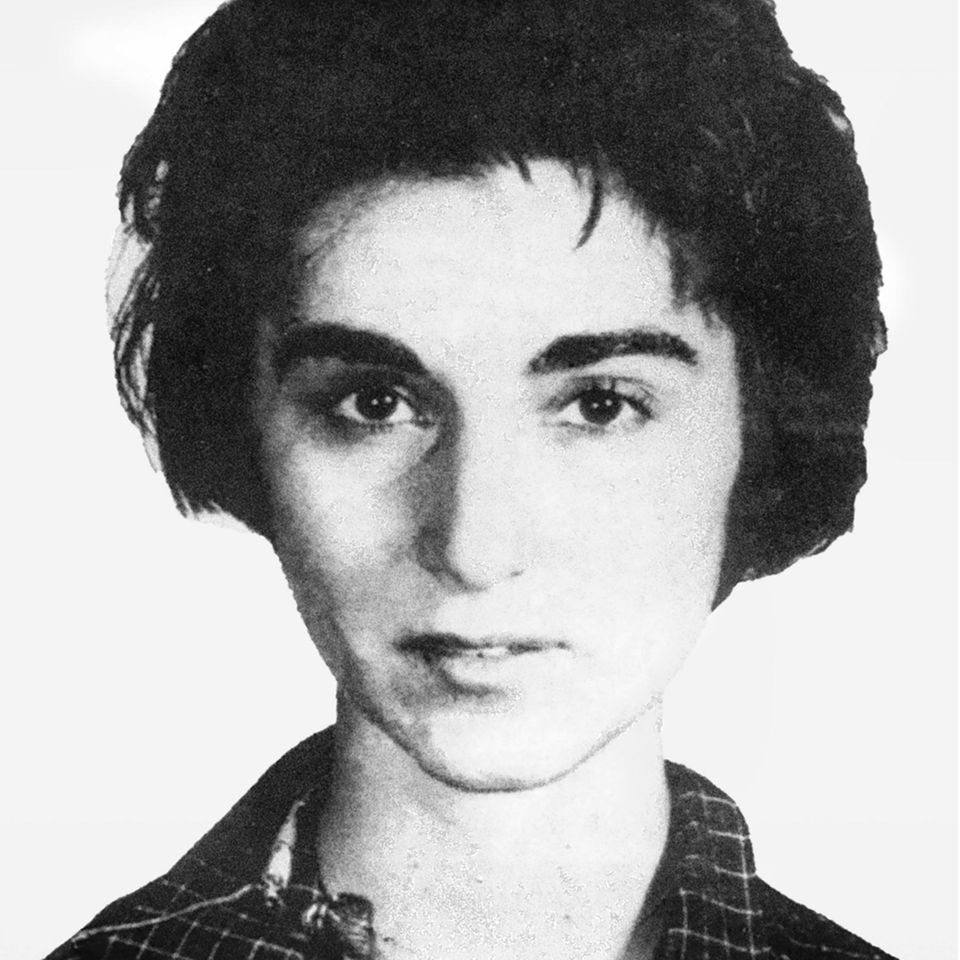
The victim's sister has spoken publicly over the years, often focusing on correcting the record about that "38 witnesses" narrative.
She has participated in documentaries and interviews, repeating the same correction each time.
Not because the number was the crime. But because the number became the story.
Modern scholarship has questioned the accuracy of the original witness count.
The initial reporting shaped public outrage and the case's legacy, but the record has been revised.
The family advocates for criminal justice reform.
They push against a story that won't die — a story that outlived the man who confessed, outlived the appeals, outlived the sentence.
What remains is the weight of that confession.
And the weight of a number that may never have been true.
The case remains a touchstone in discussions about bystander intervention and urban apathy.
It is a lesson. It is also a correction.
The family keeps telling the version that the record supports.
The public keeps repeating the version that the headline made famous.
Which version will survive the next decade?
Which version will survive the one after?
That would require evidence.
AND THE STORY STILL ISN'T OVER
Winston Moseley remained in prison for the rest of his life.
He filed multiple appeals. Each one was denied.
He petitioned for parole numerous times. Each petition was denied.
His final parole hearing came in 2015. It was denied.
Moseley died in prison on March 28, 2016, at the age of 81, at the Sullivan Correctional Facility in Fallsburg, New York.
The case did not end with his death.
The victim's sister has spent decades speaking publicly about the case. She has participated in documentaries and interviews. She has focused on correcting the record about the "38 witnesses" narrative.
That number was reported by *The New York Times*. It was later disputed. It was revised. But the correction has never travelled as far as the original claim.
The family's advocacy is documented. No next concrete step is listed in the record.
There is no specific future hearing to point to. There is no announced campaign with a date. That would require evidence.
The case remains a touchstone. It still shapes conversations about bystander intervention and urban apathy.
It is a story about what witnesses did not do. It is also a story about what a family has done since.
The sister keeps correcting. The scholarship keeps questioning. The number keeps being repeated anyway.
Which version will survive the next decade?
Which version will survive the one after?
That would require evidence.
Advertisement
You may also like
The cell tower data that put Adnan Syed near Leakin Park — and the questions it left behind
On January 13, 1999, Hae Min Lee, an 18-year-old senior at Woodlawn High School, disappeared after leaving school. Her car was found on February…
One anonymous note sent police to a witness — is that note the key to Hae Min Lee's 1999 murder case?
The note was anonymous. It arrived after Hae Min Lee's body was found on February 9, 1999, in Leakin Park, partially buried. She had…
The last video Paul Murdaugh filmed minutes before the shots that killed him and his mother
He was 22, and he was filming his dogs. Paul Murdaugh held up his cell phone at the family's hunting estate in Colleton County,…

The pillowcase that tied a kidnapper to Polly Klaas — and the parole officer who spotted him
Two girls lay on the floor of the bedroom, their hands and feet bound. They had been tied up, but they had not been…
The pajama top that told the FBI a different story than Jeffrey MacDonald's
The pajama top was folded on an evidence table, and it told two stories at once. On the night of February 17, 1970, at…
The 10 p.m. check that found an open door and an empty bed
The key turned in the lock at approximately 10:00 p.m. on May 3, 2007. Kate McCann stepped into the holiday apartment in Praia da…