The pillowcase that tied a kidnapper to Polly Klaas — and the parole officer who spotted him
Two girls lay on the floor of the bedroom, their hands and feet bound.
They had been tied up, but they had not been taken.
When the ropes came off, they described the man who had walked into the room.
Investigators turned those descriptions into a composite sketch.
The sketch was circulated widely.
It went to police departments, to newspapers, to the television stations covering the disappearance of twelve-year-old Polly Klaas.
On November 30, 1993, a parole officer looked at the drawing.
He recognized the face.
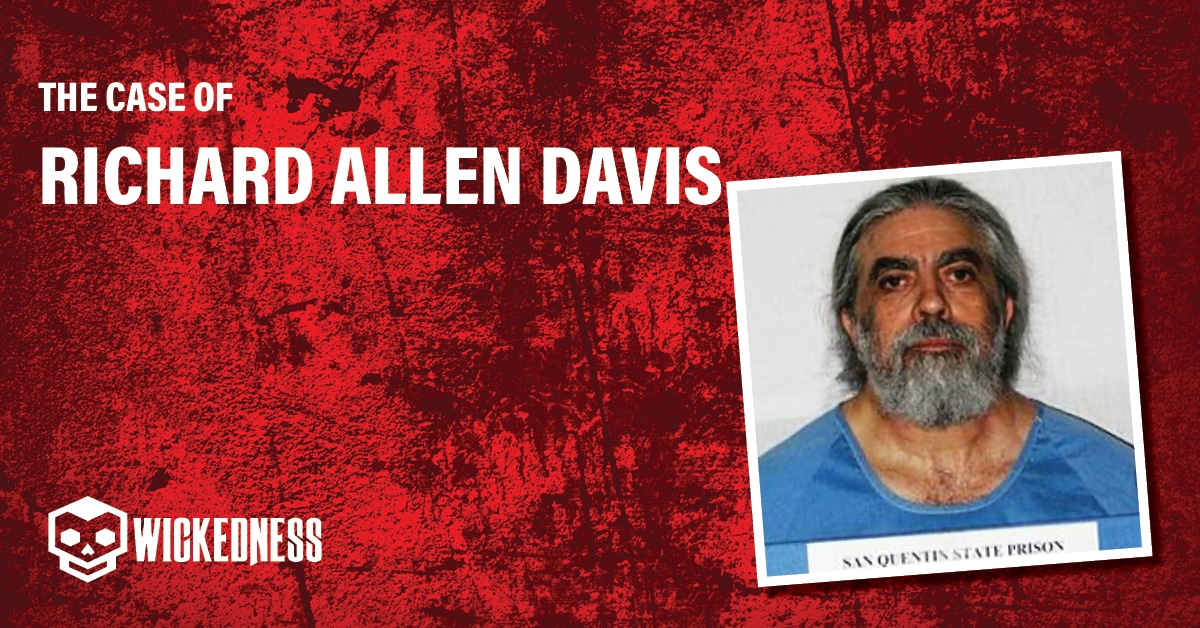
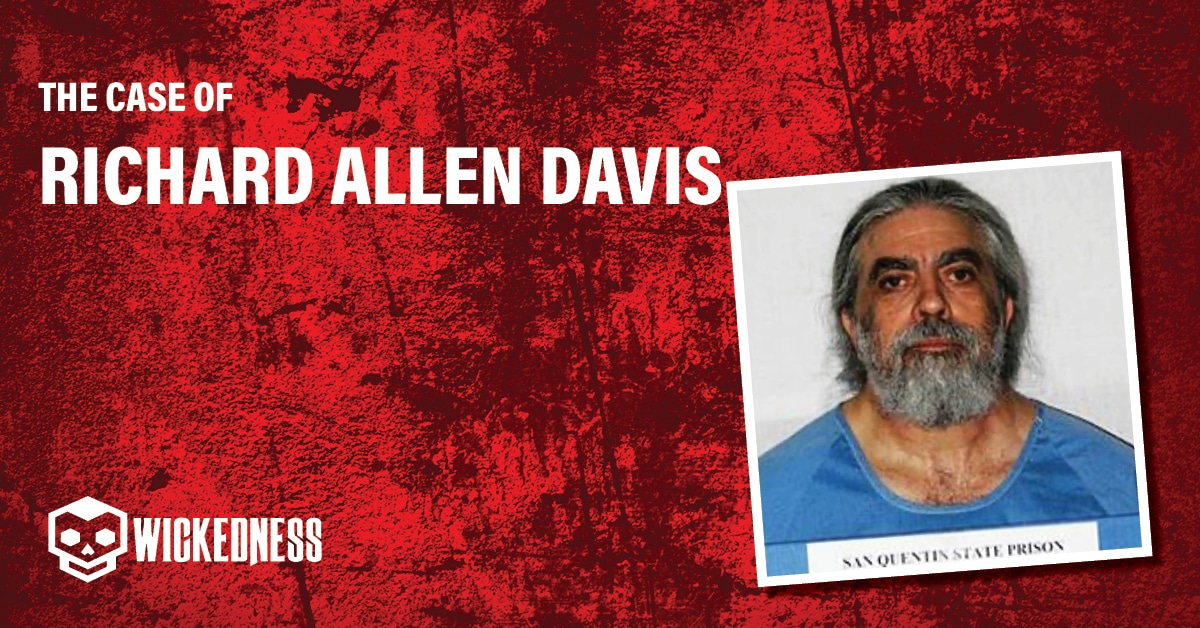
It was Richard Allen Davis, a man on parole for a 1976 kidnapping.
The recognition was a single human glance at a piece of paper.
It was not a viral tip, not a mass data sweep.
It was one person who had seen a face before, and saw it again in ink.
Davis was arrested.
The case moved forward.
The exact circumstances of how that parole officer came to see the sketch are not detailed in the record.
The record does not say whether he saw it on a bulletin board, in a file, or on a screen.
That detail is gone.
What remains is the moment itself.
A drawing, a glance, an arrest.
Two friends had given the descriptions.
A stranger had walked into a slumber party.
And a parole officer ended the search for that stranger.
Not because of a database match.
Because he remembered a face.
THE NIGHT OF OCTOBER 1
The party was in Polly’s bedroom at her mother’s house in Petaluma, California.
Three girls, twelve years old, were there for a slumber party on the night of October 1, 1993.
An intruder came in through a window, according to the account that followed.
He tied up the three girls.
He placed pillowcases over their heads.
He took Polly and left the other two behind.
Her mother, Eve Nichol, returned home and found the scene.
What exactly happened inside the house, beyond the tying and the abduction, is not specified in the record.
The two friends who were not taken gave descriptions that led to the composite sketch.
That sketch is what a parole officer would later recognize.
Why Polly was taken is the question the house left open.
Not because the record answers it.
Because it does not.
THE SEARCH AND THE ARREST
The search did not stop when the sketch was drawn.
It widened.
Local police and the FBI coordinated the effort, and thousands of volunteers joined the hunt through the hills of Sonoma County.
They looked for a girl.
They found a body.
On November 30, 1993, a parole officer recognized the man in the sketch as Richard Allen Davis, a career criminal on parole for a 1976 kidnapping.
Davis was arrested.
After questioning, he led investigators to a remote wooded area near Cloverdale, California.
Polly Klaas’s body was found there on December 4, 1993.
She had been strangled.
The search had ended, but not the way anyone had hoped.
It was a recovery, not a rescue.
The specific details of the questioning that led Davis to reveal the location are not in the record.
What is in the record is what came next.
A pillowcase from the Klaas home was found near her body.
It contained hairs consistent with Davis’s.
Fibers from his clothing and his car matched the scene.
DNA evidence linked him as well.
The defense would argue the confession was coerced.
The physical evidence did not need the confession.
The case moved from a missing child to a murder investigation in the space of four days.
The volunteers went home.
The detectives stayed.
THE PILLOWCASE AND THE TRIAL
The pillowcase from the Klaas home was found near Polly's body.
It contained hairs consistent with Davis's.
The prosecution presented that pillowcase as a key piece of evidence.
Fibers from Davis's clothing and car matched the scene.
There was DNA evidence as well.
The physical evidence was substantial, according to the record.
The defense argued that Davis's confession was coerced.
The defense argued that the evidence was circumstantial.
Not because the fibers were absent. But because the defense said they did not prove the act itself.
What the jury weighed was a confession against a pillowcase.
What the jury weighed was a confession against fibers and DNA.
What the jury weighed was a contested statement against physical links.
The prosecution presented the forensic case that tied Davis to the crime scene.
The jury convicted Davis on all counts.
First-degree murder with special circumstances.
Kidnapping.
Burglary.
The jury recommended the death penalty.
The trial moved from evidence to verdict in a single weight.
The murder weapon was not specified in public records.
That remains unestablished.
The confession could be argued as forced.
The pillowcase could not be argued away.
It was a thing found near the body.
It was a thing with hairs consistent with the man arrested for the crime.
The verdict was final on the counts.
The physical evidence carried the case where the confession was contested.
That is what the record shows.
That is what the trial decided.
AND THE STORY STILL ISN'T OVER
Judge Thomas Hastings sentenced Richard Allen Davis to death on September 26, 1996.
The sentence stands.
Davis remains on death row at San Quentin State Prison.
The state has not carried out an execution since 2006, due to legal challenges to the death penalty.
The conviction did not end the story.
It changed the law first.
In 1994, California passed its "three strikes" law, harsher sentences for repeat offenders, a direct response to the case.
Marc Klaas founded the KlaasKids Foundation, a nonprofit dedicated to protecting children from violence.
Eve Nichol has also spoken publicly about the case.
Both parents kept the story in the public record.
The pillowcase, the fibers, the sketch — those carried the verdict.
The execution has not followed.
That is the unresolved tension.
The current status of any pending legal motions or appeals is not specified in the record.
The sentence is real.
The carrying-out is not.
California has held its death row in place while the method and the law remain contested.
Davis sits there.
The case that moved a state to rewrite its sentencing rules now waits on a system that has stalled.
Not because the conviction failed.
Because the penalty phase outlasted the penalty.
It is a closed verdict.
It is an open file.
What remains is the gap between what the court ordered and what the state has done.
That gap is the story now.
Advertisement
You may also like
The tarot card left at a D.C. sniper crime scene that said 'Call me God'
The card was on the ground at a crime scene in Montgomery County. A tarot card, face up, with a message written across it:…
The cell phone records that placed a suspect near Leakin Park — but one witness kept changing his story
January 13, 1999, was a school day. Hae Min Lee, an 18-year-old senior at Woodlawn High School in Baltimore County, Maryland, was last seen…
The parole agent who saw a sketch and stopped a car — then Polly Klaas's killer led police to her body
The parole agent saw the car first. A sketch, a tip, and a car on the road — that was the break. On November…
The cellmate tip that cracked the Clutter case after investigators ignored a footprint
The footprint was there on the night of November 15, 1959, inside the farmhouse near Holcomb, Kansas. Four members of the Clutter family were…
The cell tower records that placed Adnan Syed at Leakin Park — and the witness who changed his story
The phone call came on February 12, 1999. Baltimore County police picked up an anonymous tip that day, and the voice on the line…
The jailhouse informant's testimony that could not save Casey Anthony
She sat in the witness box and testified that Casey Anthony had made incriminating statements while in jail. Her name was Robyn Adams, a…