The parole agent who saw a sketch and stopped a car — then Polly Klaas's killer led police to her body
The parole agent saw the car first.
A sketch, a tip, and a car on the road — that was the break.
On November 30, 1993, the agent recognized the vehicle from the sketch and the tip.
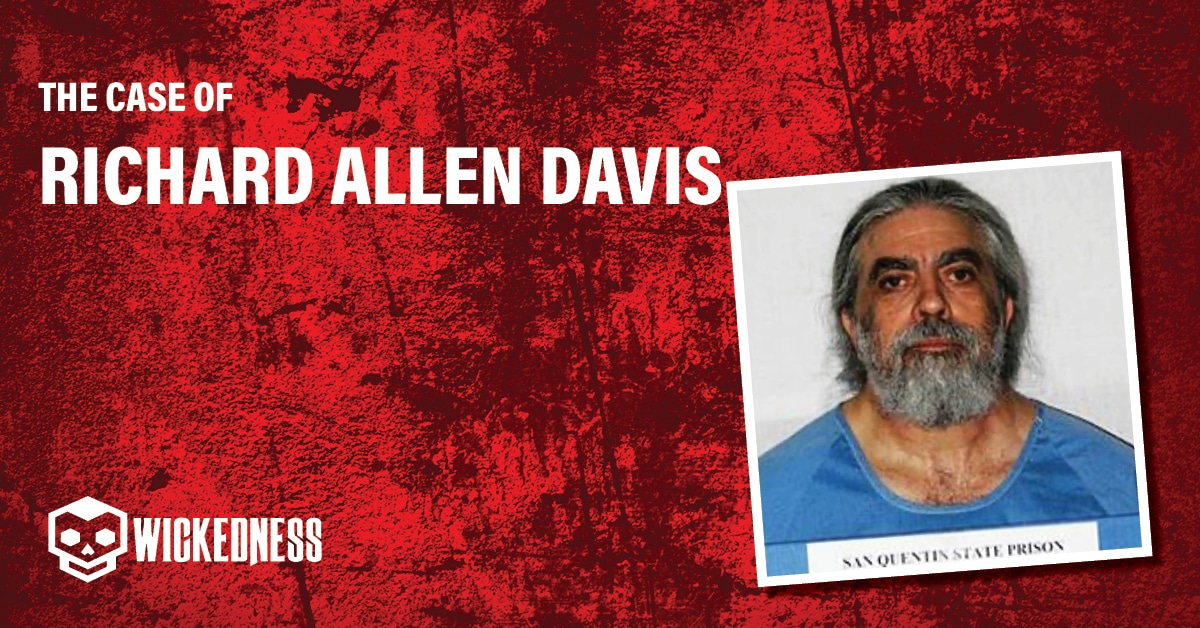
The car belonged to Richard Allen Davis, a parolee with a long criminal record.
The recognition led to a traffic stop.
It led to Davis's arrest.
The exact location of that traffic stop is not in the record.
Not the street. Not the town. Only the stop itself.
It had been weeks since Polly Klaas was taken from her mother's home in Petaluma.
Weeks of one of the largest manhunts in California history.
Weeks of wrong turns.
An FBI profiler had initially suggested the kidnapper was likely a local juvenile.
Investigators followed that lead for weeks.
They focused on the wrong people.
A neighbor was questioned and released after providing an alibi.
The case was going nowhere.
Then a parole agent saw a car.
Then a traffic stop ended the search.
One moment on a road, and the manhunt was over.
But the questions remain.
Why did the profiler point to a local juvenile?
Why did that theory hold for weeks?
Why did it take a parole agent's eyes to break the case?
That would require evidence.
The record shows the mistake. It shows the stop. It shows the arrest.
It does not show why the earlier theory lasted so long.
The car belonged to a man with a record.
The sketch and the tip pointed to him.
The agent saw what the investigation had missed.
She was on the ground below.
THE NIGHT OF OCTOBER 1
October 1, 1993, was a Friday night.
Twelve-year-old Polly Klaas was asleep in her mother's home in Petaluma, California.
She was having a slumber party with two friends.
An intruder entered the house.
He tied up the girls.
He took Polly at knifepoint.
The exact time of the kidnapping is not in the record.
The girls who were left behind gave descriptions.
Police began knocking on doors.
A neighbor was seen near the house.
He was questioned.
He was cleared after providing an alibi.
The FBI profiler offered a theory.
The kidnapper was likely a local juvenile, the profiler suggested.
Investigators followed that lead for weeks.
They focused on the wrong people.
They focused on the wrong places.
They lost time.
The house was processed for evidence.
Rope and duct tape were collected.
The neighborhood was searched.
The town was searched.
The state was searched.
It was one of the largest manhunts in California history.
But the profile kept pointing inward, to someone local, someone young.
It was a theory.
It was not supported by what the record shows.
The days turned into weeks.
The weeks turned into months.
Polly's family waited.
The investigators waited.
The profile did not break the case.
A parole agent would.
THE MANHUNT AND THE MISSTEPS
The case triggered one of the largest manhunts in California history.
Hundreds of officers searched hillsides, homes, and ditches across two counties.
The exact number of law enforcement personnel involved is not in the record.
What the record does show is where the attention went, and where it stayed.
The FBI profiler initially suggested the kidnapper was likely a local juvenile.
That theory led investigators to focus on the wrong leads for weeks.
Not because the evidence pointed that way. Because the profile said so.
A neighbor was questioned and released after providing an alibi.
He was seen near the house. He was cleared. The file moved on.
The investigators waited.
They canvassed. They followed tips. They waited again.
Why did the profile miss? Why did the neighbor get cleared so fast?
Why did weeks pass without a break in the case?
That would require evidence.
On November 30, 1993, a parole agent recognized Davis's car from a sketch and tip.
The car was central to the investigation.
The agent's recognition led to a traffic stop.
Davis was arrested after that stop.
He led authorities to Polly's body.
The profile did not break the case.
A parole agent would.
THE ARREST AND THE CONFESSION
The parole agent made the stop on November 30, 1993.
Davis was arrested after that traffic stop.
He then led authorities to Polly's body.
Her body was found on December 4, 1993, in a wooded area near Cloverdale, about 50 miles from Petaluma.
She had been strangled.
The relief of an arrest gave way to the confirmation of her death.
The case broke not with a profile but with a car.
A parole agent recognized the vehicle from a sketch and a tip.
That recognition ended the manhunt.
The evidence gathered after the arrest was physical and direct.
Rope and duct tape from the crime scene were part of the case.
Davis's prior statements to a cellmate were also used against him.
The exact content of those statements is not in the record.
What he said to that cellmate remains unestablished.
The record shows the statements were admitted, not what they contained.
The profile did not break the case.
A parole agent would.
The traffic stop did what weeks of theory could not.
It placed Richard Allen Davis in custody.
It placed him at the center of the evidence.
And it led, finally, to Polly.
She was on the ground below.
AND THE STORY STILL ISN'T OVER
The jury convicted him on all counts.
Davis was sentenced to death on September 26, 1996.
The California Supreme Court upheld the conviction and sentence in 2009.
Davis remains on death row at San Quentin State Prison.
California has not executed anyone since 2006.
Legal challenges to the death penalty have left the sentence in limbo.
An execution date is not in the record.
That would require a resolution the courts have not delivered.
Polly's death changed the law.
"Polly's Law" in California strengthened sentencing for repeat offenders.
Her father, Marc Klaas, founded the KlaasKids Foundation.
The nonprofit is dedicated to child safety and missing children.
Her mother, Eve Nichol, has largely stayed out of the public eye.
The case remains a landmark in American criminal justice history.
It is a conviction.
It is also a waiting.
The man convicted of taking Polly Klaas sits on death row.
The state that sentenced him has not carried out an execution in nearly two decades.
Justice was served in the courtroom.
Completion has not arrived in the record.
The story is closed.
The story is also still open.
Advertisement
You may also like
The tarot card left at a D.C. sniper crime scene that said 'Call me God'
The card was on the ground at a crime scene in Montgomery County. A tarot card, face up, with a message written across it:…
The cell phone records that placed a suspect near Leakin Park — but one witness kept changing his story
January 13, 1999, was a school day. Hae Min Lee, an 18-year-old senior at Woodlawn High School in Baltimore County, Maryland, was last seen…
The cellmate tip that cracked the Clutter case after investigators ignored a footprint
The footprint was there on the night of November 15, 1959, inside the farmhouse near Holcomb, Kansas. Four members of the Clutter family were…
The cell tower records that placed Adnan Syed at Leakin Park — and the witness who changed his story
The phone call came on February 12, 1999. Baltimore County police picked up an anonymous tip that day, and the voice on the line…
The jailhouse informant's testimony that could not save Casey Anthony
She sat in the witness box and testified that Casey Anthony had made incriminating statements while in jail. Her name was Robyn Adams, a…
76 died in the Waco fire, but no one was ever charged with starting it
The date was April 19, 1993. A fire broke out inside the Mount Carmel Center near Waco, Texas, and it killed 76 people. David…