The tarot card left at a D.C. sniper crime scene that said 'Call me God'
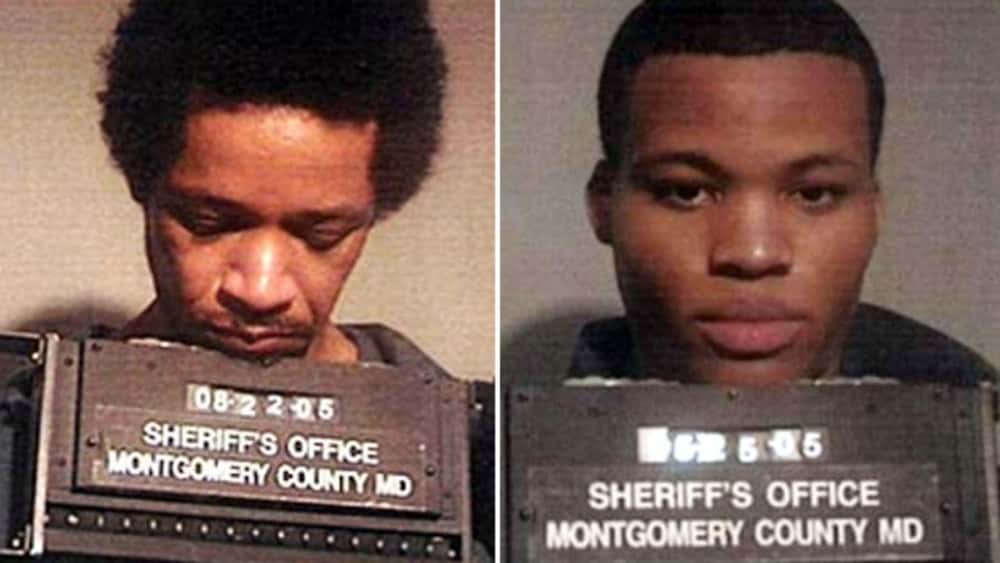
The card was on the ground at a crime scene in Montgomery County.
A tarot card, face up, with a message written across it: "Call me God."
It is a physical object, not a rumor.
It exists in the evidence file, logged and photographed, part of the record.
A caller claiming to be the shooter said he left it there.
That is the investigation account.
That is a claim, not a fact.
The record does not establish that the caller was actually the shooter.
It establishes only that a card was found, and that a man on the phone said he put it there.
The card became the focus of public attention anyway.
It was in the newspapers, on the evening news, held up at press conferences by Chief Charles Moose.
It gave the story a face — a symbol, a taunt, a signature.
What does it mean?
Who wrote those words?
Was the caller telling the truth?
That would require evidence.
The card is real. The message is real. The voice on the phone is not connected to the shootings by anything the record shows.
It is a turning point in the investigation.
It is also a question mark that was never fully answered.
THE FIRST SHOTS
The first shot came on October 2, 2002, outside a liquor store in Montgomery County, Maryland.
That is where the record begins.
Between October 2 and October 24, shootings occurred across Maryland, Virginia, and Washington, D.C.
Ten people were killed. Three were wounded.
Victims were shot while pumping gas. While mowing a lawn. While reading a book on a bench.
The attacks terrorized the Washington metropolitan area.
Schools closed. Daily routines altered.
Police initially focused on random violence, according to the investigation.
The public was warned to avoid routine activities.
People stopped filling their tanks at the same stations. They walked to cars in zigzags. They stayed inside.
The randomness was the terror.
A person could be shot anywhere, at any moment, for doing nothing more than being outside.
The exact motive for the first shooting is not in the record.
Not because it was hidden. Because it was never established.
Police had no pattern to chase, no message to decode, no face to name.
They had a region holding its breath.
And a killer, or killers, still moving through the ordinary hours of other people's days.
THE TURNING POINT
A tarot card was left at a crime scene in Montgomery County, with the message "Call me God."
A caller claiming to be the shooter left the card, according to the investigation.

The identity of that caller is not confirmed in the record.
It is a message. It is also a taunt.
Police had a piece of paper now, and a voice on a line, and still no face to put with either.
The investigation was hampered by a lack of coordination among multiple jurisdictions.
One county did not know what the next county had.
One detective did not always know what the detective down the hall had.
Police initially dismissed the possibility of two shooters.
They chased one pattern. They looked for one man.
A critical mistake was failing to connect the shootings to a previous killing in Montgomery, Alabama, and a shooting in Baton Rouge, Louisiana.
The record shows those cases were later linked to the two men arrested.
At the time, the dots were not joined.
A witness reported seeing a white van near a shooting in Ashland, Virginia.
Police chased the white van.
Police staked out white vans.
Police later learned the actual vehicle was a blue Chevrolet Caprice.
They had been watching the wrong color.
They had been looking for the wrong shape.
How close were they?
How far off?
The answer to both is in the record: the Caprice was found on October 24, at a rest stop, with two men asleep inside.
Before that, the region held its breath.
THE BREAK AND THE ARREST
The tip came from a truck driver.
It was October 24, and the driver had seen a blue Chevrolet Caprice parked at a rest stop near Myersville, Maryland.
Police found the car.
John Allen Muhammad and Lee Boyd Malvo were asleep inside.
The rifle was in the car with them.
A Bushmaster .223-caliber rifle.
Ballistics evidence linked that rifle to multiple shootings.
The region exhaled.
The chase was over.
But the questions began.
The investigation had spent weeks looking for a white van, not a blue sedan.
It had dismissed the possibility of two shooters.
It had failed to connect the shootings to a killing in Alabama and a shooting in Louisiana.
The record does not detail the exact sequence of events leading to that truck driver's tip.
That is not established.
What is established is the car, the men, the rifle.
What is established is the ballistics match.
What is established is that Muhammad had a history of domestic violence.

He had previously threatened his ex-wife.
That was in the record before the shootings.
It was not connected in time.
The investigation revealed it later.
Two men slept in a car at a rest stop.
The region had held its breath for three weeks.
They woke up in handcuffs.
The relief was real.
So was the unease.
A 17-year-old and a 41-year-old.
A rifle and a tarot card.
The caller said "Call me God."
The record says two men were found sleeping.
It does not say which one called.
AND THE STORY STILL ISN'T OVER
John Allen Muhammad stood trial in Virginia.
The charge was the murder of a man shot at a gas station in Manassas.
He was convicted of first-degree murder.
He was sentenced to death.
Lee Boyd Malvo stood trial separately in Virginia.
The charge was the murder of an FBI analyst shot outside a Home Depot.
He was convicted of first-degree murder.
He was sentenced to life without parole.
Prosecutors argued Muhammad was the mastermind.
They argued Malvo was the manipulated follower.
Malvo later claimed he was also a victim of Muhammad's control.
The full truth of that relationship is not definitively established in the record.
Muhammad was executed by lethal injection on November 10, 2009.
It was a legal end.
Malvo remains in prison, serving multiple life sentences.
The families of the victims have spoken publicly about the case.
Some have advocated for changes in how multi-jurisdictional investigations are handled.
They point to the early confusion.
They point to the lack of coordination.
They point to the tip that finally broke the case.
The legal end is not the emotional end.
The record says two men were found sleeping.
It says one was executed.
It says one remains in prison.
It does not say which one called.
Advertisement
You may also like
The cell phone records that placed a suspect near Leakin Park — but one witness kept changing his story
January 13, 1999, was a school day. Hae Min Lee, an 18-year-old senior at Woodlawn High School in Baltimore County, Maryland, was last seen…
The parole agent who saw a sketch and stopped a car — then Polly Klaas's killer led police to her body
The parole agent saw the car first. A sketch, a tip, and a car on the road — that was the break. On November…
The cellmate tip that cracked the Clutter case after investigators ignored a footprint
The footprint was there on the night of November 15, 1959, inside the farmhouse near Holcomb, Kansas. Four members of the Clutter family were…
The cell tower records that placed Adnan Syed at Leakin Park — and the witness who changed his story
The phone call came on February 12, 1999. Baltimore County police picked up an anonymous tip that day, and the voice on the line…
The jailhouse informant's testimony that could not save Casey Anthony
She sat in the witness box and testified that Casey Anthony had made incriminating statements while in jail. Her name was Robyn Adams, a…
76 died in the Waco fire, but no one was ever charged with starting it
The date was April 19, 1993. A fire broke out inside the Mount Carmel Center near Waco, Texas, and it killed 76 people. David…