The pajama top that told the FBI a different story than Jeffrey MacDonald's
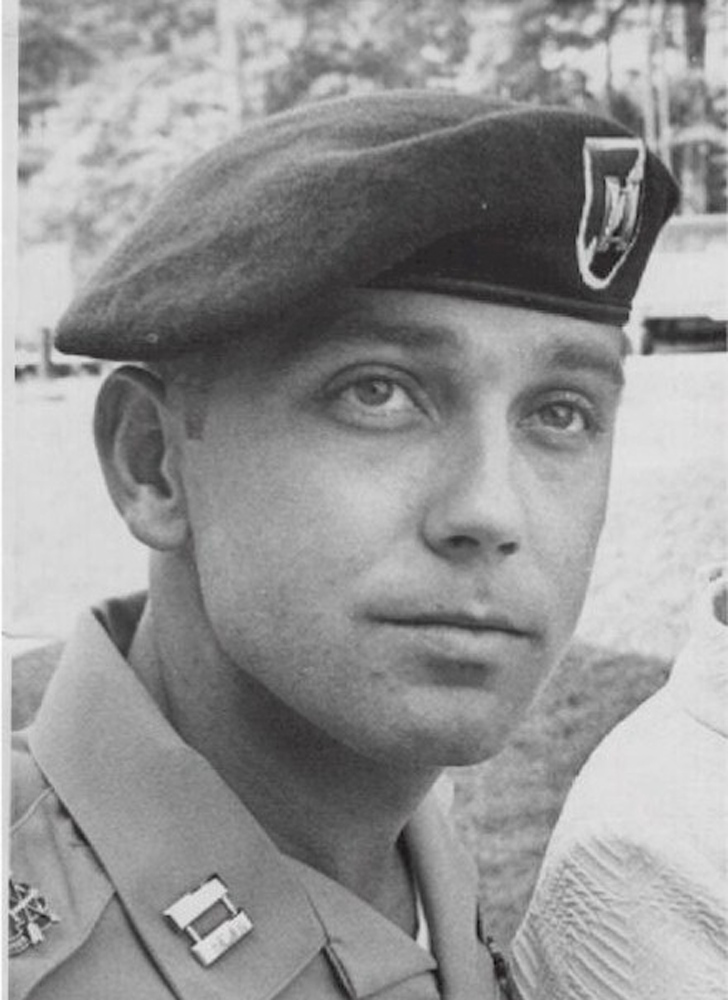
The pajama top was folded on an evidence table, and it told two stories at once.
On the night of February 17, 1970, at Fort Bragg, North Carolina, army captain Jeffrey MacDonald reported that four intruders — a group of hippies chanting "acid is groovy" — had broken into his family's base housing and attacked them.
Military police found his wife, Colette MacDonald, dead.
They found Kimberley, aged 5, dead.
They found Kristen, aged 2, dead.
Colette had been beaten and stabbed; the children were stabbed repeatedly.
MacDonald himself had minor injuries, and he was initially treated as a victim.
The pajama top belonged to him.
He said the intruders had cut it during the struggle.
The FBI serologist who examined it at trial testified differently.
He testified that the bloodstains on the pajama top were consistent with MacDonald's own blood, not the intruders'.
He testified that the pattern of those stains suggested the scene had been staged.
That is the documented reading: the pajama top as evidence of staging.
A theory circulating online treats the same top as proof of the intruder story.
That theory is not a fact established by the record.
What exists is only the serologist's trial testimony — no independent documentation of the stain pattern.
Not because the theory is false.
Not because the theory is true.
But because a viral claim is not evidence.
That would require the record to say something it does not say.
The pajama top sits at the center of the case.
It is a single object that seems to tell a story.
The official reading of it is the opposite of what the online theory expects.
She was on the ground below, and the top was above the scene, folded into a different narrative.
THE 911 CALL AND THE SCENE
MacDonald told the military police that four intruders had broken into the family's base housing.
The intruders, he said, were a group of hippies chanting "acid is groovy."
Military police found his wife, Colette, and their two daughters, Kimberley, aged 5, and Kristen, aged 2, dead on the scene.
Colette had been beaten and stabbed.
The children were stabbed repeatedly.
MacDonald himself had minor injuries.
The army's initial investigation was led by CID agent Franz Grebner.
Grebner's team found inconsistencies in MacDonald's account.
The physical evidence told a quieter story.
There were no footprints in the mud outside, despite the claimed intrusion.
The positioning of the bodies did not match the chaos of a struggle with strangers.
The weapons were never recovered.
A knife and a club — reportedly an ice pick and a wooden stake — were described, but their exact nature is not confirmed.
The exact number and identity of any intruders is not established.
Who else could have been there?
Who else could have left no tracks?

Who else could have made no sound?
That would require evidence.
The record does not provide it.
THE KASSABS' CAMPAIGN
They had buried their daughter and two granddaughters.
They had watched the army charge their son-in-law, then drop the charges after a hearing in 1970.
They had initially supported him.
Then they turned.
Colette's parents became the engine of the case, a campaign that would not let the murders rest.
They pressured authorities to reopen the investigation.
They pushed for years.
The case sat dormant until they made it move.
In 1975, a federal grand jury indicted Jeffrey MacDonald.
The charges were back.
The specific conversations between the parents and the authorities are not in the record.
Only their public campaign is documented.
What they said to investigators behind closed doors, what they promised, what they threatened — that would require evidence.
The record does not provide it.
What is documented is the persistence.
They spent years pushing for prosecution.
They pushed until the federal government took up what the army had abandoned.
They pushed through the trial in 1979.
They pushed through the conviction.
They pushed through the appeals.
Both of Colette's parents died without seeing MacDonald exonerated.
They died having spent their final years on this one thing.
They died before the Fourth Circuit denied his latest petition in 2006.
The campaign had outlasted them.
It had outlasted the army's first attempt.
It had outlasted every appeal MacDonald filed.
It remains in the record as the reason the case was never allowed to fade.
THE TWO STORIES AT TRIAL
In 1979, MacDonald was tried in federal court in Raleigh, North Carolina.
Prosecutors Brian Murtagh and James Blackburn argued he murdered his wife and daughters in a rage.
They argued he then fabricated the intruder story.
The defense attorney, Bernard Segal, maintained MacDonald's innocence.
Segal pointed to the lack of physical evidence linking his client to the killings.
The FBI serologist, Paul Stombaugh, testified about the pajama top.
He testified the bloodstains on it were consistent with MacDonald's own blood.
He testified the pattern suggested MacDonald had staged the scene.
It was the prosecution's argument that the pajama top told a different story than the one MacDonald told.
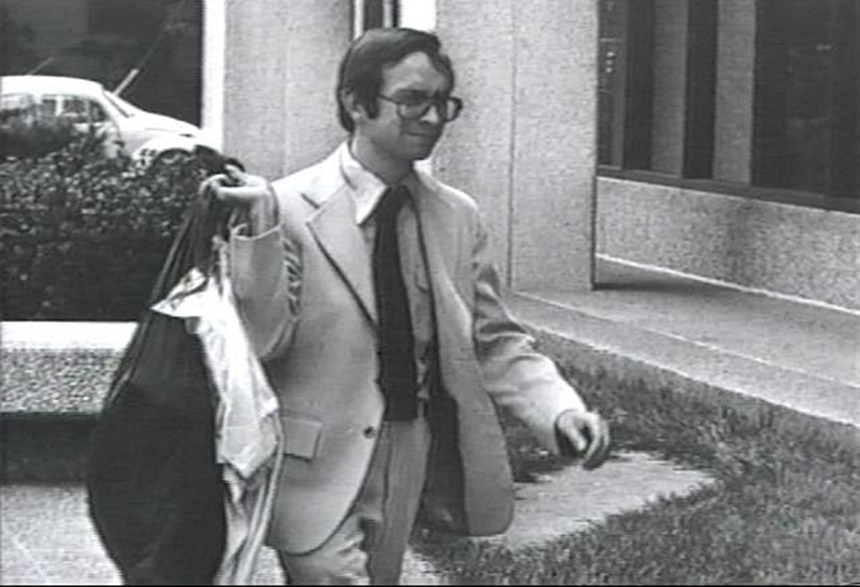
The jury convicted MacDonald of three counts of first-degree murder.
He was sentenced to three consecutive life terms.
The defense's specific rebuttal to the FBI serologist's testimony is not detailed in the record.
Only the prosecution's argument and the conviction are documented.
That would require evidence.
The record does not establish what the defense said in response.
It does not establish that the pajama top proves the intruder story.
It establishes what the FBI serologist testified.
It establishes what the jury decided.
MacDonald was convicted.
He was sentenced.
The story, as told at trial, was the prosecution's.
AND THE STORY STILL ISN'T OVER
MacDonald remains in federal prison, serving three consecutive life sentences.
He has filed numerous appeals and motions, all unsuccessful.
In 2006, the Fourth Circuit Court of Appeals denied his latest petition.
That denial is the last documented step; whether any future appeal or motion is pending is not established by the record.
The case has been the subject of books and documentaries.
Joe McGinniss’s “Fatal Vision” concluded MacDonald was guilty.
MacDonald later sued McGinniss for breach of contract over how the book portrayed him.
The lawsuit did not change the conviction.
Colette’s parents both died without seeing MacDonald exonerated.
They had spent years pushing for his prosecution, after initially supporting him.
They pressed authorities to reopen the case when it had gone dormant.
They did not live to see the outcome they fought for.
It is a story that keeps generating pages, films, arguments.
It is also a story that keeps returning to the same record.
The record shows a conviction, upheld on appeal.
The record shows a family that pushed, and pushed, until the case moved again.
The record does not show the end of the arguments.
Those continue, in books and in prison filings.
The prison sentence runs on.
The appeals ran out, one by one.
That would require evidence the record does not contain.
MacDonald has maintained his innocence for decades.
The courts have not agreed.
Colette’s parents are gone, their campaign finished.
The daughters are gone, their ages fixed at five and two.
The pajama top is in evidence, its story told by the FBI.
The intruders are not in the record.
MacDonald remains where the sentence put him.
The story, as told at trial, was the prosecution’s.
The story, as told since, has not changed the sentence.
Advertisement
You may also like
The waiter who returned a pair of eyeglasses and never came home
He was 25 years old, a waiter at a nearby restaurant. On the night of June 12, 1994, he left work to return a…
The trapdoor beneath Gacy's floorboards that led police to 27 bodies
The crawl space was a dirt hole under a suburban house, reachable only through a trapdoor. On December 22, 1978, police executing a search…
The 8:44 p.m. video that placed Alex Murdaugh at the kennels — and the alibi it shattered
The cellphone belonged to Paul Murdaugh. At 8:44 p.m. on June 7, 2021, that phone recorded video near the dog kennels at the family’s…
The .35 caliber Marlin rifle that silenced six beds in Amityville
The call came on November 13, 1974. Police were sent to 112 Ocean Avenue in Amityville, New York, after the DeFeo family failed to…
The notebook found with Brian Laundrie's remains that changed the Petito case
Gabby Petito, 22, and her fiancé Brian Laundrie set off on a cross-country van trip through national parks in the western United States. The…
The deleted file on a floppy disk that led police to the BTK killer
A floppy disk arrived at a local television station in 2004. It came from the killer known as BTK, who had taunted police and…