The 8:44 p.m. video that placed Alex Murdaugh at the kennels — and the alibi it shattered
The cellphone belonged to Paul Murdaugh.
At 8:44 p.m. on June 7, 2021, that phone recorded video near the dog kennels at the family’s Moselle estate.
Prosecutors identified three voices on that recording: Alex, Maggie, and Paul.
The same kennels where the bodies of Paul and Maggie were later found.
Alex Murdaugh had said he was napping that night.
He said he had not been at the kennels.
The video contradicted that claim.
It placed him at the murder scene minutes before the killings.
What exactly the video shows is not detailed in the record.
It is not established what is visible beyond the identified voices.
What is documented is the timestamp.
What is documented is the location.
What is documented is the contradiction.
One piece of digital evidence, recorded at 8:44 p.m., held against a story of sleep.
The video did not show the shootings.
It did not need to.
It placed Alex where he said he was not, at the time the killings would follow.
That was the weight of it.
A single timestamped file that unraveled a carefully constructed alibi.
The phone recorded.
The clock recorded.
The voices recorded.
And the record held.
THE 911 CALL AND THE BODIES
The 911 call came on June 7, 2021.
Alex Murdaugh told the dispatcher he had found the bodies of his wife, Maggie, 52, and his son, Paul, 22.
He said he had just returned from visiting his ailing father.
The record does not specify the exact time of that call.
It does not detail the precise sequence of his movements after he found them.
What is documented is the scene.
Paul had been shot twice with a shotgun.
Maggie had been shot multiple times with a rifle.
The killings happened roughly two hours after the family had eaten dinner together at the estate.
The South Carolina Law Enforcement Division took over the investigation within hours.
Investigators recovered a shotgun and a rifle at the scene.
Ballistics linked the shotgun to Paul's death.
Ballistics linked the rifle to Maggie's.
The weapons were found.
The timeline was being built.
The immediate response was swift.
The forensic work had begun.
And the digital record from the kennels was already part of it.
THE SHATTERED ALIBI
The 8:44 p.m. video did more than place voices at the kennels.
Prosecutors argued it placed Alex Murdaugh at the murder scene minutes before the killings.
That was the contradiction at the heart of his alibi.
Alex had told investigators he was napping and had not been at the kennels.
The video said otherwise.
A key turning point came when Alex admitted to lying to investigators about his whereabouts.
He maintained he did not kill his family.
But the admission cracked the story he had told from the first 911 call.
It is not established exactly what Alex admitted to lying about beyond his whereabouts.
The specifics of that lie remain part of the record's silence.
What is documented is the collapse.
The alibi was not shattered by a witness or a confession.
It was shattered by a cellphone timestamp and Alex's own words.
Then the motive emerged.
Investigators uncovered extensive financial crimes — Alex had been stealing from his law firm and clients for years.
Prosecutors argued this provided motive, as his double life was about to be exposed.
The defense argued SLED had tunnel vision.
The defense argued the video was inconclusive.
The defense argued Alex was a grieving husband and father.
The record does not resolve those arguments.
It resolves the timeline.
Alex's clothing from that night was never found.
That fact remains in the file, unexplained.
The video placed him there.
The admission placed him there.
The motive explained why he would be there.
The clothing's absence answered nothing.
THE TRIAL AND THE VERDICT
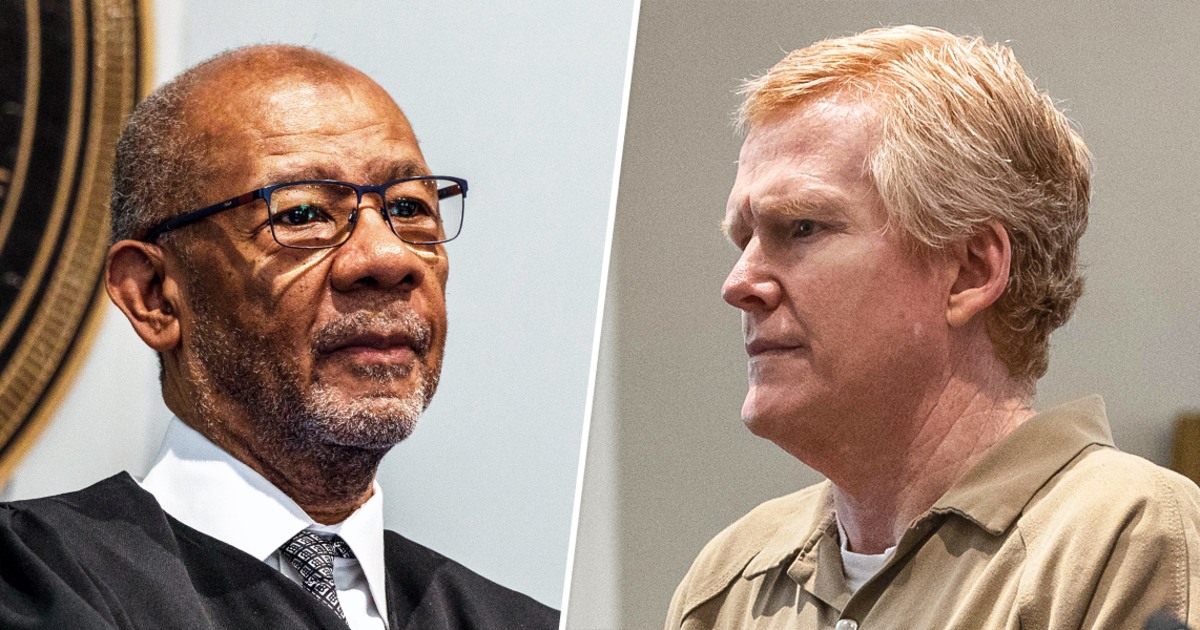
The trial opened in early 2023 in Colleton County, South Carolina, before Judge Clifton Newman.
Alex Murdaugh faced two counts of murder and two counts of possession of a weapon during the commission of a violent crime.
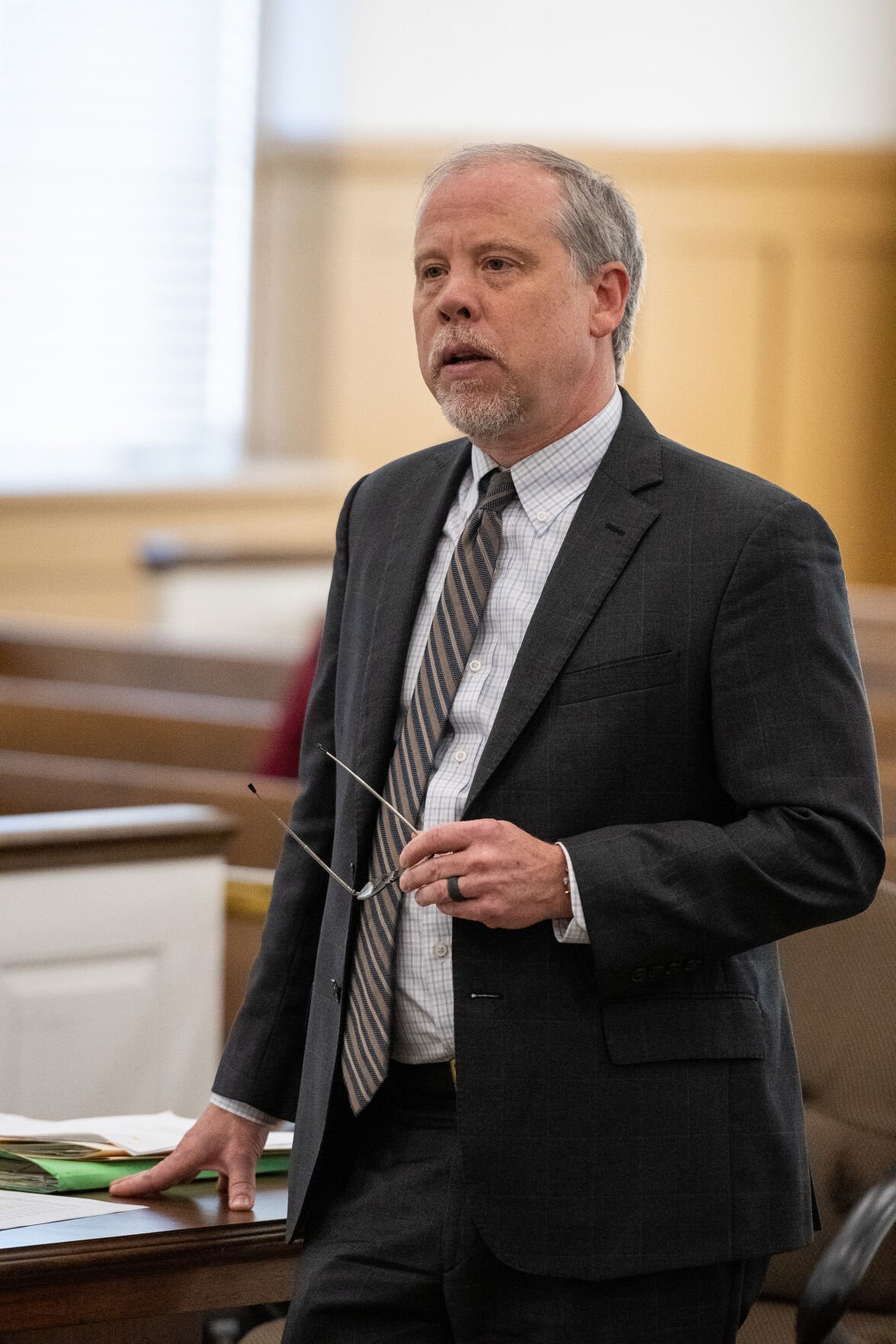
Creighton Waters led the prosecution.
He presented the cellphone video, the ballistics evidence, and testimony from the medical examiner, who detailed the wounds.
The medical examiner's testimony detailed the wounds; the record does not go further into its specifics.
The defense argued that Alex was a grieving husband and father.
The defense argued that the state had no direct evidence.
The defense's full argument is not fully captured in this record.
The jury deliberated.
On March 2, 2023, the jury found Alex guilty on all four counts.
Judge Newman sentenced him to two consecutive life sentences without the possibility of parole.
The verdict was final.
The video was decisive.
The timeline was decisive.
The admission was decisive.
The clothing's absence answered nothing, but the record had already closed.
AND THE STORY STILL ISN'T OVER
The verdict landed on March 2, 2023.
The jury found him guilty on all four counts.
Judge Clifton Newman sentenced him to two consecutive life sentences without parole.
Alex Murdaugh is serving those sentences at a South Carolina prison today.
His appeals have been denied to date.
That is where the murder case stands, and that is where the record closes.
The story does not end there.
Separately, Murdaugh has pleaded guilty or been convicted of numerous federal and state financial crimes, including fraud and money laundering.
He has been sentenced to additional prison time for those.
The legal and financial empire his family built has collapsed.
Civil lawsuits are ongoing.
Forfeiture proceedings are ongoing.
Buster Murdaugh, the surviving son, has remained publicly supportive of his father.
The coverage has not stopped either.
Documentaries have been made.
Podcasts have been produced.
The case has been examined from every angle the medium allows.
No new evidence has emerged to change the outcome.
None has been presented in any court.
The viral theories remain theories.
The record does not establish anything beyond what the jury found and the appeals court has denied.
It is a closed case.
It is also an open wound.
The financial cases grind forward, and the civil suits name the family and its holdings.
What remains is the consequence, not the question.
The question of guilt was answered in a Colleton County courtroom.
The question of what else the evidence might have shown was answered by the trial itself.
The 8:44 p.m. video did its work.
The timeline did its work.
The admission did its work.
And the record, for now, is finished.
Advertisement
You may also like
The boat bought days before Laci vanished — and the alibi that unraveled in court
The mop sat in the garage of the Modesto home, and next to it, a boat trailer with fresh paint. Police found both during…
The beauty queen's parents who spent 25 years demanding a murder trial
On February 17, 1970, at Fort Bragg, North Carolina, Army Captain Jeffrey MacDonald, a Green Beret physician, reported that four intruders — three men…
The grand jury that reviewed Adam Walsh's evidence but issued no indictment
On July 27, 1981, six-year-old Adam Walsh was watching television with other children in the Sears department store at the Hollywood Mall in Hollywood,…
The circuit board fragment from a toy car that cracked the Boston bombing case
The fragment was small enough to fit in a palm. It was a piece of a circuit board, recovered from the blast sites along…
The 'foolproof suffocation' search that hung over Casey Anthony's trial
The search term sat on Casey Anthony's home computer, logged and time-stamped by forensic examiners. "Foolproof suffocation." Investigators presented it at trial as a…
The love letters found by a crabapple tree — and the witness who said the bodies were moved
The crabapple tree stood in a place people called Lovers' Lane. On September 16, 1922, the bodies were found beneath it, in a secluded…