The beauty queen's parents who spent 25 years demanding a murder trial
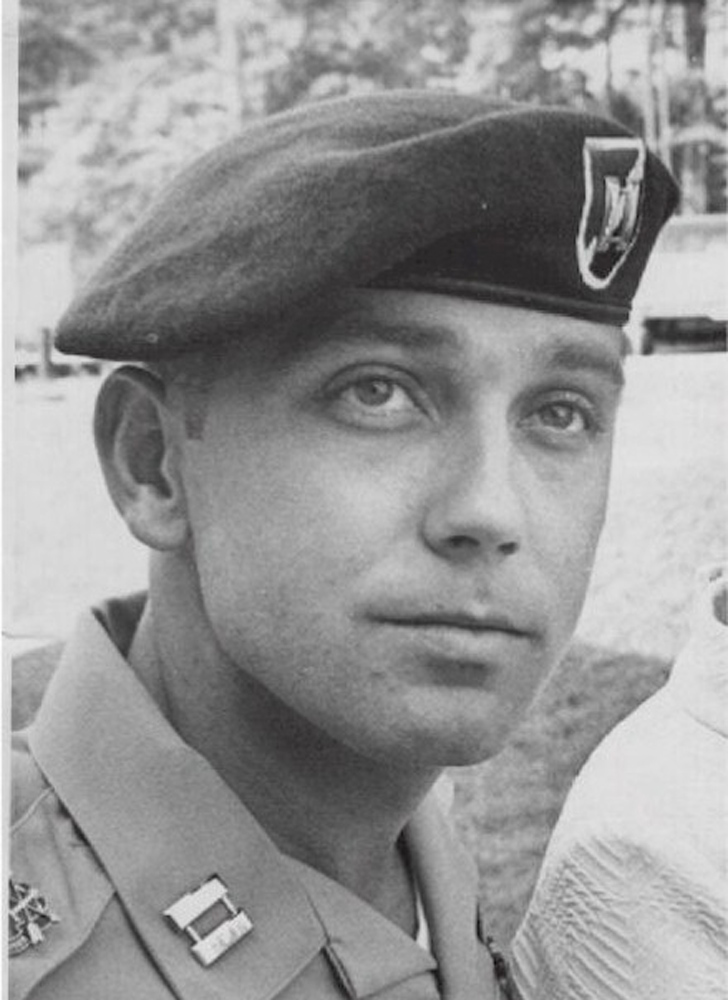
On February 17, 1970, at Fort Bragg, North Carolina, Army Captain Jeffrey MacDonald, a Green Beret physician, reported that four intruders — three men and a woman — attacked his family in their on-base home.
When military police arrived, they found MacDonald's pregnant wife, Colette, and their two daughters, 5-year-old Kimberly and 2-year-old Kristen, dead from multiple stab wounds and blunt-force injuries.
MacDonald himself had minor injuries.
He claimed the intruders chanted "acid is groovy" and killed his family.
The alleged intruders were never identified.
They were never charged.
The identity of the four intruders is not established by the record.
Only one person was ever charged in the deaths.
That person was Jeffrey MacDonald.
Colette was a former beauty queen and a teacher.
Her parents became the most persistent advocates for prosecution.
They were convinced MacDonald was guilty.
Their campaign for a murder trial would last 25 years.
Why were they so certain?
What did they know that the first investigation missed?
What made a grieving mother and father turn their fury on their son-in-law?
That would require evidence.
The Army's initial investigation accepted MacDonald's account of intruders.
Colette's parents pressured authorities to re-examine the case.
They pushed.
They lobbied.
They refused to let the case close.
The plea never stopped.
THE FIRST INVESTIGATION
The Army's initial investigation, led by CID agent Franz Grebner, accepted MacDonald's account of intruders.
Grebner believed the story of three men and a woman who chanted "acid is groovy."
The physical evidence told a different story.
There were no intruder footprints outside the home.
The bodies were positioned in ways that did not match the chaos of a random attack.
MacDonald's own injuries were minor, superficial, the kind a man could inflict on himself.
Prosecutors later argued those injuries were self-inflicted.
That is an argument, not a documented fact.
The weapons were never recovered.
In 1970, an Article 32 hearing was convened, led by Army prosecutor Victor Woolridge.
Woolridge recommended charges.
The Army dropped them for insufficient evidence.
MacDonald walked away, still a captain, still a physician, still a free man.
Colette's parents did not walk away.
They pressed authorities.
They asked questions the Army seemed unwilling to ask.
Why no footprints?
Why the folded pajama top placed near Colette's body, which prosecutors later said indicated staging?
Why did the story hold together so poorly under scrutiny?
They lobbied.
They refused to let the case close.
In 1974, the case was reopened.
It took four years of pressure from the victim's family to get there.
The frustration is easy to feel: the first investigation accepted the intruder story despite physical inconsistencies.
The parents saw what the record showed.
They would not stop until someone else saw it too.
THE REOPENING AND THE TRIAL
The parents kept pushing.
They wrote letters.
They made phone calls.
They flew to Washington.
They asked why no one had been charged.
In 1974, the case was reopened.
A federal grand jury indicted MacDonald in 1975.
The trial came in 1979.
It happened in federal court in Raleigh, North Carolina.
Prosecutors Brian Murtagh and James Blackburn laid out their case.
They argued MacDonald killed his family in a rage.
They said Colette had confronted him about his infidelity.
That motive is a prosecution argument.
The record does not establish it as fact.
The defense attorney, Bernard Segal, told the jury the intruder story.
Four strangers, he said. A woman and three men.
The prosecution pointed to the physical evidence.
No intruder footprints.
A folded pajama top placed near Colette's body.
Injuries that looked self-inflicted.
The jury deliberated.
They came back with a verdict.
Guilty on three counts of first-degree murder.
Three consecutive life sentences.
The parents got what they had fought for.
A conviction.
A man held responsible for their daughter's death.
For their grandchildren's deaths.
It was vindication.
It was also the beginning of a longer fight.
MacDonald has never stopped saying he is innocent.
The parents died without seeing him exonerate him.
They died with the conviction intact.
THE TWO STORIES
The prosecution told the jury one story.
MacDonald killed his family in a rage, they argued, after Colette confronted him about his infidelity.
The folded pajama top found near Colette's body was the proof of staging, prosecutors said.
It was arranged, they argued, to make the scene look like an intruder's work.
The defense told another story entirely.
Four intruders — three men and a woman — attacked the family, MacDonald's lawyers argued.
His own injuries were from the struggle, not from staging.
The medical examiner who testified was Dr. Charles Petty, and bloodstain analysis was part of the trial evidence.
Two narratives, each irreconcilable with the other.
The truth of the intruder story is not established.
The weapons were never recovered.
That is what the record does not contain.
The jury heard both stories and chose the prosecution's.
They convicted MacDonald of three counts of first-degree murder.
The conviction was upheld on appeal, including a 1982 Supreme Court decision.
MacDonald has never stopped saying he is innocent.
The parents died without seeing him exonerate him.
They died with the conviction intact.
Was the pajama top folded or merely fallen?
Was his injury a wound or a self-inflicted cut?
That would require evidence the record does not provide.
The case remains two stories, told against each other.
Only one was ever proven to a jury's satisfaction.
AND THE STORY STILL ISN'T OVER
Jeffrey MacDonald remains in federal prison, serving three consecutive life sentences.
His appeals have been denied repeatedly.
In 2006, he filed a motion based on DNA evidence he argued supported his intruder story.
Courts rejected it.
Colette's parents both died without seeing him exonerated.
They spent twenty-five years demanding a murder trial.
They got one.
They did not get the ending they campaigned for, and neither did MacDonald.
The case remains one of the most debated in American criminal history.
Supporters and detractors are still active.
Whether MacDonald is guilty or innocent is not established by the record.
His conviction stands.
His claims persist.
Both things are true at once.
The books became part of the case's cultural legacy.
One author embedded with MacDonald and later concluded he was guilty.
Another wrote about that author, and about the ethics of the arrangement.
Neither book settled the argument.
The parents' campaign ended in death.
The debate did not.
It is a case that outlived its central witnesses.
It is a case that outlived its most persistent advocates.
The record holds one conviction and one story of intruders.
The record does not hold proof either way.
That would require evidence the record does not provide.
Advertisement
You may also like
One body in a vacant lot, and the last call Elizabeth Short ever made
She was found at 39th Street and Norton Avenue, in a vacant lot in the Leimert Park area of Los Angeles. A woman walking…
The neighbor's camera that contradicted Christopher Watts's timeline — and the confession that followed
A neighbor’s security camera saw Shanann’s blue Ford Escape leave the home that morning. Christopher Watts told police he left for work at 5:15…
The Ryder truck axle that cracked the Oklahoma City bombing case
The rear axle of the Ryder truck came to rest somewhere in the rubble, and the record does not specify exactly where. It was…
The ransom money that led police to a carpenter's garage — and the ladder that wouldn't fit the story
The gold certificate bill was spent at a gas station. It was September 1934, more than two years after the kidnapping. The attendant noticed…
The waiter who returned sunglasses and never came home: Ronald Goldman's last errand
A pair of sunglasses left at a restaurant. A waiter running them back to the owner's daughter. On the night of June 12, 1994,…
The blood-stained knife found in Arthur Leigh Allen's home that never sealed the Zodiac case
The knife came out of Arthur Leigh Allen’s home in 1991, and it was bloody. A Vallejo task force found it during a search…