The neighbor's camera that contradicted Christopher Watts's timeline — and the confession that followed
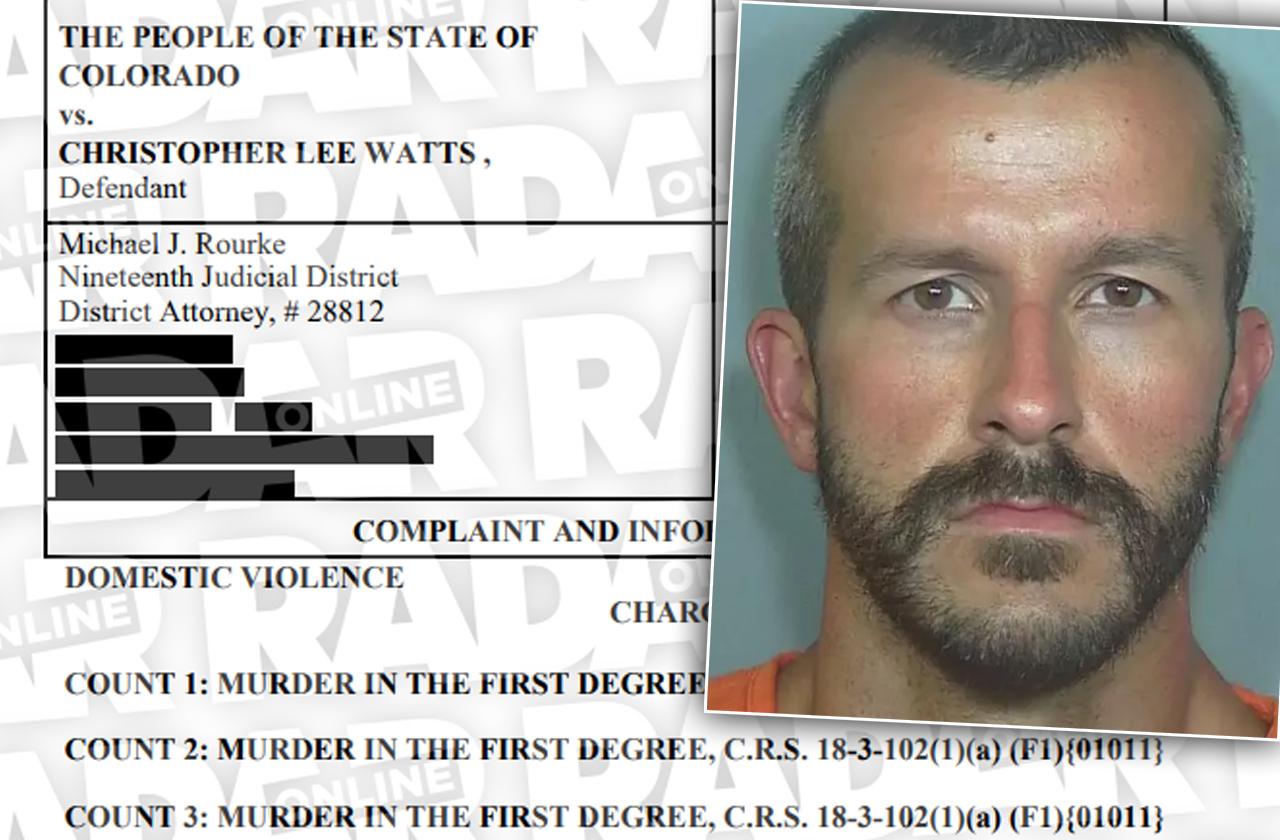
A neighbor’s security camera saw Shanann’s blue Ford Escape leave the home that morning.
Christopher Watts told police he left for work at 5:15 a.m. and hadn’t seen his family.
The footage showed the truck leaving—not his own.
The exact time the truck left and who was driving are not specified in the record.
That distinction mattered.
Watts had said he drove his own truck to work that morning.
The camera did not agree.
Detectives noted the inconsistency in his timeline and his demeanor.
They had found Shanann’s purse and phone in the home, and her car seat in the garage.
A woman who lived nearby had a camera that kept its own hours.
It recorded the driveway, the street, the morning light.
What it recorded did not match the story.
Watts failed a polygraph test administered by the Frederick Police Department.
On August 15, 2018, he was arrested after being confronted with the evidence.
He confessed to killing Shanann and the girls.
He led investigators to the oilfield site where the bodies were found.
A simple camera had done its part.
It had not decided anything on its own.
But it had made the story harder to tell.
THE MISSING REPORT
The friend went to the family home on August 13, 2018.
She went because Shanann Watts had failed to show up for a doctor's appointment.
She found no one there and reported the family missing.
Police found Shanann's purse and phone inside the home.
They found her car seat in the garage.
The house was otherwise empty.
Christopher Watts said he had left early for work that morning.
He said he did not know where his family was.
He said it plainly, and he said it on camera.
Over the following days, Watts gave television interviews pleading for their return.
He looked into the lens and asked for help.
Detectives watched him.
They noted inconsistencies in his timeline.
They noted inconsistencies in his demeanor.
A man whose wife and daughters were missing should be frantic.
He was not frantic.
He was calm.

He was cooperative.
He was measured in a way that did not fit the moment.
The friend's name is not used in this article.
The exact time of the missing person report is not specified.
Those details are not in the record that survives.
What is in the record is the shape of the morning.
A woman gone.
A house left with her phone and her purse.
A husband who had already left.
A friend who came looking because Shanann had not.
That is where the investigation began.
THE CONTRADICTION
The neighbor's camera did not show Christopher Watts's truck.
It showed Shanann's blue Ford Escape leaving the home early that morning.
Watts had told police he drove his own truck to work that day.
The footage contradicted his timeline.
It contradicted his words.
It contradicted everything he had said on television while pleading for his family's return.
The Frederick Police Department administered a polygraph test.
Watts failed it.
The exact questions on that test are not in the record.
The specific details of the confrontation that followed are not in the record either.
What is in the record is what happened next.
On August 15, 2018, Watts was arrested.
He was confronted with the evidence, according to the investigation.
He confessed.
He confessed to killing Shanann.
He confessed to killing the girls.
He led investigators to an oilfield site in Weld County.
That is where the bodies were found.
The lies collapsed.
The truth began to surface.
Not because the camera showed everything.
But because it showed enough.
THE CONFESSION AND THE EVIDENCE
He confessed on August 15, 2018.
First, he said he had killed Shanann in a rage after she killed the girls.

Later, he admitted to killing all three.
The autopsies conducted by Dr. William B. Anderson determined that Shanann had been strangled.
The girls had been smothered.
No weapon was used.
The prosecution's case rested on Watts's confession, the neighbor's surveillance footage, and the physical evidence at the oilfield site.
It rested on what he said.
It rested on what the camera showed.
It rested on what the bodies told the medical examiner.
Watts was charged with three counts of first-degree murder.
He was also charged with one count of unlawful termination of a pregnancy.
He initially entered a not guilty plea.
On November 6, 2018, he changed that plea to guilty.
The deal was simple: prosecutors agreed not to seek the death penalty.
The exact sequence of events on the morning of the murders is not fully established beyond the confession.
Not the order of the killings.
Not the moments between them.
Not the final words.
That would require evidence the record does not provide.
What the record does provide is a guilty plea, entered in open court, with the weight of the evidence behind it.
The confession was the hinge.
The camera footage was the contradiction.
The autopsy findings were the confirmation.
AND THE STORY STILL ISN'T OVER
On November 19, 2018, Judge Marcelo Kopcow sentenced Watts to life in prison without the possibility of parole for the murders of Shanann and the two girls.
The judge added 48 years for the unlawful termination of pregnancy, to be served consecutively.
Watts was ordered to pay restitution.
He was immediately transferred to the Colorado Department of Corrections.
In 2019, he was moved to the Dodge Correctional Institution in Wisconsin.
The transfer was due to safety concerns in Colorado.
He has not been granted parole, and he is not eligible for it.
Shanann's parents have spoken publicly about the case.
They have also been involved in advocacy around domestic violence awareness.
The specific advocacy efforts of the family are not detailed in the record.
The family home in Frederick was sold.
The case has been the subject of extensive media coverage, including documentaries and news specials.
The camera footage was the contradiction that broke his story.
The confession was the hinge that closed it.
The sentence was the end of the legal case.
The impact is not over.
Advertisement
You may also like
The tarot card left at a D.C. sniper crime scene that said 'Call me God'
The card was on the ground at a crime scene in Montgomery County. A tarot card, face up, with a message written across it:…
The cell phone records that placed a suspect near Leakin Park — but one witness kept changing his story
January 13, 1999, was a school day. Hae Min Lee, an 18-year-old senior at Woodlawn High School in Baltimore County, Maryland, was last seen…
The parole agent who saw a sketch and stopped a car — then Polly Klaas's killer led police to her body
The parole agent saw the car first. A sketch, a tip, and a car on the road — that was the break. On November…
The cellmate tip that cracked the Clutter case after investigators ignored a footprint
The footprint was there on the night of November 15, 1959, inside the farmhouse near Holcomb, Kansas. Four members of the Clutter family were…
The cell tower records that placed Adnan Syed at Leakin Park — and the witness who changed his story
The phone call came on February 12, 1999. Baltimore County police picked up an anonymous tip that day, and the voice on the line…
The jailhouse informant's testimony that could not save Casey Anthony
She sat in the witness box and testified that Casey Anthony had made incriminating statements while in jail. Her name was Robyn Adams, a…