The blood-stained knife found in Arthur Leigh Allen's home that never sealed the Zodiac case
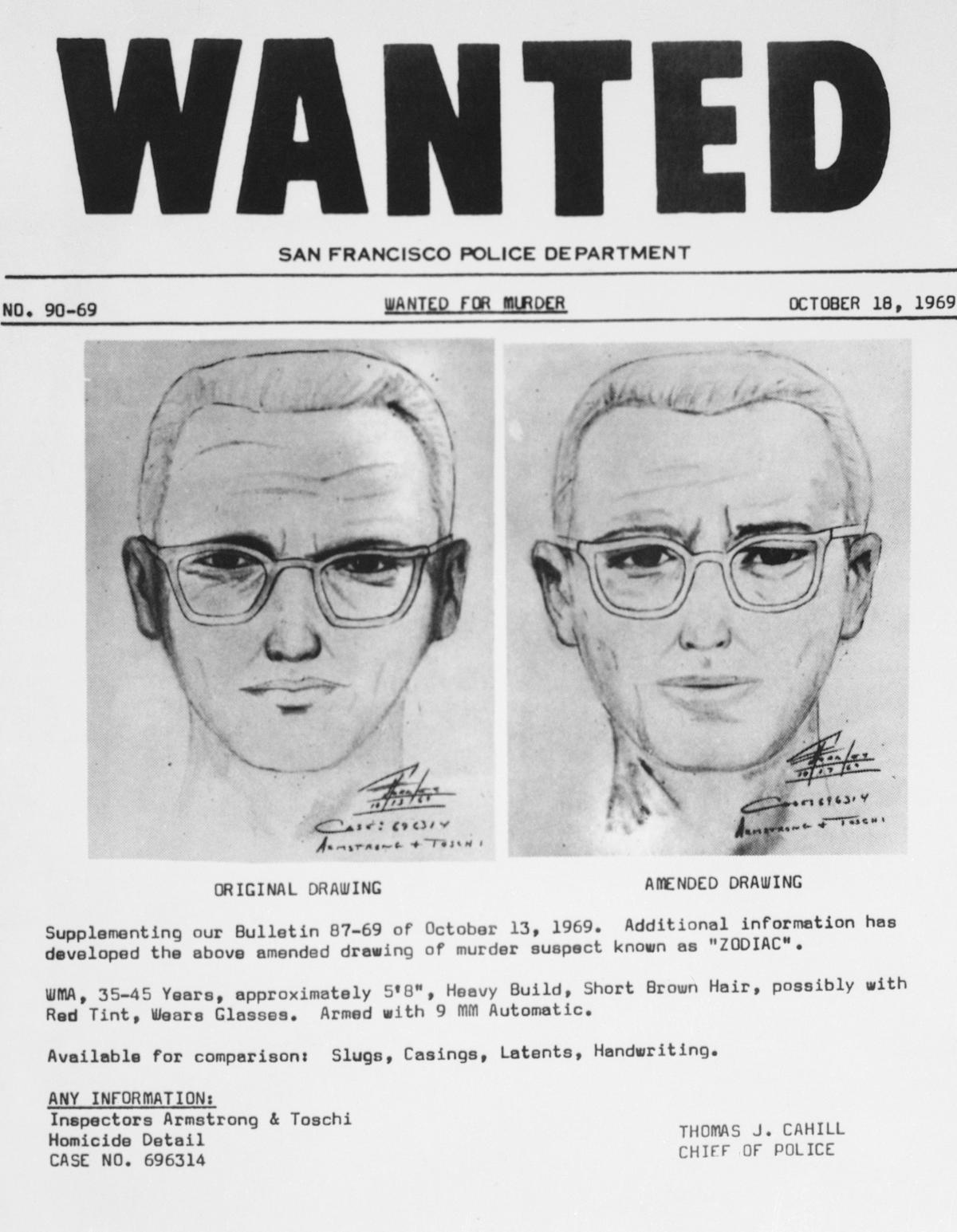
The knife came out of Arthur Leigh Allen’s home in 1991, and it was bloody.
A Vallejo task force found it during a search of the suspect’s house, part of the long investigation into the Zodiac murders that spanned California from December 1968 to October 1969.
They also found a hooded costume.
The discovery fueled suspicion; it looked like something out of the case file.
But no conclusive evidence ever linked the knife to the crimes.
The source does not establish that the knife was used in any Zodiac attack.
It does not specify whose blood was on it.
It does not even say exactly where in the home the knife was found, or describe its condition beyond that single word: bloody.
A survivor had picked Allen from a photo lineup, and the task force, including a Vallejo detective, had focused on him.
The knife seemed to fit a pattern.
It was evidence of something.
It was not evidence of the Zodiac.
Allen was never charged with any of the murders.
He died in 1992, a year after the search.
The knife sits in the record as a question mark—a blood-stained object that pointed at a man but proved nothing about him.
THE ATTACKS AND THE LETTERS
Between December 1968 and October 1969, a serial killer known as the Zodiac murdered at least five people in the San Francisco Bay Area.
The confirmed attacks were shootings at a remote road in Benicia, then at Blue Rock Springs Park in Vallejo.
Then a stabbing at Lake Berryessa.
Then the shooting of a taxi driver in San Francisco's Presidio Heights.
The killer sent taunting, cryptogram-laden letters to newspapers.
He coined the name "Zodiac" himself, in his own hand.
Police linked the attacks through ballistics, survivor testimony, and the killer's own letters.
Ballistics matched some of the shootings. Survivors described the same man. The letters claimed the rest.
One cipher, cracked by a Salinas schoolteacher and his wife, contained a boastful confession.
It read as a claim of authorship over the murders.
The killer's identity is not established in the record.
No one was ever arrested or tried for the murders.
No trial occurred, so there were no prosecutors, no defence attorneys, no judge.
The letters were the closest thing to a witness statement.
They were taunting. They were cryptogram-laden. They were audacious.
Each envelope widened the fear.
The taxi driver's killing came eleven days after the Lake Berryessa stabbing.
The killer wrote again.
The record holds his words, his ciphers, his claimed body count.
It does not hold his name.
THE SUSPECT AND THE SEARCH
The task force in Vallejo turned to Arthur Leigh Allen in 1991.
A surviving victim had picked him from a photo lineup.
Detective Jack Mulanax was part of that task force.
The search of Allen's home found a bloody knife.
The search also found a hooded costume.
That was the evidence, and that was all the evidence.
The source does not establish that the knife or the costume were connected to any specific crime.
It does not establish that the knife carried a victim's blood.
It does not establish that the costume was worn at any attack.
It does not establish that Allen owned them with any intent.
The knife was bloody. The costume was hooded. The link was missing.
Allen was never charged with any of the Zodiac murders.
There was no trial, no prosecution, no defence, no judge.
He died in 1992.
How could this not be enough?
How could a bloody knife and a hooded costume fail to close a case?
How could a survivor's identification fail to hold?
Because identification is not proof.
Because a knife is a knife until a record ties it to a crime.
Because suspicion, no matter how strong, is not a conviction.
The record holds the search.
It holds the knife and the costume.
It holds the unanswered question of what they meant.
THE DNA EXCLUSION
In 2002, DNA testing excluded Arthur Leigh Allen as the source of biological material from the Stine crime scene.
The exclusion came a decade after Allen died, in 1992.
He was never charged with any of the Zodiac murders.
There was no trial.
No prosecutor presented a case against him.
No defence attorney answered one.
The San Francisco Police Department officially closed the Zodiac case in 2004.
It has been reopened and closed multiple times since.
No one has ever been convicted of any of the Zodiac murders.
The case remains officially unsolved.
Does the DNA exclusion settle it?
Does it clear Allen of everything?
Does it prove he was never at any crime scene?
That would require evidence.
The record does not establish that Allen was the Zodiac.
The DNA evidence excludes him from one crime scene.
It does not definitively rule him out from all attacks.
The knife and the costume remain in the record.
They remain unexplained by any trial.
They remain unexplained by any conviction.
The source does not establish that Allen was the Zodiac.
The source establishes only what the test showed.
One test.
One crime scene.
One suspect, cleared after death.
AND THE STORY STILL ISN'T OVER
The San Francisco Police Department closed the Zodiac case in 2004.
It has been reopened and closed multiple times since.
The FBI has revisited the case periodically.
The file stays open in the way that unsolved things stay open.
Books are written about the Zodiac.
Documentaries are made about the Zodiac.
Amateur investigators trade theories in forums and podcasts.
No definitive suspect has emerged.
The survivors have spoken.
The survivor of the Blue Rock Springs shooting described the attack in interviews.
The survivor of the Lake Berryessa stabbing described the attack in interviews.
They named a suspect from a photo lineup.
That suspect was never charged.
He was cleared by DNA after his death.
The case is closed.
The case is also open.
Every new documentary asks the same question.
Every new book asks the same question.
Every new amateur theory asks the same question.
The answer requires evidence that the record does not contain.
The source material does not provide a specific next step.
There is no hearing date.
There is no pending motion.
There is only the absence of a name.
One suspect was cleared after death.
One test excluded him.
One crime scene still holds its secret.
Advertisement
You may also like
The tarot card left at a D.C. sniper crime scene that said 'Call me God'
The card was on the ground at a crime scene in Montgomery County. A tarot card, face up, with a message written across it:…
The cell phone records that placed a suspect near Leakin Park — but one witness kept changing his story
January 13, 1999, was a school day. Hae Min Lee, an 18-year-old senior at Woodlawn High School in Baltimore County, Maryland, was last seen…
The parole agent who saw a sketch and stopped a car — then Polly Klaas's killer led police to her body
The parole agent saw the car first. A sketch, a tip, and a car on the road — that was the break. On November…
The cellmate tip that cracked the Clutter case after investigators ignored a footprint
The footprint was there on the night of November 15, 1959, inside the farmhouse near Holcomb, Kansas. Four members of the Clutter family were…
The cell tower records that placed Adnan Syed at Leakin Park — and the witness who changed his story
The phone call came on February 12, 1999. Baltimore County police picked up an anonymous tip that day, and the voice on the line…
The jailhouse informant's testimony that could not save Casey Anthony
She sat in the witness box and testified that Casey Anthony had made incriminating statements while in jail. Her name was Robyn Adams, a…