The ransom money that led police to a carpenter's garage — and the ladder that wouldn't fit the story
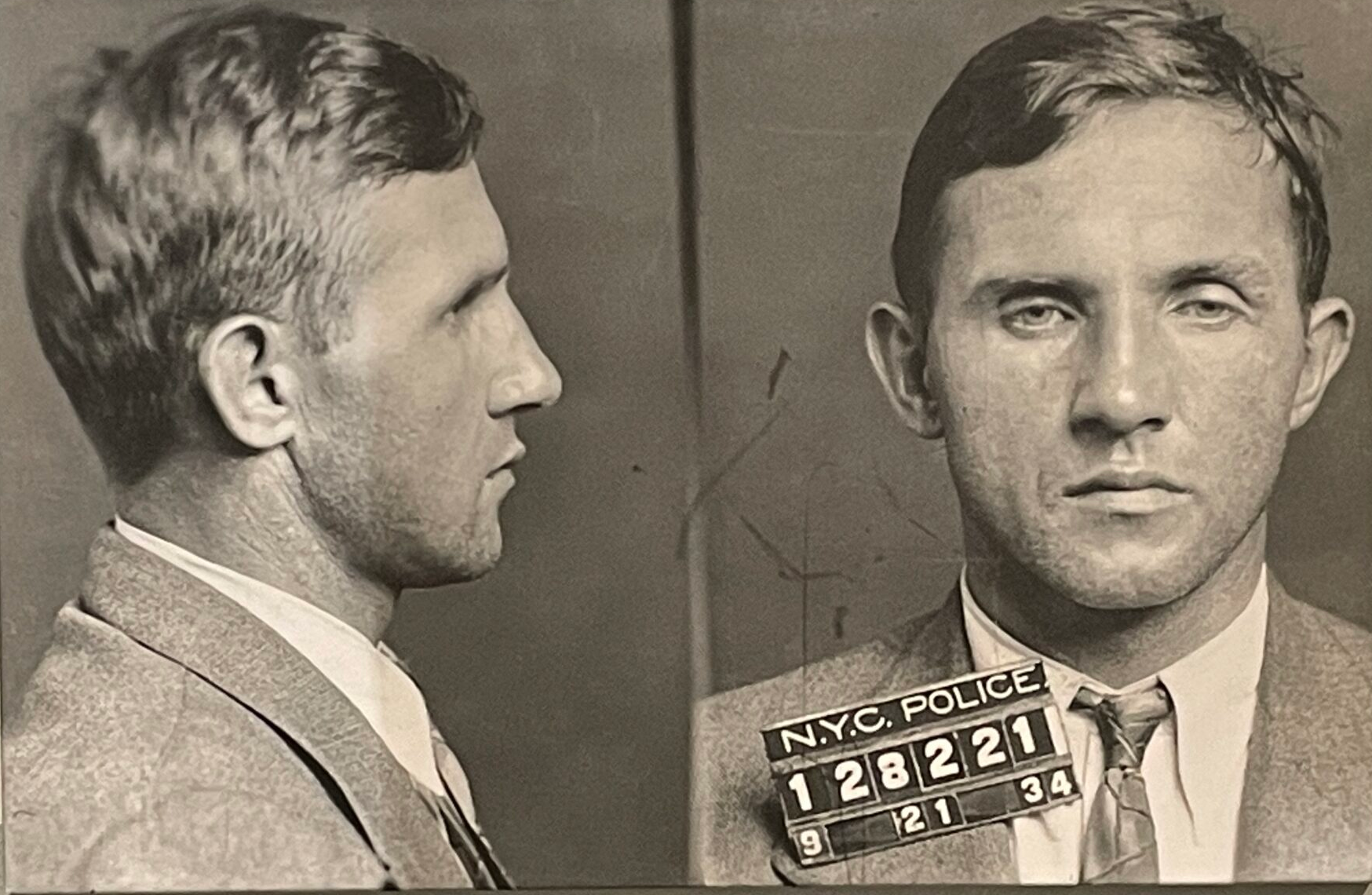
The gold certificate bill was spent at a gas station.
It was September 1934, more than two years after the kidnapping.
The attendant noticed the bill and wrote down a license plate number.
That plate led police to Bruno Richard Hauptmann.
He was a German immigrant carpenter living in the Bronx.
The bill was part of the $50,000 ransom.
That money had been delivered through Dr. John F. Condon, a retired Bronx schoolteacher.
Condon had acted as the intermediary.
The case had gone cold by then.
Two years of dead ends, cleared servants, and public suspicion.
Then a single piece of paper at a filling station.
It is not established that Hauptmann was the only person who spent the ransom money.
It is not established that the gas station attendant's sighting was the sole reason for the arrest.
What is documented is the bill, the plate, and the arrest.
The money had been marked, part of the recorded ransom.
Its appearance in circulation was the break the investigation needed.
Or so the record suggests.
The attendant's role is documented in the investigation record.
The arrest followed.
The carpenter said he was innocent.
That claim would carry him through a trial, an appeal, and to the electric chair.
But in September 1934, none of that had happened yet.
There was just a bill, a license plate, and a man.
THE NURSERY AND THE NOTE
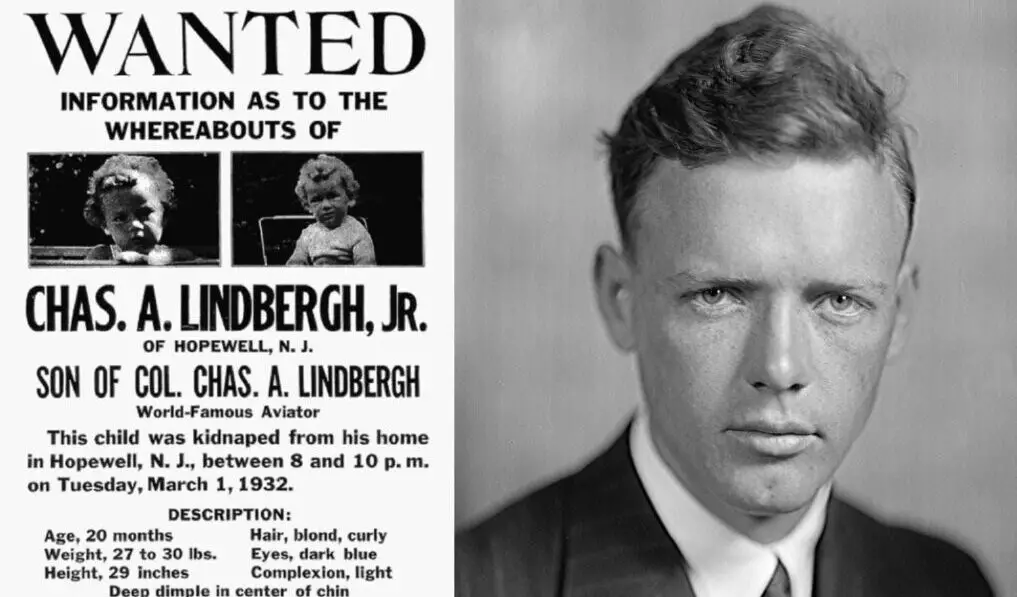
On the evening of March 1, 1932, Charles Lindbergh Jr., the 20-month-old son of aviator Charles Lindbergh and Anne Morrow Lindbergh, was taken from his crib in the nursery of the family home in Hopewell, New Jersey.
Anne discovered the child missing around 10 p.m.
The exact time the child was taken is not established; only that Anne discovered the child missing around 10 p.m.
A ransom note demanding $50,000 was left on the windowsill.
The investigation was led by the New Jersey State Police, with Colonel H. Norman Schwarzkopf as superintendent.
A significant mistake early on was the failure to secure the crime scene.
The nursery was contaminated by numerous people before forensic examination.
The room where a child vanished was trampled before anyone could read it.
Police initially focused on the Lindbergh household staff, including the child's nurse and other servants.
They were cleared.
The case went cold for over two years.
There was a note, a nursery, and a ladder that wouldn't fit the story.
THE CEMETERY MEETING
A second ransom note appeared, and Dr. John F. Condon, a retired Bronx schoolteacher, offered to act as intermediary.
Condon delivered the ransom money.
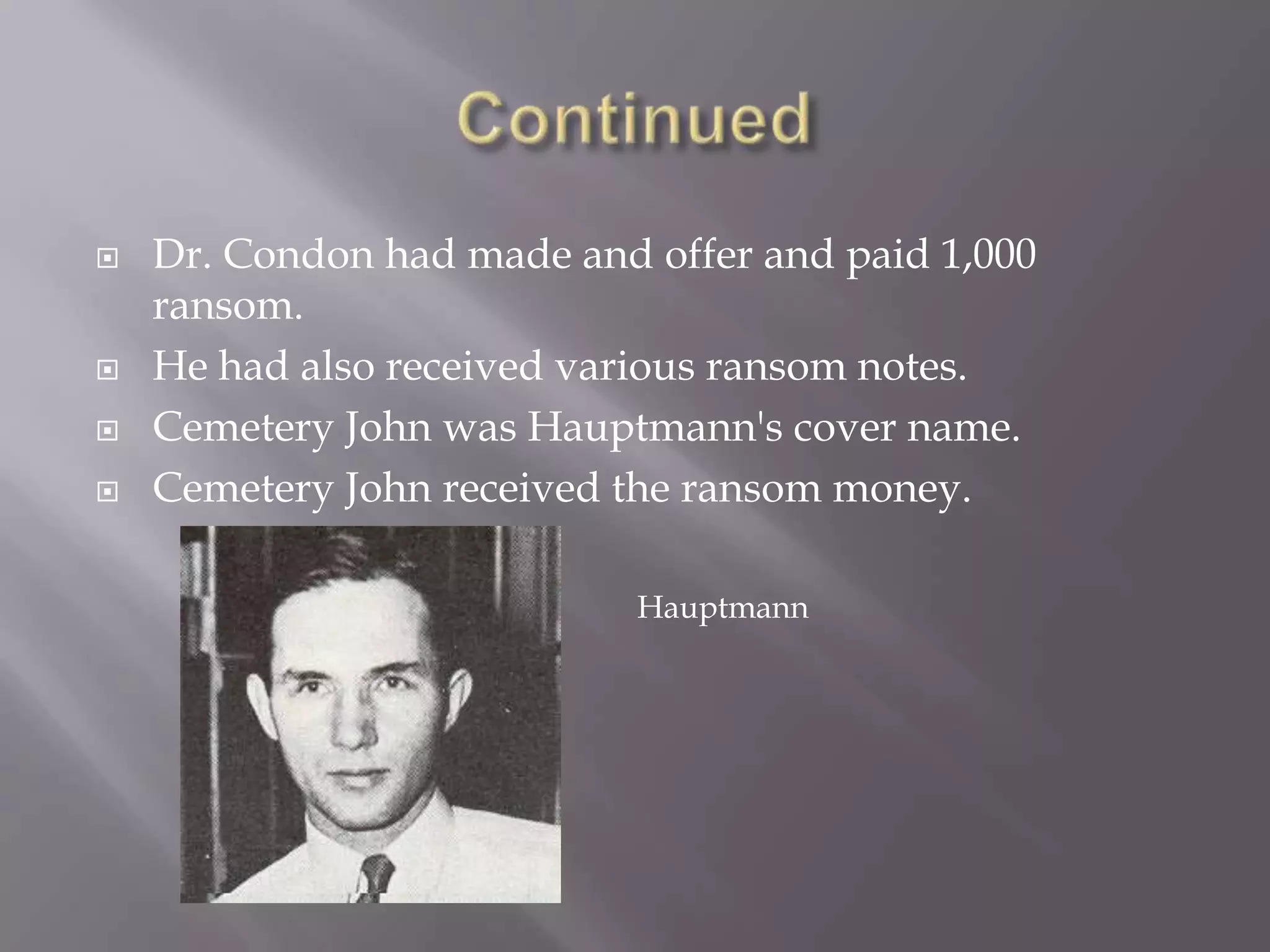
At trial, Condon testified and identified Hauptmann as the man he met in a cemetery to deliver the ransom.
That identification is Condon's testimony.
It is not established that the man Condon met in the cemetery was definitively the kidnapper.
The money was handed over in the dark, and the case went cold.
Then, on May 12, 1932, the child's body was found in a shallow grave about four and a half miles from the house, in woods near Mount Rose, New Jersey.
The cause of death was a blow to the head, likely from a fall or impact.
The ransom had been paid, and the child was already dead.
The intermediary's word would later become the hinge of the prosecution's case, but the meeting itself left no other witnesses.
The grave was the turning point no one had wanted.
The money passed hands in a cemetery; the body was found in the woods.
One identification stood between the accused and the electric chair.
THE LADDER AND THE GARAGE
The prosecution built its case on the ransom money found in Hauptmann's garage.
It built it on handwriting analysis.
It built it on the testimony of Dr. Condon, the intermediary who said he met Hauptmann in a cemetery.
The ladder was the object that was meant to hold it all together.
The homemade ladder used to reach the nursery window was traced to wood from Hauptmann's attic.
That was the claim.
It was also contested.
The source states the ladder's wood was "traced" to the attic, but it does not establish that the tracing was sound.
What remains is a piece of evidence with two competing stories built around it.
The defense argued that Hauptmann was framed.
The defense argued that the evidence was circumstantial.
The defense argued that the ransom money had been planted.
Not because the defense had a better story.
But because a pile of cash and a wooden ladder could be made to point in either direction.
The trial began on January 2, 1935, in Flemington, New Jersey.
It lasted five weeks.
Prosecutors presented over 160 witnesses.
The defense presented a man who said he was innocent.
One identification stood between the accused and the electric chair.
A ladder that wouldn't fit the story.
A garage full of cash that could have been placed there.
That would require evidence — and the record does not settle which version holds.
AND THE STORY STILL ISN'T OVER
On February 13, 1935, the jury found Hauptmann guilty of first-degree murder.
He was sentenced to death.
Appeals and motions for a new trial were denied.
Hauptmann was executed in the electric chair at the New Jersey State Prison in Trenton on April 3, 1936.
He maintained his innocence to the end.
It is not established that Hauptmann was guilty beyond all doubt.
The source notes that questions about his guilt have persisted.
No official reexamination has changed the verdict.
The case has been the subject of numerous books and documentaries.
The ransom money and the ladder remain in evidence archives.
The money that led police to the garage.
The ladder that wouldn't fit the story.
Both still sit in storage, catalogued and unanswered.
A verdict was delivered.
An execution was carried out.
And yet the questions never died.
They were not resolved by the trial.
They were not resolved by the appeals.
They were not resolved by the decades of books and documentaries that followed.
That would require evidence — and the record does not settle which version holds.
The record settles only what happened in the courtroom.
The record settles only what happened in the prison.
The rest remains what it has always been: a story with a ladder in it, a story with cash in a garage, a story that the archive still holds open.
Advertisement
You may also like
The tarot card left at a D.C. sniper crime scene that said 'Call me God'
The card was on the ground at a crime scene in Montgomery County. A tarot card, face up, with a message written across it:…
The cell phone records that placed a suspect near Leakin Park — but one witness kept changing his story
January 13, 1999, was a school day. Hae Min Lee, an 18-year-old senior at Woodlawn High School in Baltimore County, Maryland, was last seen…
The parole agent who saw a sketch and stopped a car — then Polly Klaas's killer led police to her body
The parole agent saw the car first. A sketch, a tip, and a car on the road — that was the break. On November…
The cellmate tip that cracked the Clutter case after investigators ignored a footprint
The footprint was there on the night of November 15, 1959, inside the farmhouse near Holcomb, Kansas. Four members of the Clutter family were…
The cell tower records that placed Adnan Syed at Leakin Park — and the witness who changed his story
The phone call came on February 12, 1999. Baltimore County police picked up an anonymous tip that day, and the voice on the line…
The jailhouse informant's testimony that could not save Casey Anthony
She sat in the witness box and testified that Casey Anthony had made incriminating statements while in jail. Her name was Robyn Adams, a…