The 'foolproof suffocation' search that hung over Casey Anthony's trial
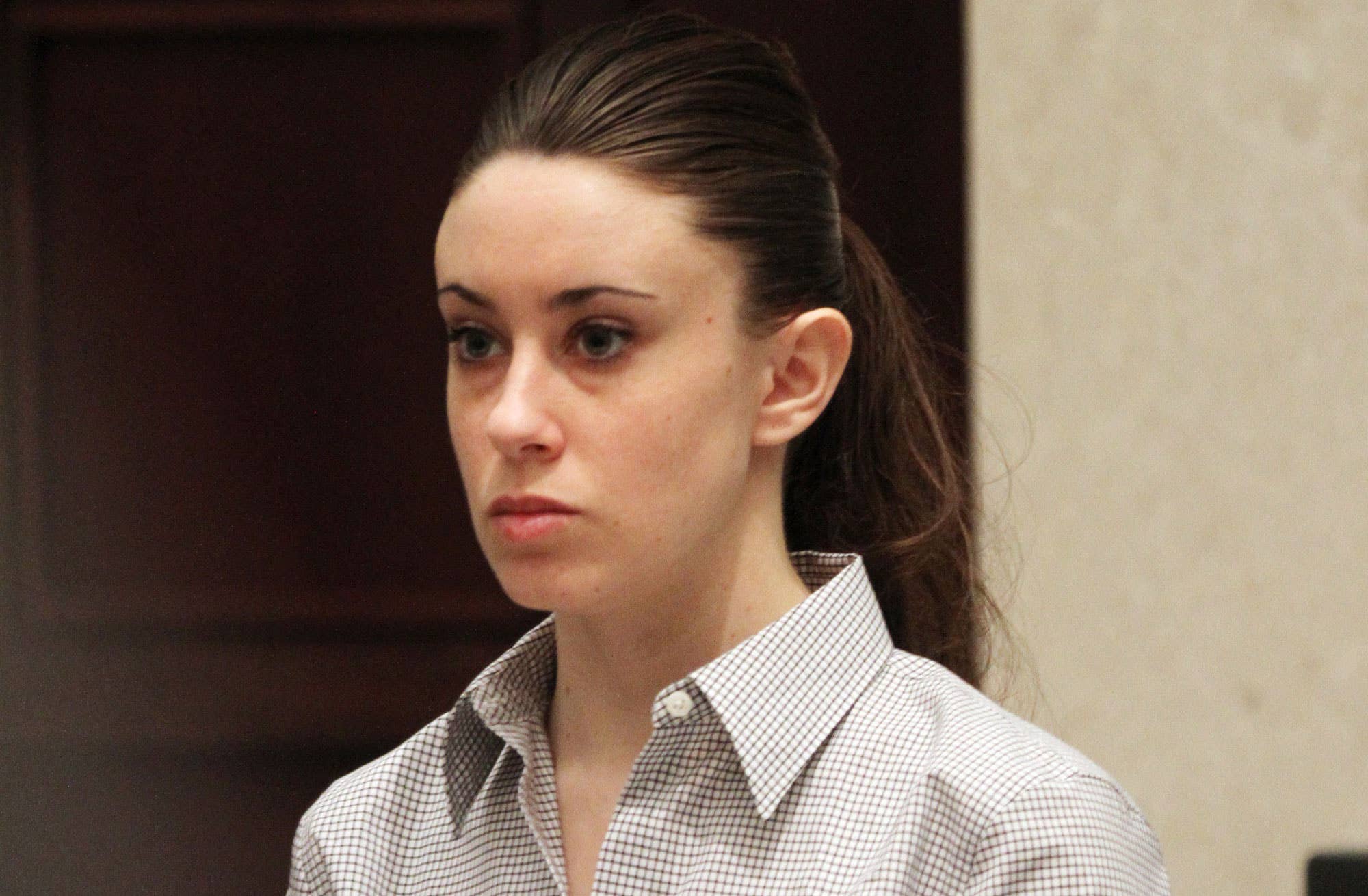
The search term sat on Casey Anthony's home computer, logged and time-stamped by forensic examiners.
"Foolproof suffocation."
Investigators presented it at trial as a turning point.
The phrase appears in the official record of the investigation, pulled from the family's shared computer during the hunt for a missing two-year-old girl.
Caylee Anthony was reported missing on July 15, 2008, when her grandmother called 911 after Casey admitted she had not seen the child for 31 days.
The search was a documented fact.
What the search meant was another matter.
The defense argued it was not conclusive, pointing out that the computer was shared and that a phrase typed into a browser is not a confession.
It is not established that the search reflects intent.
It is not established that it reflects method.
The cause of death was never determined; the medical examiner ruled the death a homicide, but the body was too decomposed to say how she died.
What the record shows is a string of characters on a hard drive.
What the record does not show is who typed it, or why, or what it had to do with the child's death.
That would require evidence.
The search seemed to hold a key.
It opened a door that led nowhere certain.
The unease comes from the gap between what the phrase suggests and what the case actually proved.
A single search, repeated in headlines, reduced to a line in a timeline.
It is a fact.
It is also a question the trial never answered.
THE 911 CALL AND THE MISSING 31 DAYS
The 911 call came on July 15, 2008.
Cindy Anthony told the dispatcher her daughter’s car smelled like death.

She said Casey Anthony had finally admitted she had not seen her daughter for 31 days.
That gap — the missing month — is where the investigation began.
Casey first told police that Caylee had been kidnapped by a nanny named Zenaida Fernandez-Gonzalez.
Investigators determined that person did not exist.
She offered other false leads, including a claim that she dropped Caylee off at an apartment complex.
Detectives checked. Nothing there.
The car was the starting point, the decomposition odor Cindy described in that call.
The 31 days sit between the last time anyone placed Caylee with her mother and the day the family called for help.
What happened inside those 31 days is not established.
The record shows the gap existed.
The record shows Casey lied about it.
The nanny’s existence is disproven, but her role in the story is not established either.
Each false lead pushed the timeline further from explanation.
Each lie gave investigators a new dead end to clear.
The car smelled. The child was gone. The grandmother called.
That is where the evidence begins.
That is also where the answers stop.
THE CAR, THE REMAINS, AND THE DUCT TAPE
The trunk of Casey Anthony’s white Pontiac Sunfire was opened in a forensic bay, and the air changed.
A forensic scientist testified that the trunk contained chloroform.
The same scientist testified that a decomposition odor was present.
The defense argued the odor could have come from a bag of garbage left in the car.
Not because the science was wrong. Because the source was disputable.
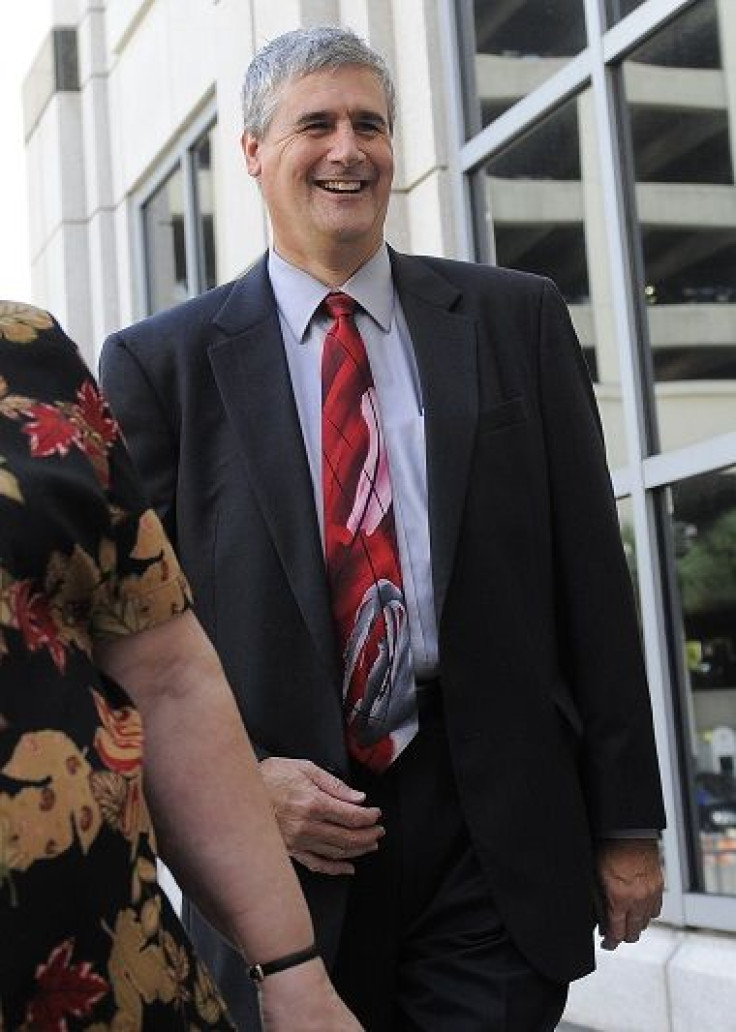
The car pointed somewhere. It did not say where.
On December 11, 2008, a utility worker found skeletal remains in a wooded area less than a mile from the Anthony home.
The remains were identified as Caylee Anthony.
Duct tape was found near the jaw area of the remains.
The medical examiner ruled the death a homicide.
The cause of death could not be determined because the body was too decomposed.
So the tape was there. What the tape did is not established.
The prosecution argued the tape was the method. The defense argued it was placed later, in panic. The record does not resolve which.
The remains were found in a black plastic bag, according to trial testimony.
The car smelled of death. The body was in the woods. The tape sat near the jaw.
It is a sequence. It is not a story.
The forensic scientist testified to chloroform in the trunk. The defense said garbage. The jury heard both.
The medical examiner testified that homicide was the manner of death. The cause remained undetermined.
That is the weight of the physical evidence: it points, and it stops.
The car was examined. The odor was documented. The remains were identified.
What happened between the car and the woods was never fixed by forensic proof.
TWO STORIES, ONE SET OF FACTS
The prosecution opened with a mother who wanted her freedom.
The prosecution argued that Casey Anthony murdered her daughter to free herself from parental responsibilities.
The defense opened with a different story.
The defense argued that Caylee accidentally drowned in the family pool on June 16, 2008.
The defense said Casey panicked and hid the body.
Two narratives, one set of facts.
/jose-baez-1-c5cc5e9bf1ef40618009a54f4c07593e.jpg)
The trial began on May 3, 2011, in Orlando, Florida.
The venue had been changed because of pretrial publicity.
The prosecution presented the "foolproof suffocation" search as key.
The defense argued the search was inconclusive.
What did the search prove?
What did the search disprove?
Neither side could say.
The defense's theory was not supported by physical evidence.
The medical examiner could not determine the cause of death.
The body was too decomposed.
The prosecution's case relied on circumstantial evidence: the lies, the car's odor, the location of the remains.
The defense's case relied on a narrative: a drowning, a panic, a cover-up.
It points, and it stops.
That is the weight of the physical evidence.
What happened between the car and the woods was never fixed by forensic proof.
Neither narrative is proven.
The cause of death remains undetermined.
AND THE STORY STILL ISN'T OVER
On July 5, 2011, the jury found Casey not guilty of first-degree murder, aggravated child abuse, and aggravated manslaughter of a child.
She was found guilty of four counts of providing false information to law enforcement.
The sentence was four years, with credit for time served.
She was released on July 17, 2011.
She has since maintained her innocence.

The verdict does not establish what happened.
The cause of death remains undetermined.
That is the record: an acquittal, a conviction for lies, and a death with no proven cause.
George Anthony, the victim’s grandfather, told a 2017 interviewer he believed in Casey’s innocence.
The jury heard the search, the odor, the duct tape, and the lies.
The jury heard the defense’s story of an accidental drowning and a panicked cover-up.
What the jury did not hear was proof of how the child died.
The case remains one of the most controversial in American legal history.
The debate continues because the record leaves a gap.
Not because the gap is small.
But because the gap is where the verdict lives.
A charge is not a conviction.
An acquittal is not a finding of innocence.
It is a finding that the state did not prove its case.
The search for “foolproof suffocation” was documented.
Its meaning was disputed.
It was not proof of murder.
The car smelled of decomposition.
The remains were found with duct tape near the jaw.
The cause of death could not be determined.
The state argued murder.
The defense argued accident and panic.
Neither narrative is proven.
The jury had to choose between stories, not between proofs.
They chose the verdict the law allowed.
She walked out on July 17, 2011.
The questions walked out with her.
Advertisement
You may also like
The tarot card left at a D.C. sniper crime scene that said 'Call me God'
The card was on the ground at a crime scene in Montgomery County. A tarot card, face up, with a message written across it:…
The cell phone records that placed a suspect near Leakin Park — but one witness kept changing his story
January 13, 1999, was a school day. Hae Min Lee, an 18-year-old senior at Woodlawn High School in Baltimore County, Maryland, was last seen…
The parole agent who saw a sketch and stopped a car — then Polly Klaas's killer led police to her body
The parole agent saw the car first. A sketch, a tip, and a car on the road — that was the break. On November…
The cellmate tip that cracked the Clutter case after investigators ignored a footprint
The footprint was there on the night of November 15, 1959, inside the farmhouse near Holcomb, Kansas. Four members of the Clutter family were…
The cell tower records that placed Adnan Syed at Leakin Park — and the witness who changed his story
The phone call came on February 12, 1999. Baltimore County police picked up an anonymous tip that day, and the voice on the line…
The jailhouse informant's testimony that could not save Casey Anthony
She sat in the witness box and testified that Casey Anthony had made incriminating statements while in jail. Her name was Robyn Adams, a…