The love letters found by a crabapple tree — and the witness who said the bodies were moved
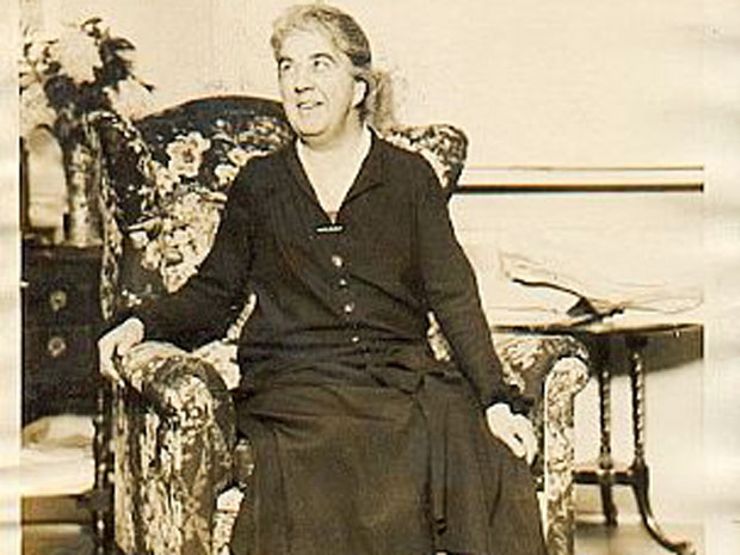
The crabapple tree stood in a place people called Lovers' Lane.
On September 16, 1922, the bodies were found beneath it, in a secluded lane near Phillipsburg, in the town of New Brunswick.
Reverend Edward Wheeler Hall had been shot in the head.
Mrs. Eleanor Reinhardt Mills had been shot in the face, and her throat was cut.
They were arranged in a posed manner.
Love letters between the two were scattered nearby.
The letters were the kind that confirmed what the town suspected: the Episcopal minister and his choir singer were having an affair.
The scene was a tableau.
Someone had placed the dead with care, or with cruelty, or with both.
Who arranges the dead like this?
Who shoots a man in the head, shoots a woman in the face, cuts her throat, and then leaves them posed for discovery?
The answer is not established.
Whether the scene was staged by the killer, or by someone who found the bodies and moved them, is not established.
The case became a national sensation because of the scandal of a clergyman's affair and the gruesome staging of the crime.
It is a story of a botched scene, a witness's claim, and a trial that decided nothing.
But the first thing anyone saw was the tree.
The letters.
The posed dead.
She was on the ground below, and the letters were on the ground with her.
THE BOTCHED SCENE
A local man found them first.
The police did not rope off the lane.
Onlookers walked through the scene before the first detective arrived.
The lead detective collected some evidence, but the ground had already been crossed.
What exactly the onlookers disturbed is not specified in the record.
The letters were still there.
The letters named the affair, and the affair named a motive, and the motive named no one in particular.
A .32-caliber revolver was the likely weapon, but it was never recovered.
That was not definitively established at trial.
The case stalled.
It stalled because the scene had been trampled.
It stalled because the first detective's notes were thin.
It stalled because a scandal this public needed a suspect fast, and no suspect fit.
Public pressure mounted.
A grand jury was convened.
The grand jury heard the letters read aloud.
The grand jury heard about the posed bodies.
The grand jury failed to indict anyone.
The file went quiet.
The crabapple tree kept its place in the lane.
The bodies were buried in separate cemeteries.
The case slipped away, not because the truth was hidden, but because the ground had been walked on.
THE WITNESS WHO SAID THE BODIES WERE MOVED
The year was 1926, and four years had passed since the bodies were found beneath the tree.
A witness came forward claiming to have seen the bodies being moved.
The witness said the scene under the crabapple tree was not the original scene.
It was a claim that finally gave the stalled case a direction.
Frances Hall was arrested.
Her two brothers were arrested.
Another man was arrested.
All four were charged with murder.
The prosecution built its case on that witness and on testimony about a conspiracy.
The alleged involvement of the Stevens family was the thread the state pulled.
It was a thread, but the record shows it was largely circumstantial.
The defense said the evidence was fabricated.
The defense said the witnesses were unreliable.
The identity of the witness is not in the record.

The specifics of what that witness claimed to have seen are not in the record.
What remains is a single person's account, offered years after the ground was walked on.
It is a jolt of hope that the case is finally cracking.
It is also a doubt that cannot be resolved.
Can one witness be trusted?
Can one witness undo the damage of a botched scene?
Can one witness carry the weight of four arrests?
That would require evidence.
The trial would soon test how much weight the claim could hold.
THE TRIAL AND THE VERDICT
The trial began in November 1926 in Somerville, New Jersey.
The courtroom was packed before the first witness was sworn.
The prosecution, led by Alexander Simpson, built its case on one claim: that a witness had seen the defendants moving the bodies.
That witness was the hinge.
Simpson presented her testimony as the proof of a conspiracy — the bodies staged, the scene rearranged, the truth buried under a crabapple tree.
The defense answered with a different question.
Who believes a single witness after four years of silence?
The defense attacked the credibility of the witnesses.
They argued the evidence was insufficient.
They argued the claim was a story, not a fact.
The jury heard about love letters, about a botched scene, about a .32-caliber revolver that was never recovered.
The revolver was never found.
It was not definitively established at trial.
The prosecution could not place the weapon in any hand.
The defense did not need to solve the murder.
They only needed to break the hinge.
After a lengthy trial, the jury deliberated for several hours.
The verdict came back: not guilty for all defendants.
The courtroom exhaled.
The defendants walked out.
The case was never officially solved.
No one else was ever charged.
The witness's claim had carried the arrests.
It could not carry the conviction.
AND THE STORY STILL ISN'T OVER
Frances Hall and her brothers returned to private life.
The case remains officially unsolved.
No one else was ever charged.
No hearing followed. No motion was filed. No decision came down. That would require evidence.
Over the decades, various theories have been proposed.
Each one names a different hand, a different motive, a different reason the bodies lay posed beneath the crabapple tree.
The record does not establish any of them.
The Hall-Mills case is remembered as one of the most sensational murder cases of the 1920s.
It is often cited as an example of how media frenzy and flawed police work can obscure the truth.
The witness's claim had carried the arrests.
It could not carry the conviction.
The victims are buried in separate cemeteries.
Reverend Hall in one. Mrs. Mills in another.
The space between them is the distance the case never closed.
The case has been the subject of books and documentaries.
Each retelling returns to the same hinge: the witness who said the bodies were moved.
Each retelling stops at the same place: the jury's verdict, the acquittal, the silence after.
The .32-caliber revolver was never recovered.
That, too, is not established.
What remains is a quiet, unresolved ache.
A case closed but never solved.
A question the record leaves open, unanswered, for a century.
Advertisement
You may also like
The ransom money that led police to a carpenter's garage — and the ladder that wouldn't fit the story
The gold certificate bill was spent at a gas station. It was September 1934, more than two years after the kidnapping. The attendant noticed…
The waiter who returned sunglasses and never came home: Ronald Goldman's last errand
A pair of sunglasses left at a restaurant. A waiter running them back to the owner's daughter. On the night of June 12, 1994,…
The blood-stained knife found in Arthur Leigh Allen's home that never sealed the Zodiac case
The knife came out of Arthur Leigh Allen’s home in 1991, and it was bloody. A Vallejo task force found it during a search…
The DNA match that ended a 20-year manhunt for a killer the police had already cleared
He passed the polygraph. The truck painter from Auburn, Washington sat for the test early in the Green River Killer investigation, and the machine…
The FBI tape that captured what happened inside the Waco compound before the fire
The infrared footage was shot from above, by surveillance aircraft circling the compound. The audio recordings were captured the same way, microphones picking up…
The boat bought days before Laci vanished — and the alibi that unraveled in court
The mop sat in the garage of the Modesto home, and next to it, a boat trailer with fresh paint. Police found both during…