The DNA match that ended a 20-year manhunt for a killer the police had already cleared
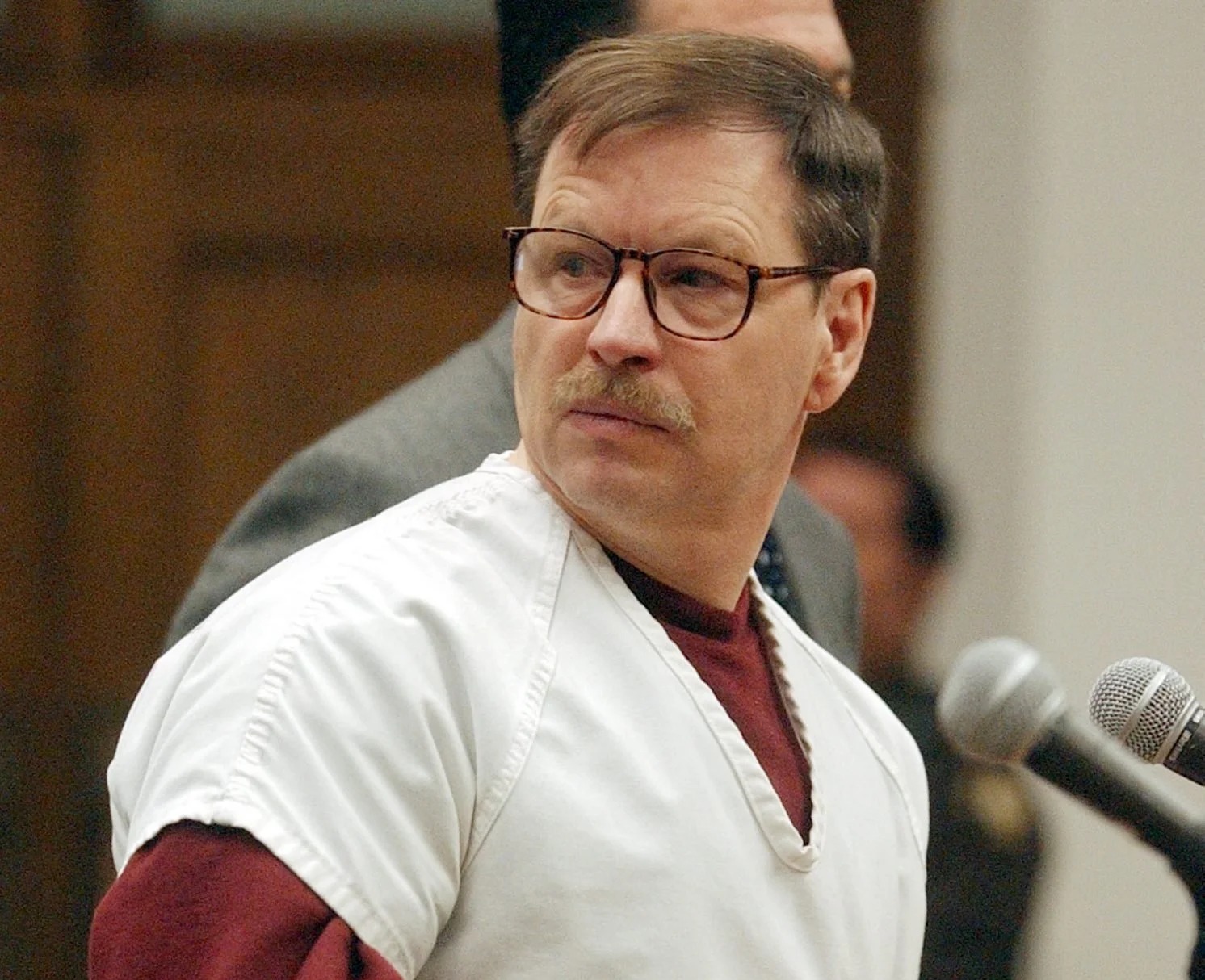
He passed the polygraph.
The truck painter from Auburn, Washington sat for the test early in the Green River Killer investigation, and the machine said he was telling the truth.
He was cleared.
In 1982, remains of two women were found in the Green River, and the search for their killer began.
More bodies surfaced in the following years, discovered by hunters, hikers, and police searches across the remote, wooded areas south of Seattle.
The victims were typically strangled, their bodies dumped near the water that gave the case its name.
The investigation grew into one of the largest and longest-running serial murder inquiries in American history.
For nearly two decades, it went unsolved.
The man who passed the polygraph kept painting trucks.
He kept living in Auburn.
And the case kept collecting names without a suspect who stuck.
The exact number of victims is not established.
The true number is believed to be higher than 48, but the record does not settle it.
That would require evidence the case has not produced.
How does a man sit across from a detective, answer the questions, and walk away clean?
How does the machine say truth when the truth was strangulation?
How does a cleared suspect become the killer the DNA would eventually name?
That would require the polygraph to be wrong.
It would require the investigation to have missed what was in front of it.
It would require twenty years.
THE TASK FORCE YEARS
The King County Sheriff's Office formed a dedicated task force.
At its peak, it included dozens of investigators.
The lead detective had previously worked on the Ted Bundy case.
He applied similar profiling and forensic techniques to the Green River killings.
The case was marked by numerous false leads and suspects who were later cleared.
The specific number of false leads or cleared suspects is not in the record.
Ridgway was among those questioned early.
He passed a polygraph test.
So he was cleared.
Remains continued to be found by hunters, hikers, and police searches throughout the 1980s and 1990s.
Each discovery reopened the same questions.
Each new find added another name to a list that kept growing.
The task force chased tips that dissolved into nothing.
It interviewed witnesses whose stories shifted.
It held suspects who could not be tied to a single victim.
Not because the leads were worthless.
But because the evidence did not connect.
The polygraph said Ridgway was telling the truth.
The investigation accepted that answer.
It moved on to other names, other theories, other dead ends.
The years passed in that rhythm.
A discovery.
A suspect.
A clearance.
A return to the files.
That would require the polygraph to be wrong.
It would require the investigation to have missed what was in front of it.
It would require twenty years.
THE DNA BREAKTHROUGH
The breakthrough came in 2001, not from a confession or a tip, but from a laboratory.
Advances in DNA technology allowed investigators to re-examine evidence that had sat in storage for years.
Saliva and semen samples from several victims yielded matches.
One of those victims was a woman named Marcia Fay Chapman, whose name appears in the record of the case.
The DNA pointed to Gary Ridgway.
There were also paint particles found on the victims, particles consistent with his workplace as a truck painter.
The polygraph he passed in the 1980s meant nothing to the science.
The task force had cleared him; the lab did not.
Ridgway was arrested in November 2001.
He was charged with seven counts of aggravated first-degree murder.
The specific date of the DNA match is not in the record.
The exact laboratory that processed the samples is not in the record either.
What is in the record is the arrest, the charges, and the sudden end of a two-decade search.
Decades of false leads, cleared suspects, and profiles collapsed into a single genetic profile.
It is a sudden shift.
It is also a quiet one — an arrest made without a chase, without a struggle, without a scene.
The man who had been questioned, tested, and released was now in custody.
The science had done what the interviews could not.
That would require the polygraph to be wrong.
It would require the investigation to have missed what was in front of it.
It would require twenty years.
In November 2001, it took a match.
THE PLEA AND THE SENTENCE
In November 2001, the DNA match ended the manhunt.
Gary Ridgway was arrested and charged with seven counts of aggravated first-degree murder.
Facing the possibility of the death penalty, he agreed to a plea bargain in 2003.
In exchange for a life sentence without the possibility of parole, he confessed to 48 murders.
He also led investigators to the remains of several victims.
The exact number of additional remains located through his cooperation is not in the record.
That number would require evidence no one has produced.
The prosecution was led by the King County Prosecutor and his deputies.
They presented the case, and the defense negotiated the deal.
The plea was accepted by a King County Superior Court judge.
Ridgway was sentenced to 48 consecutive life terms.
Forty-eight terms for 48 confessions.
He would never leave prison.
As part of the agreement, he cooperated with authorities in locating additional victims' remains.
The cooperation was the point.
The families wanted the remains.
The state wanted the certainty of a conviction.
The deal gave them both, and it gave Ridgway his life.
It was a trade.
It was also a sentence.
The judge accepted it, and the courtroom moved on.
Ridgway left the courtroom in chains.
He has remained in prison since his sentencing in 2003.
Some victims' families have expressed frustration that the death penalty was not pursued.
Others have accepted the plea as a means of gaining closure and recovering remains.
The exact number of victims remains unknown.
The number he confessed to was 48.
The true number is believed to be higher.
That belief is not a fact in the record.
It is a theory.
The record holds what he said, what he showed, and what the judge accepted.
AND THE STORY STILL ISN'T OVER
Ridgway is serving his life sentences at the Washington State Penitentiary in Walla Walla.
He has remained there since his sentencing in 2003.
Some families have expressed frustration that the death penalty was not pursued.
Others have accepted the plea as a means of gaining closure and recovering remains.
The case has been the subject of numerous books and documentaries.
The exact number of victims is not established.
It is not a fact in the record.
The true number is believed to be higher than 48.
That belief is a theory.
The record holds what he said, what he showed, and what the judge accepted.
Forty-eight life terms are what the judge accepted.
The families carry what remains.
The graves were found because he led the way.
The plea bought certainty for forty-eight.
It did not buy a final count.
The story is not neatly closed.
The grief is ongoing.
The record is closed.
The case is not.
Advertisement
You may also like
The confession freed the jury to decide only one question: was he insane?
The knife Moseley said he used was never recovered. He was a 29-year-old business machine operator who confessed to the murder of Catherine "Kitty"…
The duct tape on Laci Peterson's body that led to a conviction, but no cause of death
The duct tape was on her body when she was found. It was wrapped around her, forensic evidence presented at trial showed. That much…
The former associate’s testimony that could decide the Tupac Shakur murder trial
The former associate took the stand in a Las Vegas courtroom and said Duane “Keffe D” Davis admitted to being involved in the shooting…
One body in a vacant lot, and the last call Elizabeth Short ever made
She was found at 39th Street and Norton Avenue, in a vacant lot in the Leimert Park area of Los Angeles. A woman walking…
The neighbor's camera that contradicted Christopher Watts's timeline — and the confession that followed
A neighbor’s security camera saw Shanann’s blue Ford Escape leave the home that morning. Christopher Watts told police he left for work at 5:15…
The Ryder truck axle that cracked the Oklahoma City bombing case
The rear axle of the Ryder truck came to rest somewhere in the rubble, and the record does not specify exactly where. It was…