The confession freed the jury to decide only one question: was he insane?
The knife Moseley said he used was never recovered.
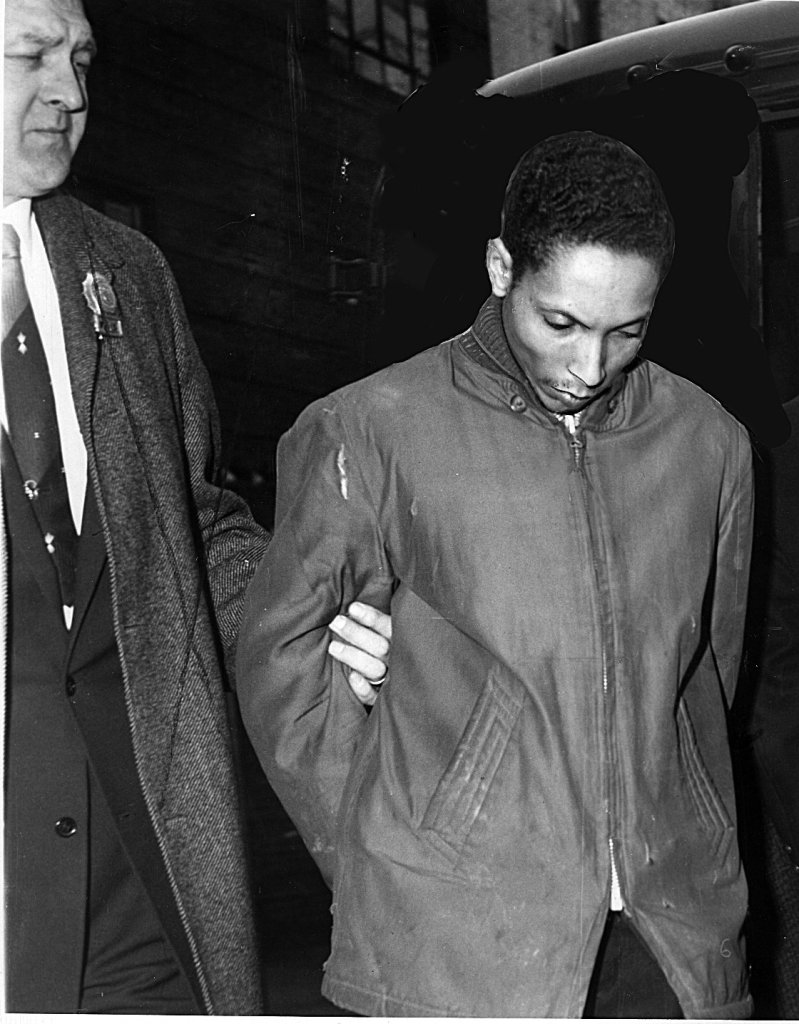
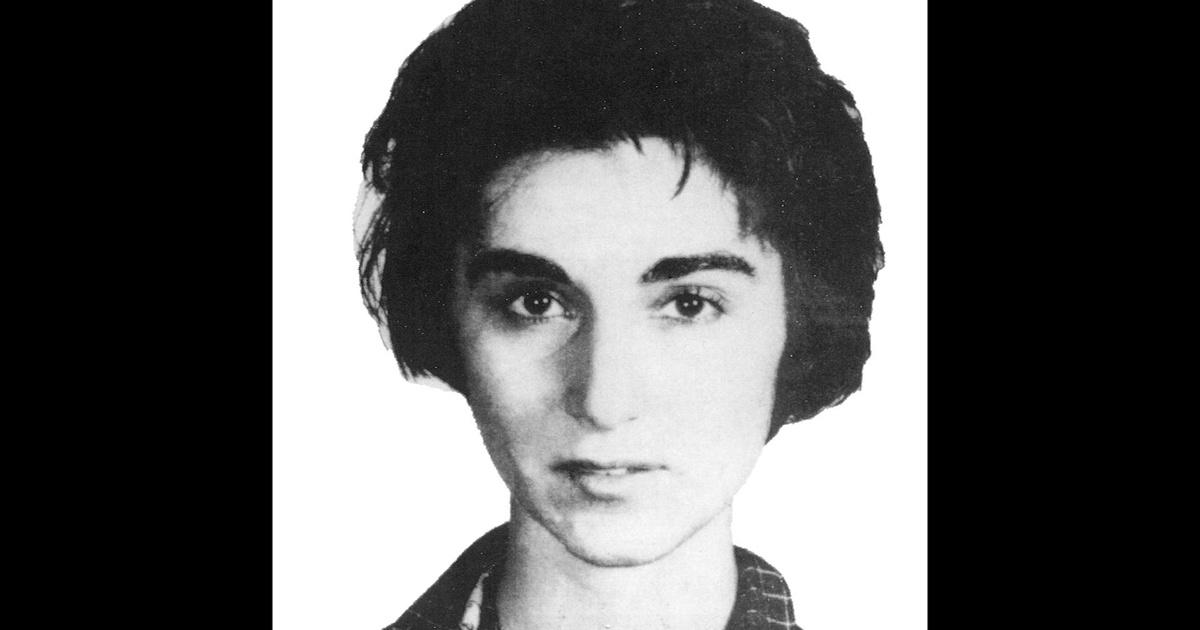
He was a 29-year-old business machine operator who confessed to the murder of Catherine "Kitty" Genovese, 28, outside her apartment at 82-70 Austin Street in Kew Gardens, Queens, on March 13, 1964.
The confession meant the trial would not be about whether he did it.
It would be about his state of mind.
The attack happened in two phases over about half an hour.
A neighbor, Sophia Farrar, found Genovese dying in a hallway and stayed with her until help arrived.
Genovese died en route to the hospital.
The knife's location is not in the record.
Any description of it beyond Moseley's own account is not in the record.
That absence sat at the centre of the case.
Police had no suspects for six days.
Moseley was arrested on March 19, 1964, during a burglary attempt.
He voluntarily confessed to the Genovese killing and to two other murders.
The weapon he described was never found.
The trial would hinge on what the jury made of that confession — and of the man who gave it.
Not on whether it happened.
But on whether he was legally responsible for it.
The prosecution had the confession, corroborated by witness testimony.
One witness testified he saw a man attacking a woman and called police.
Farrar testified she found Genovese in the hallway.
The defence did not contest that Moseley committed the act.
It argued he was legally insane.
The jury rejected that argument on June 8, 1964, and convicted Moseley of first-degree murder.
The missing knife did not decide the case.
The confession did.
That freed the trial to ask only one question: was he insane?
SIX DAYS AND A CONFESSION
For six days, police had no suspects.
Then, on March 19, 1964, a man was arrested during a burglary attempt.
He was Winston Moseley, a 29-year-old business machine operator.
The lead detective of the Queens homicide squad took Moseley's confession.
Moseley confessed voluntarily to the Genovese killing.
He also confessed to two other murders: Annie Mae Johnson and Barbara Kralik.
The specific content of that confession, beyond the fact that it was made voluntarily, is not detailed in the source.
Moseley led police to locations connected to the other murders.
The relief of a break in the case was real.
It was undercut by the weight of what the confession admitted.
The defense would not contest that Moseley committed the act.
That was the point.
The act was established.
The knife was not recovered.
The confession did not need it.
The trial that began in June would not ask whether he did it.
It would ask only what was inside his mind.
THE TRIAL: ONE QUESTION ONLY
The trial began in June 1964 before a justice of the New York State Supreme Court.
Winston Moseley pleaded not guilty by reason of insanity.
The prosecution presented Moseley's confession, corroborated by witness testimony.
A neighbor, Robert Moseley, no relation to the defendant, testified he saw a man attacking a woman and called police.
Sophia Farrar testified she found Genovese in the hallway.
The defense presented psychiatric testimony that Moseley suffered from mental illness.
The specific psychiatric diagnoses or the content of expert testimony are not in the source.
The courtroom was reduced to a single, stark question of sanity.
The act was not in dispute; the confession had settled that before the first juror was sworn.
What remained was whether a man who admitted the killing could be held responsible for it.
The prosecution argued the confession and the witnesses established the act, and the psychiatric defense could not excuse it.
The defense argued that mental illness meant Moseley was not legally responsible for his actions.
The jury heard both readings of the same mind.
They rejected the insanity defense and convicted Moseley of first-degree murder on June 8, 1964.
TWO READINGS OF THE SAME MIND
The prosecution’s reading began with the confession and the witnesses who placed Moseley at the scene.
The act was established, they argued; the question was whether the psychiatric defense could meet the law’s test for insanity.
That test, the prosecution said, was strict, and Moseley’s claimed illness did not meet it.
The defense offered a different reading of the same facts.
Moseley suffered from mental illness, they argued, and therefore was not legally responsible for his actions.
The defense did not contest that Moseley committed the act; they contested whether the law could hold him accountable for it.
Two interpretations of the same mind stood before the jury.
The jury heard both readings of the same mind.
They rejected the insanity defense and convicted Moseley of first-degree murder on June 8, 1964.
The justice sentenced Moseley to death.
The jury's deliberative process and the specific reasoning behind the verdict are not in the record.
The conviction was appealed, and in 1967 the New York Court of Appeals ordered a new trial on the insanity issue.
At the retrial, Moseley was again convicted and sentenced to life imprisonment.
The legal machinery settled the question, but the two readings never fully dissolved.
One reading said the mind was responsible; the other said it was not.
The record preserves both, and the verdict that chose between them.
AND THE STORY STILL ISN'T OVER
The appeals process did not hold him for long.
In 1968, while his case was still moving through the courts, Moseley escaped from custody.
He committed additional crimes before being recaptured.
He was returned to prison, and he stayed there.
Moseley died in custody on March 28, 2016, at the age of 81.
The conviction stood; the man did not outlive it.
But the story around the case outgrew the trial itself.
The legacy became the "bystander effect," a term built on the widely reported claim that 38 witnesses saw or heard the attack and did nothing.
That number was repeated for decades as a fact of the case.
It was not a fact of the trial.
The exact number of witnesses, and what each saw or heard, is not established.
The 38-witness figure is a disputed claim.
Later reporting, including work by journalist Jim Rasenberger, showed the account was exaggerated.
Some neighbors did call police and intervene.
The record of the trial did not need that number; the confession and the testimony were enough for the jury.
The family of Kitty Genovese has continued to speak about her memory.
The building where she died, at 82-70 Austin Street, was later demolished.
What remains is a conviction, a confession, and a famous detail that was itself a distortion.
The legal machinery settled the question of guilt and punishment.
The story, it turns out, was never as clean as the verdict.
Advertisement
You may also like
The psychologist's patient who said she overheard a confession that broke the Menendez case
Judalon Smyth told police she heard Erik Menendez’s voice through a door. She was a former patient of Dr. Jerome Oziel, the brothers’ psychologist.…
The 1997 Versace murder case: how the FBI's manhunt ended with a suicide, not a trial
The steps of Casa Casuarina were still wet with the morning's humidity. At approximately 8:45 a.m. on July 15, 1997, Gianni Versace was shot…
The trunk hole in a Caprice that turned a car into a shooting blind
There is a hole in the trunk of a blue Chevrolet Caprice sedan. It is a hole cut into the metal, large enough for…
The manifesto his brother recognized — and the FBI task force that missed the trail for years
The manifesto was 35,000 words long. Its title was "Industrial Society and Its Future," and in September 1995, the Washington Post and the New…
The 45-minute deliberation that ended four murder trials in one Kansas courtroom
The jury was out for approximately 45 minutes. Four counts of first-degree murder, two defendants, one verdict on each count. The trial had begun…
Why a cotton gin fan tied with barbed wire still haunts a Mississippi courtroom 70 years on
The cotton gin fan came up with the body on August 31, 1955, tied to the neck with barbed wire. The fan was a…