The trunk hole in a Caprice that turned a car into a shooting blind
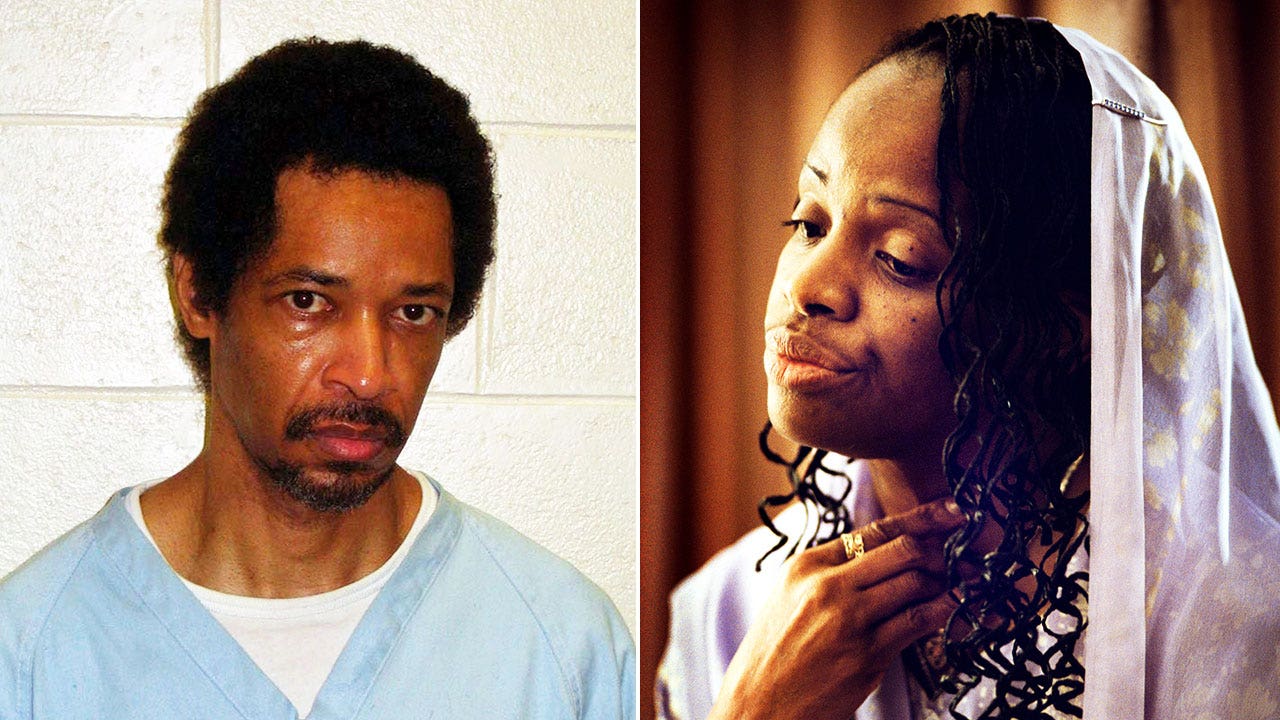
There is a hole in the trunk of a blue Chevrolet Caprice sedan.
It is a hole cut into the metal, large enough for a rifle barrel and a pair of eyes.
From inside that trunk, a shooter could fire without being seen.
The car becomes a blind on wheels.
Between October 2 and October 24, 2002, a series of shootings killed 10 people and wounded 3 others across Maryland, Virginia, and Washington, D.C.
The attacks appeared random.
Schools were closed.
Residents avoided gas stations and open areas.
The break in the case came after a witness reported seeing a white van near one of the shootings.
Not a Caprice.
A white van.
That detail would matter later, against the actual vehicle.
The record documents the hole.
It documents the rifle, a Bushmaster .223-caliber, found in the car at an arrest on October 24.
It does not document who cut the hole.
It does not document when the modification was made.
That is not established.
How does a shooter fire so accurately from a darkened trunk?
Ballistics linked the shootings to the rifle.
The hole explains the concealment.
The accuracy remains a question the record answers only through testimony.
The car was mundane.
It was a sedan.
It was also a firing position.
OCTOBER 2–24 — THE RANDOM SHOTS
The first shot came at a gas station in Wheaton, Maryland.
Another at a bus stop in Rockville.
A man mowing a lawn in Aspen Hill.
A woman loading groceries into her car in Falls Church.
A man at a bus stop in Aspen Hill.
Ten dead, three wounded, across Maryland, Virginia, and Washington, D.C., between October 2 and October 24, 2002.
The attacks appeared random.
No pattern, no motive visible, only a region frozen by fear.
Schools were closed.
Residents avoided gas stations and open areas.
Montgomery County Police Chief Charles Moose led the investigation.
He coordinated a multi-jurisdictional task force.
The task force chased a white van.
A witness had reported seeing a white van near one of the shootings.
That was a lead.
It was also a dead end.
Ballistics told a different story.
Forensic examiners linked the shootings to a Bushmaster .223-caliber rifle.
The rifle was the constant.
The victims were the variables.
Near one of the shootings, investigators found a note.
The note demanded $10 million.
Prosecutors presented it as evidence of premeditation.
The source does not establish who wrote the note.
It does not establish exactly where it was found, beyond near one of the shootings.
That would require evidence.
The record shows the note existed.
The record does not show the hand that left it.
Charles Moose read statements to the press, day after day.
He named no one.
He asked for help.
He promised the killers would be caught.
The region waited.
The randomness was the weapon.
It was also the terror.
A man in Manassas, Virginia, fell.
A woman in Falls Church, Virginia, fell.
A man in Aspen Hill, Maryland, fell.
Each fell alone, in the open, in the ordinary.
The car was mundane.
It was a sedan.
It was also a firing position.
THE REST STOP ARREST
On October 24, 2002, police arrested John Allen Muhammad and Lee Boyd Malvo at a rest stop near Myersville, Maryland.
The car was a blue Chevrolet Caprice sedan.
Inside it, investigators found the Bushmaster .223-caliber rifle.
The trunk had a hole cut into it.
That hole turned the sedan into a firing position.
A shooter could kneel in the trunk, aim through the opening, and fire without being seen.
The relief of capture settled over the region.
It was also strange.
Two men in a sedan had caused a regional panic.
Malvo was 17 at the time.
He later confessed to several shootings, according to the source.
He also provided detailed testimony against Muhammad, the source reports.
In that testimony, Malvo described their partnership.
He said Muhammad was the shooter in some attacks and the planner throughout.
The defense argued that Malvo was manipulated by Muhammad.
That claim would be tested in court.
What either man said at the moment of arrest is not established in the source.
The record does not include those words.
The rifle was found.
The trunk hole was documented.
The arrests ended the shootings.
The panic did not end immediately.
Schools had been closed.
Residents had avoided gas stations and open areas.
Now they knew who was in the car.
It was a Gulf War veteran and a teenager from Jamaica.
It was a sedan with a hole in the trunk.
It was also a firing position.
THE VIRGINIA TRIAL — TWO STORIES, ONE CAR
The trial came first for Muhammad, in Prince William County, Virginia.
The Commonwealth's Attorney chose that venue deliberately, to avoid federal charges that did not carry the death penalty.
The prosecution built its case on two pillars: the testimony of Malvo and the forensic evidence.
Malvo, then 17, took the stand and described the partnership, the planning, and the shooting.
The medical examiner testified about the wound that killed the man in Manassas.
The defense answered with a single, sharp claim: Muhammad was not the shooter in that killing.
Malvo acted alone, they argued; Muhammad was a scapegoat, not a trigger man.
Two stories, one car.
The prosecution said the car was a sniper's nest, with Muhammad directing the fire.
The defense said the car held a manipulated teenager who fired without the older man's hand on the rifle.
The jury heard the ballistics.
The jury heard the confession.
The jury heard the testimony of the teenager against the man who, the defense said, had controlled him.
Then the jury convicted Muhammad of capital murder.
The charge rested on a Virginia law that allowed a murder conviction for a killing committed during an act of terrorism.
The judge imposed the sentence the jury recommended: death.
What the record does not establish is who fired the shot that killed the Manassas victim.
Both sides disputed it, and neither proved it to the other's satisfaction.
It is a fact that Muhammad was convicted.
It is a fact that the defense argued Malvo acted alone.
It is not a fact, established by the source, that Muhammad pulled the trigger.
Malvo was tried separately, in 2003, in Chesapeake, Virginia.
He was convicted of capital murder for the killing of Linda Franklin.
He was sentenced to life without parole, because he was a juvenile.
Two trials.
Two convictions.
One unresolved question about a single shot.
AND THE STORY STILL ISN'T OVER
John Allen Muhammad was executed by lethal injection on November 10, 2009, in Virginia.
Lee Boyd Malvo is serving life without parole in a Virginia prison.
In 2017, the U.S. Supreme Court declined to hear Malvo's appeal, which argued that his juvenile sentence was unconstitutional under later rulings.
The source does not establish the current status of any pending appeal or motion for Malvo beyond that 2017 decision.
Several victims' families have spoken publicly about the lasting impact of the attacks.
The wife of one victim spoke. The son of another victim spoke.
They described lives interrupted at a gas station, at a school, at a bus stop.
The randomness is what they describe. The randomness is what remains.
The case led to changes in how multi-jurisdictional shootings are investigated.
It drew increased attention to the use of terrorism statutes in murder prosecutions.
Virginia used its terrorism law to convict Muhammad for the killing in Manassas.
The law allowed a murder conviction for a killing committed during an act of terrorism.
The legal question did not end with the execution.
It did not end with the life sentence.
For Malvo, the question was about his age. He was 17 at the time of the attacks.
Later rulings held that juvenile life sentences without parole are unconstitutional in many cases.
The Supreme Court declined to hear his appeal in 2017.
That is where the record stops.
Not because the questions were answered. But because the court did not take the case.
The mechanics of the shootings are established. The modified trunk. The rifle. The testimony.
The broader questions — about motive, about a wider conspiracy — are not established by the source.
The executions and sentences did not answer the randomness.
They answered the legal charges.
The ache remains in the public record, in the families' words, in the legal briefs that stopped at a denial.
Two men were convicted. One was executed. One remains in prison.
The hole in the trunk is documented. The silence after the last appeal is not.
Advertisement
You may also like
In Casey Anthony trial, the trunk evidence that split the courtroom
The trunk of the car was opened in a garage in Orlando, and the air that came out had a smell that witnesses later…
The pharmacy receipt that tied John Wayne Gacy to Robert Piest's vanishing
The pharmacy receipt was found in John Wayne Gacy's home. It was found after Robert Piest, a teenager, was last seen at a pharmacy…
The 8:44 p.m. video on Paul's phone that placed Alex Murdaugh at the kennels
The phone was in Paul Murdaugh’s hand, or near it, at 8:44 p.m. on June 7, 2021. The video it recorded captured voices. Investigators…
Why the BTK killer's floppy disk question sealed his fate — and the trial that followed
The question came in the middle of a taunting exchange, years after the silence ended. In 2004, Dennis Rader resumed sending letters to Wichita…
The cell phone video that put Alex Murdaugh at the kennels — and shattered his alibi
On June 7, 2021, Paul Murdaugh and his mother, Maggie, were found shot to death at the family's hunting estate, Moselle, near Islandton, South…
FBI says Laundrie's notebook admitted to Petito's killing — yet full contents never released
A notebook was found near Brian Laundrie’s remains in Myakkahatchee Creek Environmental Park, Florida, on October 20, 2021. A gun was found nearby, and…