Why the BTK killer's floppy disk question sealed his fate — and the trial that followed
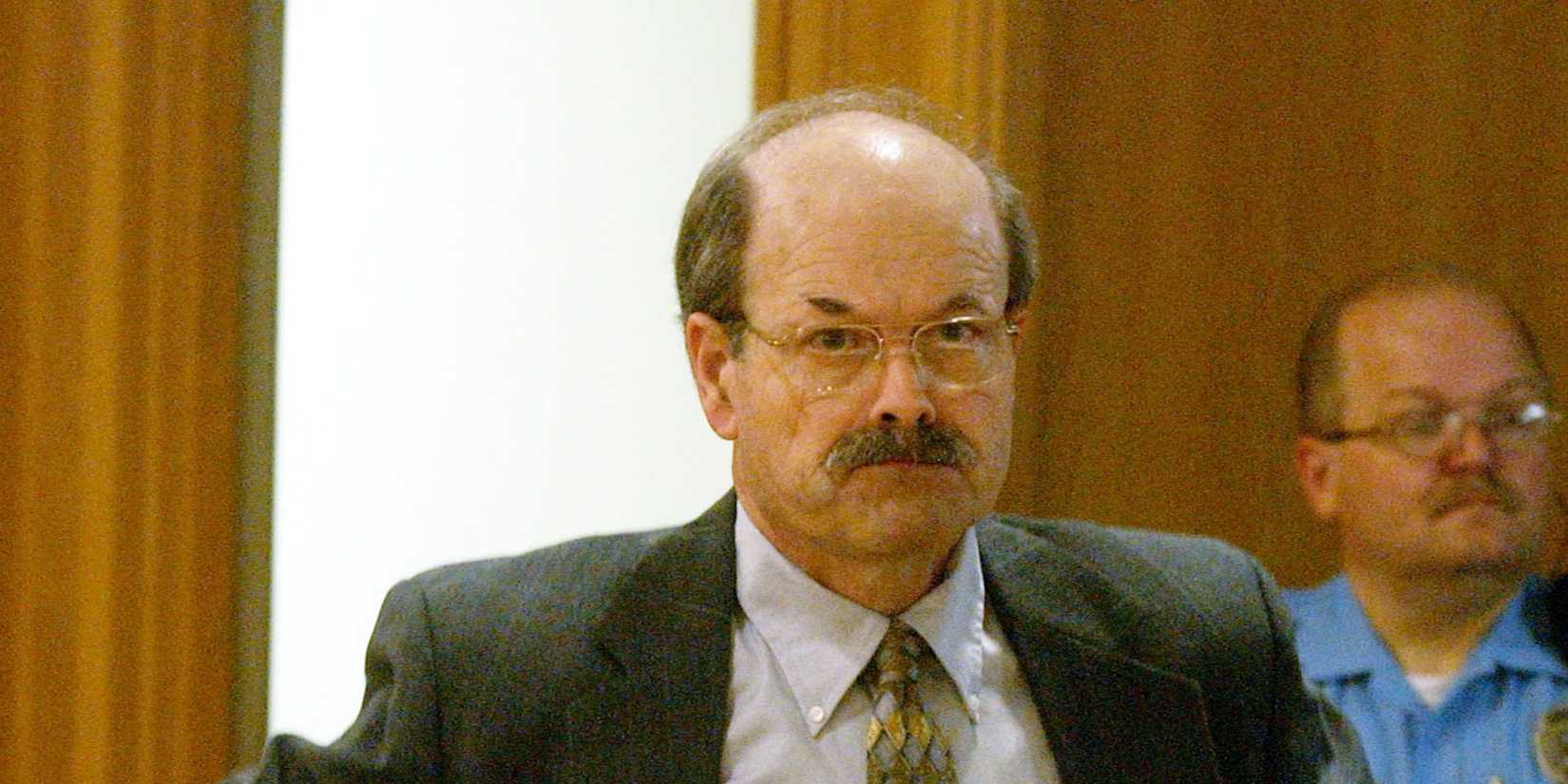
The question came in the middle of a taunting exchange, years after the silence ended.
In 2004, Dennis Rader resumed sending letters to Wichita media, letters that mocked the investigation he had evaded for three decades.
In one exchange, Rader asked police whether a floppy disk he sent could be traced.
It was a documented question, a small technical inquiry buried in a killer's game.
Investigators determined it could be traced.
And Rader subsequently sent a disk containing metadata linking it to a computer at his church and to a file bearing his name.
The exact wording of Rader's question is not in the record.
Only that he asked whether the disk could be traced.
Why would he ask that?
Why would a man who had killed ten people, who had taunted police for years, hand them a path back to himself?
Why would he step closer to the trap he must have known was closing?
The record does not answer that.
The record only shows the question, the answer, and the disk that followed.
It is a fact that the disk carried metadata.
It is a fact that the metadata pointed to his church and his name.
It is not a fact that the disk alone caught him.
That would require evidence the record does not supply.
The disk was a step. A documented step, taken by a man who had spent decades watching his own footsteps vanish.
He was on the ground below, still writing.
THE 30-YEAR GAP
Between 1974 and 1991, Dennis Rader murdered ten people in and around Wichita, Kansas.
The first murders occurred on January 15, 1974, when Rader killed a man, his wife, and two of their children at their home.
The original investigation in the 1970s and 1980s produced few leads, despite Rader's taunting letters to police and media.
The exact number of those letters is not specified in the source.
It is not established.
The case went cold for decades.
Cold enough that the man responsible lived an ordinary public life.
Rader was a former Wichita city code enforcement officer.
He was also a church council president.
He was a husband and a father.
The record does not say what his neighbors saw when they looked at him.
That would require evidence.
The case stayed cold until 2004, when Rader resumed communication.
He wrote again.
He wrote to a Wichita television station.

The letters reopened everything.
Detective Ken Landwehr led the task force that analyzed the new letters.
He would later lead the case to its end.
But that end was still a year away.
A year of letters, of questions, of a disk.
The gap was thirty years long.
It was also a lifetime of ordinary days.
It is a documented gap.
It is also a gap the record cannot fully explain.
THE DISK AND THE DNA
In 2004, Rader sent a letter to a Wichita television station, and the case reopened.
Detective Ken Landwehr led the task force that analyzed the new letters.
Rader asked whether a floppy disk could be traced.
Investigators said yes, and he sent one.
The disk contained metadata linking it to a computer at his church and to a file bearing his name.
DNA evidence from crime scenes also matched Rader.
The disk was a lead.
The DNA was the link.
Was the disk alone enough to catch him?
Not alone.
The disk gave investigators a name to look at.
The DNA made that name certain.
Rader was arrested on February 25, 2005.
The specific DNA experts who testified are not widely named in mainstream coverage.
That detail is not established in the record.
What is established is the match.
It is a documented fact.
It is also the weight the case rested on.
THE TRIAL WITHOUT A JURY
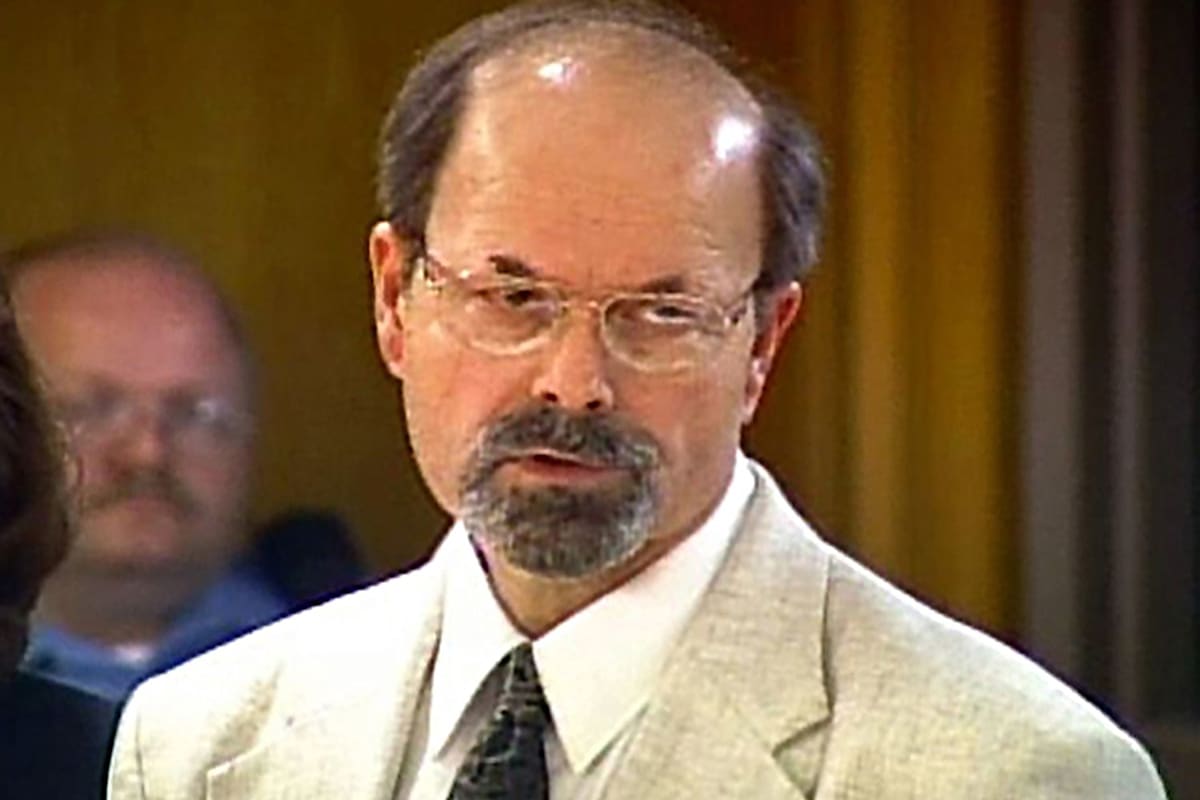
He waived his right to a jury trial.
On June 27, 2005, he pleaded guilty to ten counts of first-degree murder.
No jury would hear the evidence. No jury would decide.
The judge heard it instead.
Prosecutors put surviving family members on the stand.
They testified about what was taken from them and how it was taken.
They described the killings in detail.
The nature of the crimes was laid out in open court.
The defense argued that he suffered from a mental illness.
It was not accepted as a defense.
What else the defense argued beyond that is not in the record.
The judge weighed the pleas. The judge weighed the testimony.
He sentenced Dennis Rader to ten consecutive life sentences.
The minimum was 175 years in prison.
Parole was impossible.
Not because the sentence was dramatic. Because the math was final.
The death penalty was not available.
The murders occurred before Kansas reinstated capital punishment in 1994.
So the state could not seek it.
The families heard the sentence. The families heard the finality.
Rader stood and was taken away.
Ten counts. Ten lives. Ten consecutive terms.
It is a sentence that ends in prison.
It is also a sentence that ends the case.
AND THE STORY STILL ISN'T OVER
The ten consecutive life sentences carry a minimum of 175 years.
Parole is impossible. That is the math of the sentence.
Dennis Rader serves those sentences at El Dorado Correctional Facility in Kansas.
He is still there. He has given interviews from prison.
In 2023, Rader was charged with additional crimes related to the 1991 murder of Cynthia Dawn Soman.
Those proceedings were ongoing as of the last widely reported updates.
That is all the record says: ongoing. Not resolved, not dismissed, not concluded.
The victims' families have publicly stated that the guilty plea and sentencing brought closure.
Closure, they said. Not the same as an ending.
The trial ended with a confession and a sentence. The story did not end with the trial.
It is a case that keeps producing questions. It is a case that keeps producing charges. It is a case that keeps producing interviews from a man serving 175 years.
What more can a convicted man say? What more can a proceeding add?
That would require evidence. That would require a verdict.
Neither is in the record.
What is in the record: ten counts, ten lives, ten consecutive terms.
And a man still speaking from a cell in Kansas.
Advertisement
You may also like
The Bushmaster rifle in a modified Caprice that ended a 23-day terror — and the question that still haunts
The truck driver saw the parked Caprice and called it in. On October 24, 2002, police found the Chevrolet Caprice at a rest stop…
The drifter who confessed to Adam Walsh's murder — then recanted, then confessed again
He was a drifter, a man already serving time for other crimes in 1983. That year, Ottis Toole confessed to abducting and killing six-year-old…
The 'Pig Woman' testimony that sent a widow and her brothers to trial for a priest's murder
She called herself the Pig Woman, and she was dying. In 1926, a farmer's wife known by that name gave testimony that she had…
The jailhouse witness and the 31 days Casey Anthony never reported Caylee missing
Cindy Anthony called 911 from her Orlando home on July 15, 2008. She reported that her 22-year-old daughter, Casey Anthony, had stolen her car.…
Baltimore Teen Vanished in 1999, Ex-Boyfriend Convicted in Case That Gripped America
The last bell at Woodlawn High School rang on January 13, 1999, and Hae Min Lee walked out of the building. She was 18,…
The bloody shirt scrap mailed to a newspaper that proved a killer's boast
A scrap of shirt arrived at a newspaper, stiff with dried blood. It was mailed as proof. Proof that the writer was the killer.…