The 'Pig Woman' testimony that sent a widow and her brothers to trial for a priest's murder
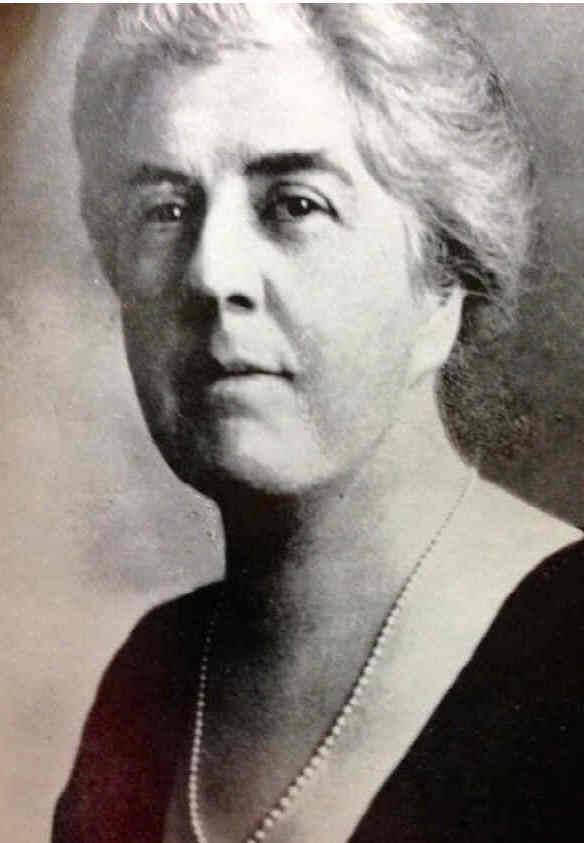
She called herself the Pig Woman, and she was dying.
In 1926, a farmer's wife known by that name gave testimony that she had witnessed the murders of a priest and a choir singer from her farm.
She made the claim while in poor health, according to the source.
Her story described seeing a woman and two men near the crime scene.
The descriptions matched the accused widow and her two brothers.
That single testimony was the key that reopened a case that had gone cold for four years.
Was she telling the truth?
Was she lying to matter, one last time, before she died?
Or was she simply the only voice the prosecution had?
The source states she had a criminal record.
The defense would later use that record to attack her credibility.
The source does not record any independent witness or physical proof backing her account.
It is not established that her testimony was corroborated by anyone or anything.
No forensic evidence tied the accused to the scene.
No second pair of eyes confirmed what she said she saw.
Just a dying woman's words, carrying the weight of an entire prosecution.
She was on the stand, and she was all they had.
THE BODIES UNDER THE CRABAPPLE TREE
The bodies were found on September 16, 1922, beneath a crabapple tree near a lovers' lane in New Brunswick, New Jersey.
The Reverend Edward Wheeler Hall was an Episcopal priest. Mrs. Eleanor Reinhardt Mills was a choir singer.
Both were married — to other people.
They had been having an affair.
Both had been shot. Mills’s throat was slashed, and letters from Hall to Mills were scattered nearby.
The scene was a mess before anyone properly looked at it.
Local authorities moved the bodies before a proper examination, according to the source. Evidence was lost.
The source does not identify who moved the bodies. The source does not say exactly what evidence was lost.
That is not established.
What is established is the chaos. What is established is the slip.
The case became a national sensation. It went unsolved for years.
Not because no one looked. Because the looking started too late and too sloppily.
The crabapple tree held the story. The ground around it gave nothing back.
THE REOPENING AND THE ARRESTS
Four years after the bodies were found, the case came back.
A grand jury was convened in 1926, and the source attributes the reopening largely to public pressure and new testimony from the Pig Woman.
What specific new evidence beyond her words prompted the grand jury, the source does not state.
The widow, Frances Noel Stevens Hall, was arrested.
Her two brothers were arrested with her.
All three were charged with the murders.
The prosecution alleged that Frances Hall, enraged by the affair, had orchestrated the killings with her brothers as accomplices.
The defense argued the couple had been killed by a deranged vagrant, or by someone else entirely.
The trial began in November 1926.
The Middlesex County Prosecutor led the prosecution.
Two defense attorneys led the defense.
The Pig Woman was the centerpiece.
She claimed she had seen a woman and two men near the crime scene, matching the descriptions of the accused.
Her testimony was compromised by her poor health.
Her testimony was compromised by her criminal record.
The defense would use both.
The letters from Hall to Mills were introduced, but the source does not link them directly to the defendants.
No physical evidence connected the accused to the crime.
The state had a story. The state had a witness.
The state did not have the ground.

One witness stood between three accused people and the rest of their lives.
THE TESTIMONY ON THE STAND
The prosecution, led by the Middlesex County Prosecutor, argued that Frances Hall killed her husband out of jealousy, with her brothers as accomplices.
It was a story built on one voice.
The defense, led by two attorneys, argued the evidence was circumstantial and that the Pig Woman's testimony was unreliable.
They pointed to her past.
They pointed to her health.
They pointed to a woman who claimed to have seen everything from a distance, through darkness, across a field.
The prosecution introduced letters from Hall to Mills, found scattered at the scene.
The letters proved the affair.
The letters proved nothing else — the source states they were not directly linked to the defendants.
Was there a fingerprint on a page?
Was there a name in a hand that matched the accused?
The record does not say.
The murder weapon, a .32-caliber revolver, was never recovered.
The defense highlighted that absence.
No weapon.
No fingerprints.
No physical evidence connecting the defendants to the murders — the source does not record any, and the record does not establish any.
So the state had a story.
The state had one witness.
The defense had silence where the proof should have been.
Was her word enough to hang three people?
That was the question the jury carried out of the courtroom.
One witness against a case built on absence.
The ground never spoke.
The gun never surfaced.
The letters only told a love story, not a killing.
AND THE STORY STILL ISN'T OVER
The jury was out for less than five hours.
Not guilty, for all three.
The verdict landed like a door closing on a room that was never searched.
The acquittal was read as a failure of the prosecution's case.
It was a case built on the bedridden words of a dying woman, and the bed had collapsed.
The defense had called her a liar with a record, and the jury believed them.
She was on the ground below.
The accused widow and her brothers walked out and lived their lives without further legal trouble.
The Pig Woman died in 1930, four years after she gave her testimony.
The case was never solved.
The source does not state who committed the murders.
It does not record any later confession.
It does not record new evidence.
No new arrests have been recorded.
The .32-caliber revolver never surfaced.
The ground never spoke again.
The Hall-Mills case remains one of the most famous unsolved murders in American history.
Books and documentaries keep returning to the crabapple tree.
They keep returning to the letters, the choir singer, the priest.
They keep returning to the question the trial answered without answering.
Who pulled the trigger?
Who cut her throat?
Who scattered the letters?
That would require evidence.
The record holds an acquittal, not a solution.
An open wound, not a closing statement.
Advertisement
You may also like
The dentist who was a person of interest in the Black Dahlia case, then quietly cleared
She thought it was a mannequin. A local resident, walking in Leimert Park on the morning of January 15, 1947, saw what looked like…
The Glock Keffe D says he handed over — and the white Cadillac that changed rap history
The white Cadillac moved down the Las Vegas Strip on the night of September 7, 1996. A black BMW 750iL rolled ahead of it,…
The 14-foot aluminum fishing boat Scott Peterson bought weeks before Laci vanished
A 14-foot aluminum fishing boat. That is what Scott Peterson bought weeks before Laci vanished, a documented purchase, not a rumor. On December 24,…
Why a Colorado jury heard a confession that changed everything about the Watts family case
The friend called police on the morning of August 13, 2018. Shanann Watts, 15 weeks pregnant, was missing with her daughters, Bella, 4, and…
The blood on his pajama sleeve that contradicted Jeffrey MacDonald's intruder story
The pajama sleeve was examined under a microscope, and the blood on it held a pattern. The pattern was a transfer, a smear of…
The defense’s claim that McVeigh was a scapegoat — and the witness who testified he built the bomb
The blast at the Alfred P. Murrah Federal Building occurred at 9:02 a.m. on April 19, 1995. It killed 168 people and injured more…