The defense’s claim that McVeigh was a scapegoat — and the witness who testified he built the bomb
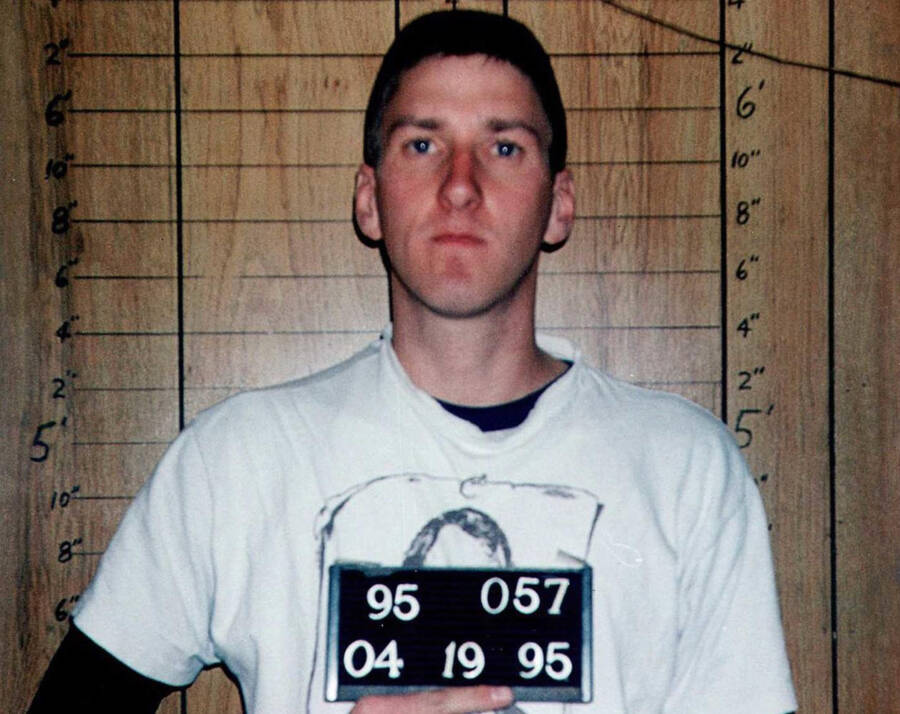
The blast at the Alfred P. Murrah Federal Building occurred at 9:02 a.m. on April 19, 1995.
It killed 168 people and injured more than 680 others.
Within 90 minutes of the blast, Oklahoma Highway Patrol trooper Charlie Hanger stopped Timothy McVeigh for driving without a license plate.
Hanger arrested him on a firearms charge.
A routine stop for a missing plate.
Meanwhile, investigators traced the truck axle found at the scene to a Ryder rental agency.
That trace led them to McVeigh’s alias.
The axle was a piece of the truck bomb.
The defense, led by Stephen Jones, would later argue that McVeigh was a scapegoat and that others were involved.
The prosecution, led by Joseph Hartzler, would present over 100 witnesses.
How does a man stopped for a missing license plate become the central figure in a federal trial?
Was it the evidence?
Was it the testimony?
Was it the sheer scale of the destruction?
That would require the trial itself.
The source does not establish what McVeigh said during the traffic stop.
The source does not establish what he was doing immediately before it.
The stop happened.
The arrest happened.
The axle led somewhere.
THE STORAGE UNIT AND THE RECEIPT
The receipt was for ammonium nitrate fertilizer.
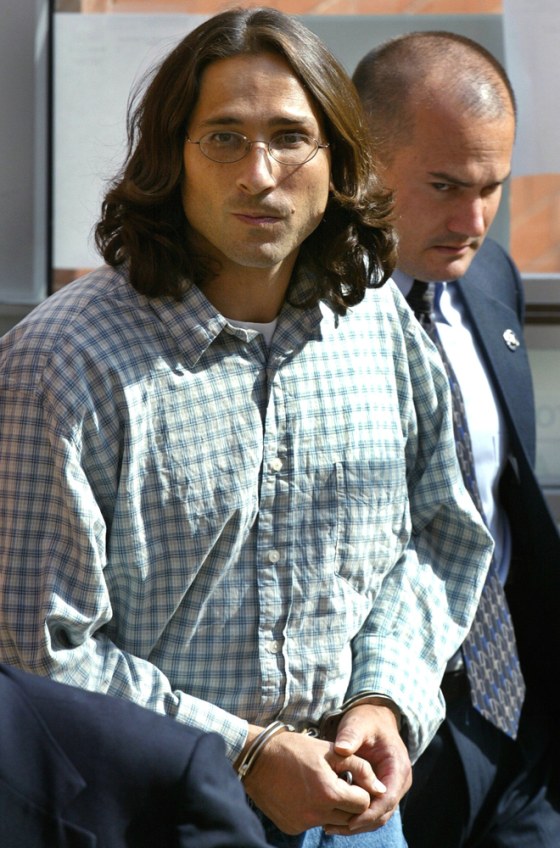
McVeigh's fingerprints were on it.
The source states this evidence.
A storage unit held the work.
Investigators found that McVeigh and Terry Nichols had used it to build the bomb.
The source states this finding.
The rented Ryder truck was filled with a fertilizer-and-fuel-oil bomb.
The source describes the weapon.
Mundane objects, one after another.
A receipt.
A storage unit.
A rental truck.
Each one became a load-bearing wall in the federal case.
Michael Fortier testified about the preparations.
His then-wife, Lori Fortier, testified too.
The source names them as key witnesses.
They described what the conspirators did before the blast.
What they bought.
What they built.
Where they built it.
The FBI coordinated the investigation.
The lead FBI agent directed the work.
The source states this, without naming him.
What the record does not establish: who rented the storage unit.
The exact date of the rental is also not specified.
Neither fact appears in the source.
That would require evidence.
The receipt sits in the record.
The fingerprints sit on the receipt.
The bomb sat in the truck.
The case sat on all of it.
THE DENVER COURTROOM
Judge Richard Matsch granted the change of venue.
The trial moved to Denver, Colorado. The source states this.
McVeigh was charged with 11 federal counts.
Conspiracy was among them. First-degree murder was among them.
The prosecution, led by Joseph Hartzler, presented over 100 witnesses.
The defense, led by Stephen Jones, argued that McVeigh was a scapegoat.
Others were involved, the defense argued. The defense did not call McVeigh to testify.
Why stay silent?
Why not take the stand against the scapegoat story?
Why leave the courtroom to the 100 witnesses?
The source does not specify which witnesses the defense called.
The source does not specify the content of their testimony.
That is not established.

The prosecution's wall stood in Denver. The defense's theory stood against it.
Judge Matsch presided over both.
The fingerprints sat on the receipt. The axle sat at the scene. The witness testimony sat in the record.
McVeigh sat silent.
THE WITNESS AND THE VERDICT
The FBI’s mistake was not a small one.
Thousands of documents were withheld from the defense, and Judge Matsch reprimanded the bureau for it.
The trial was delayed.
The defense argued that McVeigh was a scapegoat, that others were involved, that the record did not tell the whole story.
Stephen Jones led that argument. He did not call McVeigh to testify.
McVeigh sat silent.
The prosecution answered with over 100 witnesses. Michael Fortier testified against both McVeigh and Nichols. He had been part of the conspiracy; he was sentenced to prison for failing to warn authorities.
Lori Fortier testified for the prosecution about the conspirators’ preparations. She described the bomb-building, the storage unit, the fertilizer. The source states this.
The physical evidence sat alongside her words. The fingerprints on the receipt. The axle at the scene. The rented truck.
The defense called it a theory. The prosecution called it a case.
Was the verdict the only possible conclusion? That would require evidence.
The source does not establish whether the FBI’s document mistake affected the trial’s outcome.
On June 2, 1997, McVeigh was convicted on all counts. He was sentenced to death.
The jury had heard the Fortiers. The jury had seen the receipt. The jury had weighed the scapegoat against the testimony.
They chose the testimony.
AND THE STORY STILL ISN'T OVER
McVeigh was executed by lethal injection on June 11, 2001, at the federal penitentiary in Terre Haute, Indiana.

The source states this plainly.
Terry Nichols was tried separately.
He was convicted of conspiracy and involuntary manslaughter.
He was sentenced to life in prison without the possibility of parole.
Michael Fortier was released from prison in 2006.
The Oklahoma City National Memorial now stands on the site of the former federal building.
It honors the 168 victims.
Nineteen of them were children in the day-care center.
Many victims' families have continued to speak publicly about the bombing and its aftermath.
Bud Welch is one of them.
His daughter Julie died in the blast.
He became a public advocate against the death penalty.
He spoke at trials and memorial events.
The record does not specify any pending legal motions or upcoming hearings.
No new courtroom date.
No new filing.
That would require evidence the source does not provide.
The story still isn't over.
Not because the courts are moving.
But because the loss is permanent.
The memorial stands where the building fell.
The families speak because the dead cannot.
The verdicts were delivered.
The sentences were carried out.
The witnesses were released.
The story still isn't over.
Advertisement
You may also like
The bloody glove found on O.J. Simpson's estate that didn't fit in court
The glove lay on the ground of the estate on Rockingham Avenue. It was a bloody glove, discovered by a detective who had come…
The dentist who was a person of interest in the Black Dahlia case, then quietly cleared
She thought it was a mannequin. A local resident, walking in Leimert Park on the morning of January 15, 1947, saw what looked like…
The Glock Keffe D says he handed over — and the white Cadillac that changed rap history
The white Cadillac moved down the Las Vegas Strip on the night of September 7, 1996. A black BMW 750iL rolled ahead of it,…
The 14-foot aluminum fishing boat Scott Peterson bought weeks before Laci vanished
A 14-foot aluminum fishing boat. That is what Scott Peterson bought weeks before Laci vanished, a documented purchase, not a rumor. On December 24,…
Why a Colorado jury heard a confession that changed everything about the Watts family case
The friend called police on the morning of August 13, 2018. Shanann Watts, 15 weeks pregnant, was missing with her daughters, Bella, 4, and…
The blood on his pajama sleeve that contradicted Jeffrey MacDonald's intruder story
The pajama sleeve was examined under a microscope, and the blood on it held a pattern. The pattern was a transfer, a smear of…