Why a Colorado jury heard a confession that changed everything about the Watts family case
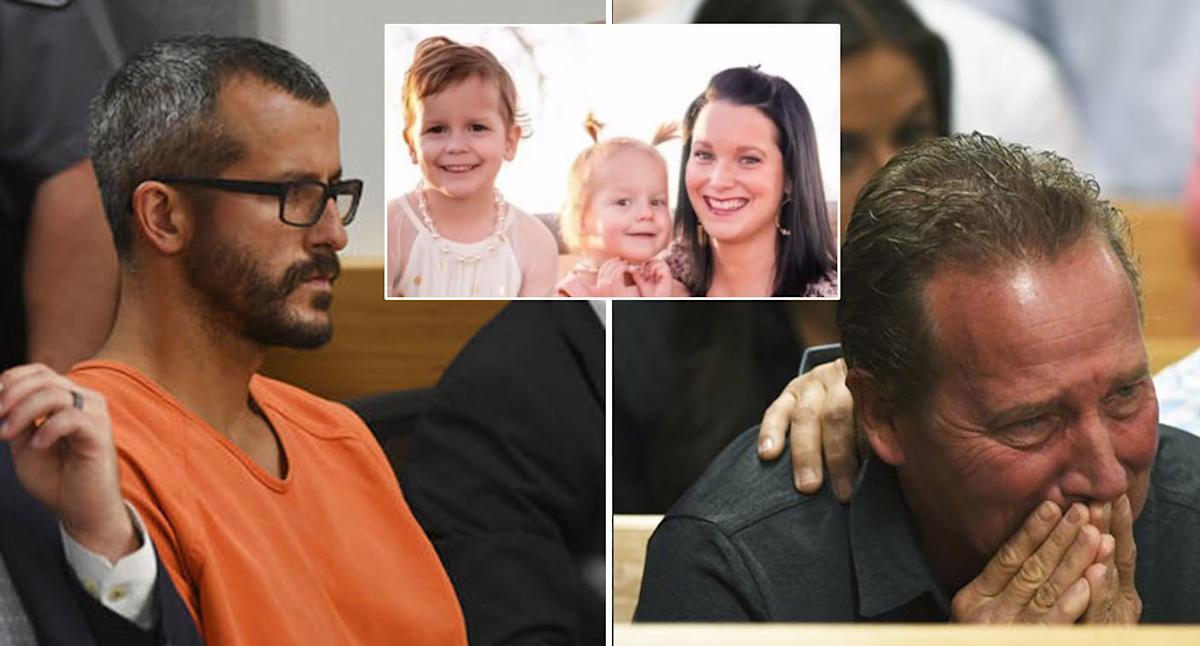
The friend called police on the morning of August 13, 2018.
Shanann Watts, 15 weeks pregnant, was missing with her daughters, Bella, 4, and Celeste, 3.
Their home was in Frederick, Colorado.
Christopher Watts, Shanann's husband, told the friend and the officers who arrived that his wife and daughters had vanished during the night.
He said they had gone to a friend's house.
His voice was calm.
A neighbour's security camera footage showed Shanann's truck returning to the home early that morning.
It contradicted the story he told.
Detectives noted inconsistencies in his timeline.
They watched his face when he spoke about his missing family.
What exactly happened inside the home that night is not established beyond Watts's later confession.
The record does not resolve the gap between the calm husband and the truck on the driveway.
It only holds the footage, the timeline, and the quiet contradictions.
The morning was still early.
THE OILFIELD DISCOVERY
Later that day, police found her body in a shallow grave at an oilfield site owned by Anadarko Petroleum, where Watts worked.
The two girls were found nearby, submerged in oilfield tanks.
The missing persons case became a murder investigation on the spot.
Watts was arrested on August 15, 2018.
The medical examiner's testimony established the cause and manner of death for all three victims.
Strangulation for Shanann. Smothering for the girls.
The exact sequence of events at the oilfield site is not detailed in the record beyond the discovery of the bodies.
Not because the testimony was unclear. Because the record does not reach that far.
What the jury heard was the finding, not the choreography.
The shallow grave held the body of a woman 15 weeks pregnant.
The tanks held her daughters.
The shift was complete: from a husband claiming his family vanished to a man arrested for their deaths.
The morning was still early, but the day had turned.
It is a grim finality. It is also a beginning.
The trial would come later. The confession would come first.
THE CONFESSION AND ITS SHIFT
The confession came on August 15, the same day Watts was arrested.
He failed a polygraph examination first.
Then he confessed to killing Shanann and the children.

But his first story was not the truth he would finally tell.
He initially claimed Shanann had killed the girls.
He said he had reacted in anger.
That version of events blamed the dead.
It made Shanann the murderer, and Watts the man who lost control.
Later, he shifted.
He admitted to strangling Shanann.
He admitted to smothering the girls.
The lead detective was present for the confession.
His name is not confirmed in news coverage.
The precise circumstances of that confession are not in the record.
Whether it was videotaped, whether it was witnessed, whether it was written down — that is not established.
What is established is the shift itself.
Not because the first story was plausible.
But because the second story matched the evidence.
A confession that changed everything changes nothing about what was found.
Shanann's body in a shallow grave at the oilfield.
The girls submerged in oilfield tanks.
The truck returning home on a neighbour's camera.
Watts told a story that made him a victim.
Then he told a story that made him the perpetrator.
The jury would hear the second version.
The defence would argue for life without parole, not innocence.
The confession carried the weight of the case.
It still does.
THE TRIAL AND THE PLEA
He was charged with three counts of first-degree murder.
Two counts of murder of a child under 12.
One count of unlawful termination of a pregnancy.
Three counts of tampering with a deceased human body.
He entered a plea of not guilty.
Then, on November 6, 2018, he changed it.
The plea was guilty, part of a deal with prosecutors to avoid the death penalty.
The prosecution presented its evidence of the killings.
:max_bytes(150000):strip_icc():focal(995x318:997x320)/chris-watts-family-main-081325-0e08a43c43f54d3ca80a4ff7eb743064.jpg)
The defence argued for a sentence of life without parole, not the death penalty.
Not because they disputed what he had done.
But because the law allowed them to ask for the lesser punishment.
The specific arguments made by the defence and the prosecution during that sentencing hearing are not detailed in the record.
What is recorded is the outcome.
The trial judge sentenced him to five consecutive life sentences without the possibility of parole.
Plus 84 years for the tampering charges.
Five lifetimes, stacked one after another.
That is what the plea bought him: an end to the case, and a cell that will hold him until it is over.
He did not get the death penalty.
He got the rest of his life.
The judge imposed the sentence.
The courtroom heard it.
And the confession that had shifted the case carried it to that point.
AND THE STORY STILL ISN'T OVER
The judge imposed the sentence, and the courtroom heard it.
The confession that had shifted the case carried it to that point.
Christopher Watts is incarcerated at the Dodge Correctional Institution in Waupun, Wisconsin.
He is serving multiple life sentences without parole.
He has given interviews from prison, including one to a news outlet in 2019.
In that interview, he described the killings.
Shanann's family has spoken publicly about their grief.
They have advocated for awareness of domestic violence.
The Watts home in Frederick was sold.
The family has sought to move on.
No appeals have succeeded in altering his sentence.
Any future legal steps or pending motions are not in the record.
That would require evidence.
The interviews continue to surface.
The family continues to speak.
The case remains closed in the legal record, yet open in the public mind.
It is a conviction.
It is also a story that keeps being retold.
The confession was the pivot.
The plea was the end of the trial.
But the telling of it is not over.
Advertisement
You may also like
The bloody glove found on O.J. Simpson's estate that didn't fit in court
The glove lay on the ground of the estate on Rockingham Avenue. It was a bloody glove, discovered by a detective who had come…
The dentist who was a person of interest in the Black Dahlia case, then quietly cleared
She thought it was a mannequin. A local resident, walking in Leimert Park on the morning of January 15, 1947, saw what looked like…
The Glock Keffe D says he handed over — and the white Cadillac that changed rap history
The white Cadillac moved down the Las Vegas Strip on the night of September 7, 1996. A black BMW 750iL rolled ahead of it,…
The 14-foot aluminum fishing boat Scott Peterson bought weeks before Laci vanished
A 14-foot aluminum fishing boat. That is what Scott Peterson bought weeks before Laci vanished, a documented purchase, not a rumor. On December 24,…
The blood on his pajama sleeve that contradicted Jeffrey MacDonald's intruder story
The pajama sleeve was examined under a microscope, and the blood on it held a pattern. The pattern was a transfer, a smear of…
The defense’s claim that McVeigh was a scapegoat — and the witness who testified he built the bomb
The blast at the Alfred P. Murrah Federal Building occurred at 9:02 a.m. on April 19, 1995. It killed 168 people and injured more…