The Glock Keffe D says he handed over — and the white Cadillac that changed rap history
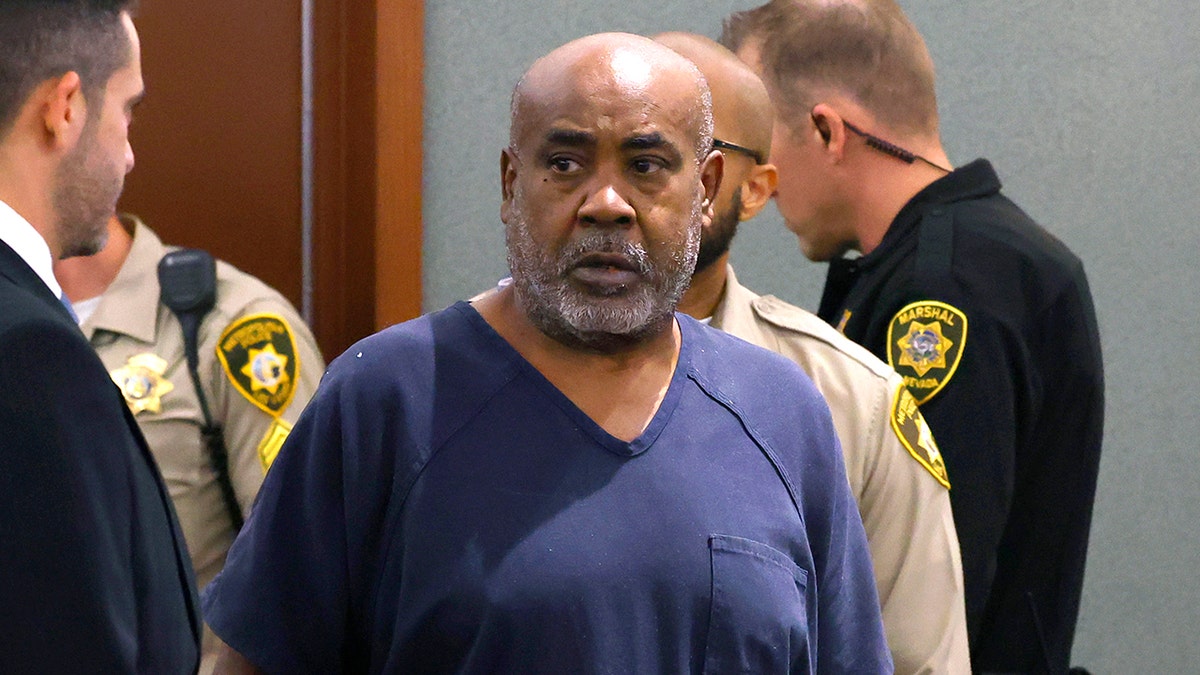
The white Cadillac moved down the Las Vegas Strip on the night of September 7, 1996.
A black BMW 750iL rolled ahead of it, carrying rapper Tupac Shakur.
Shots came from the Cadillac, according to the account of Duane Keith Davis, known as Keffe D.
Davis says he was in that car.
Davis says he provided the gun.
The gun was a Glock handgun, per Davis’s own statements.
The shooter’s identity is not established.
The investigation record does not name who fired the weapon.
Davis says he supplied it, not that he fired it.
The black BMW took four bullets, two of them in Shakur’s chest.
Witnesses flagged down officers; police did not discover the shooting at the scene.
Shakur died on September 13, 1996, at age 25.
No one was arrested that night.
No one was arrested for decades.
Davis’s claim came later, in a 2018 documentary, where he said he had been in the car and had handed over the gun.
That claim is the documented core of the case.
It is also a claim from the accused himself.
The white Cadillac remains an image, not a confirmed fact.
Who drove it, who rode in it, who fired from it — the record does not say.
That would require evidence.
The shooter was never identified.
The case went cold.
THE MAN WHO SAYS HE WAS THERE
Duane Keith Davis went by Keffe D.
The case record calls him a figure in the Los Angeles-area gang scene.
What that meant exactly — his rank, his history, his standing — is not in the record.
He was not the shooter.
The charging documents say he orchestrated the attack.
He was arrested on September 29, 2023, and charged with one count of murder with a deadly weapon.
He pleaded not guilty.
The shooting itself was widely attributed to a feud between East Coast and West Coast hip-hop factions.
Shakur was aligned with Death Row Records.
The driver of the BMW was Marion "Suge" Knight, co-founder of Death Row Records.
Knight was in the front passenger seat and was wounded in the head by a fragment.

Davis was a figure in that world, the record says.
He was the only person ever charged.
How did he go from a gang figure to the only person charged in a decades-old murder?
That is the question the record opens and does not close.
The shooter was never identified.
Davis's own statements, made years later, are what prosecutors say they relied on.
No physical evidence linked him to the shooting.
He remains in custody awaiting trial.
He has not been convicted.
He has not been acquitted.
THE COLD CASE THAT WOKE UP
The original investigation by the Las Vegas Metropolitan Police Department was hampered by a lack of cooperation from witnesses.
Many of those witnesses were associated with Death Row Records or rival gangs.
For years, the case was considered cold.
No one was arrested at the time, and the case remained open for decades.
In 2018, Davis publicly claimed in a documentary that he had been in the car from which the shots were fired.
He said he had provided the gun used in the shooting.
That statement, along with later interviews and a 2023 search warrant, led to Davis’s arrest.
The case was built largely on Davis’s own statements.
There was no physical evidence linking him to the shooting.
Prosecutors also relied on testimony from witnesses who placed him at the scene.
The shooter was never identified.
The lead detective on the original case is not named in the record.
Not because the record hides it.
Because the record does not establish it.
Davis was arrested on September 29, 2023, and charged with one count of murder with a deadly weapon.
He pleaded not guilty.
He remains in custody awaiting trial.
He has not been convicted.
He has not been acquitted.
WHAT THE RECORD DOES AND DOESN'T SAY
The claim is Davis's own account, and the record treats it that way.
He said he supplied the Glock. He said the shots were fired from a white Cadillac. The prosecution built its case largely on those statements, along with witness testimony placing him at the scene.
What the record does not establish: whether the Glock was actually fired from the white Cadillac. That is not established. The shooter's identity is not established either.

The shooter was never identified. The investigation record says so plainly.
No physical evidence linked Davis to the shooting, according to the case file. There was no fingerprint, no ballistic match, no recovered weapon tied to him by forensics. The case rested on his words.
It is a documented core of the case. It is also only his account.
Davis was arrested in 2023 and charged with murder with a deadly weapon. He pleaded not guilty. The case is being prosecuted by the Clark County District Attorney's Office.
He remained in custody at the Clark County Detention Center without bail.
He has not been convicted. He has not been acquitted.
No other arrests have been made in the case. No other person has been charged.
So the viral claim travels far. The record travels only as far as Davis's own statements.
Was he in the car? He said so. Did he supply the gun? He said so. Did the gun fire from that Cadillac? That would require evidence.
That evidence is not in the record.
AND THE STORY STILL ISN'T OVER
The trial was scheduled to begin in March 2025.
It was delayed.
As of the most recent reports, the trial had been postponed, with no new date set.
That is not established — a new date has not been set.
Davis remains in custody at the Clark County Detention Center, awaiting trial.
He has not been convicted. He has not been acquitted.
Tupac Shakur’s mother, Afeni Shakur, died in 2016.
She never saw an arrest in her son’s case.
The arrest came seven years later.
The murder of Christopher Wallace, in 1997, remains unsolved.
No other arrests have been made in either case.
The Shakur case has been the subject of numerous documentaries and books.
The Wallace case has been the subject of its own books and films.
Both stories are told and retold.
Both stories end the same way — with a question mark.
Davis’s trial is pending.
Legal proceedings continue.
The record holds what it holds: one man’s statements, a charge, a plea, a delay.
No physical evidence links him to the shooting, according to the case record.
The shooter was never identified.
The white Cadillac was never produced.
The Glock was never recovered.
That evidence is not in the record.
It may never be.
Advertisement
You may also like
The bloody glove found on O.J. Simpson's estate that didn't fit in court
The glove lay on the ground of the estate on Rockingham Avenue. It was a bloody glove, discovered by a detective who had come…
The dentist who was a person of interest in the Black Dahlia case, then quietly cleared
She thought it was a mannequin. A local resident, walking in Leimert Park on the morning of January 15, 1947, saw what looked like…
The 14-foot aluminum fishing boat Scott Peterson bought weeks before Laci vanished
A 14-foot aluminum fishing boat. That is what Scott Peterson bought weeks before Laci vanished, a documented purchase, not a rumor. On December 24,…
Why a Colorado jury heard a confession that changed everything about the Watts family case
The friend called police on the morning of August 13, 2018. Shanann Watts, 15 weeks pregnant, was missing with her daughters, Bella, 4, and…
The blood on his pajama sleeve that contradicted Jeffrey MacDonald's intruder story
The pajama sleeve was examined under a microscope, and the blood on it held a pattern. The pattern was a transfer, a smear of…
The defense’s claim that McVeigh was a scapegoat — and the witness who testified he built the bomb
The blast at the Alfred P. Murrah Federal Building occurred at 9:02 a.m. on April 19, 1995. It killed 168 people and injured more…