The Bushmaster rifle in a modified Caprice that ended a 23-day terror — and the question that still haunts
The truck driver saw the parked Caprice and called it in.
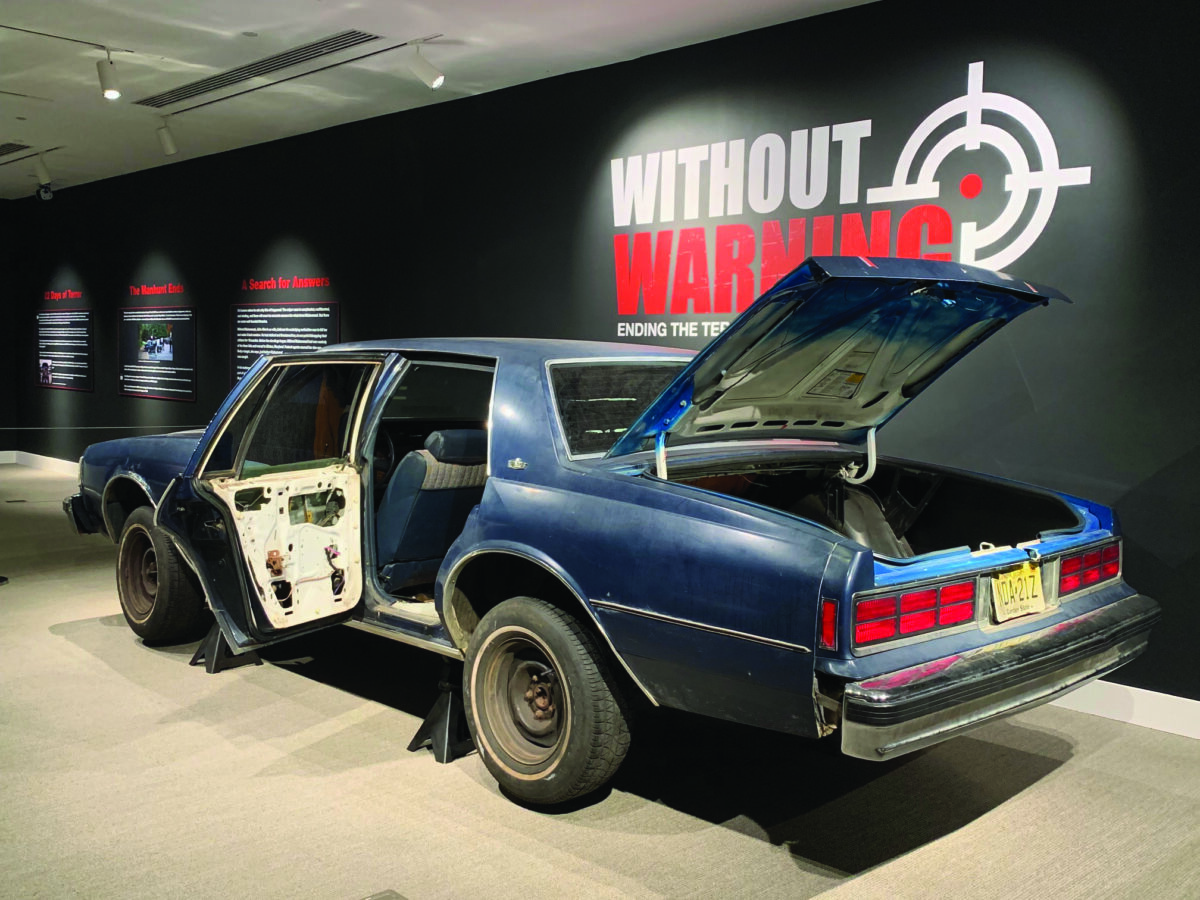
On October 24, 2002, police found the Chevrolet Caprice at a rest stop on Interstate 70 near Myersville, Maryland.
Inside the car, they found two men and a Bushmaster .223-caliber rifle.
The two men were later identified as John Allen Muhammad and Lee Boyd Malvo.
The car had been modified so that a shooter could fire from the trunk without being seen.
Ballistics tests later linked the rifle to several of the shootings.
The killing spree that terrorized the Washington, D.C., area for 23 days ended with this arrest.
How did a car and a rifle hide in plain sight for so long?
The car was a mundane object, a sedan parked at a rest stop.
The rifle was a commercial weapon, not a military secret.
The record does not detail the exact mechanics of how the trunk modification was used in each shooting.
That would require evidence.
For 23 days, the region shut down, schools closed, residents avoided public spaces.
A truck driver's tip ended it.
Two men sat in a parked car, a rifle in the trunk.
The spree was over.
The question of who pulled the trigger remains a matter of legal argument, not settled fact.
THE 23 DAYS
The first shooting came on October 2, 2002, outside a store in Maryland.
By October 3, five more people had been shot in the Washington, D.C., area.
Another fell on October 9, another on October 11, another on October 14, and one on October 22.
Ten people were killed and three wounded across the region before the spree ended on October 24.
The victims were shot at gas stations, outside stores, on streets, and at a school.
A 13-year-old boy, Iran Brown, was shot outside his middle school in Bowie, Maryland; he survived.
The region shut down in fear.
Schools closed, residents avoided public spaces, and police urged people to stay indoors.
The shootings were initially believed to be the work of a single sniper.
They were later attributed to two men operating together.
A note left at the scene of one shooting demanded $10 million and threatened more violence.
The note was later linked to Malvo's handwriting, according to the record.
The specific locations and order of all shootings are not fully itemized in the record.
It is not established who fired the rifle in each attack.
The question that still haunts the case is precisely that: who pulled the trigger.

Not because the record is silent.
But because the legal argument never settled it.
Chief Charles Moose led the investigation, coordinating a task force across state and federal agencies.
The break did not come from the task force.
It came from a truck driver's tip on October 24, pointing police to a parked Chevrolet Caprice.
Inside the car sat two men and a Bushmaster .223-caliber rifle.
The car had been modified so a shooter could fire from the trunk unseen.
The spree was over.
The terror had lasted 23 days.
THE ARREST AND THE EVIDENCE
Chief Charles Moose of the Montgomery County Police Department led the investigation.
He coordinated a multi-jurisdictional task force that included the FBI and the Bureau of Alcohol, Tobacco, Firearms and Explosives.
The break came on October 24, 2002.
A truck driver's tip led police to a parked Chevrolet Caprice at a rest stop on Interstate 70 near Myersville, Maryland.
Inside the car, police found Muhammad and Malvo.
They also found a Bushmaster .223-caliber rifle.
Ballistics tests linked the rifle to several of the shootings.
The car had been modified so a shooter could fire from the trunk unseen.
The suspects were also linked to earlier shootings in other states.
There was a killing at a liquor store in Montgomery, Alabama.
There was a shooting outside a restaurant in Baton Rouge, Louisiana.
A note left at the scene of one shooting demanded $10 million and threatened more violence.
The note was later linked to Malvo's handwriting.
The exact nature of the truck driver's tip is not detailed beyond the date.
The timing of the arrest is not detailed beyond the date.
What the driver saw, what he reported, how the police moved — the record does not say.
It is a gap in the documented record.
It is also the moment the spree ended.
TWO MEN, TWO STORIES
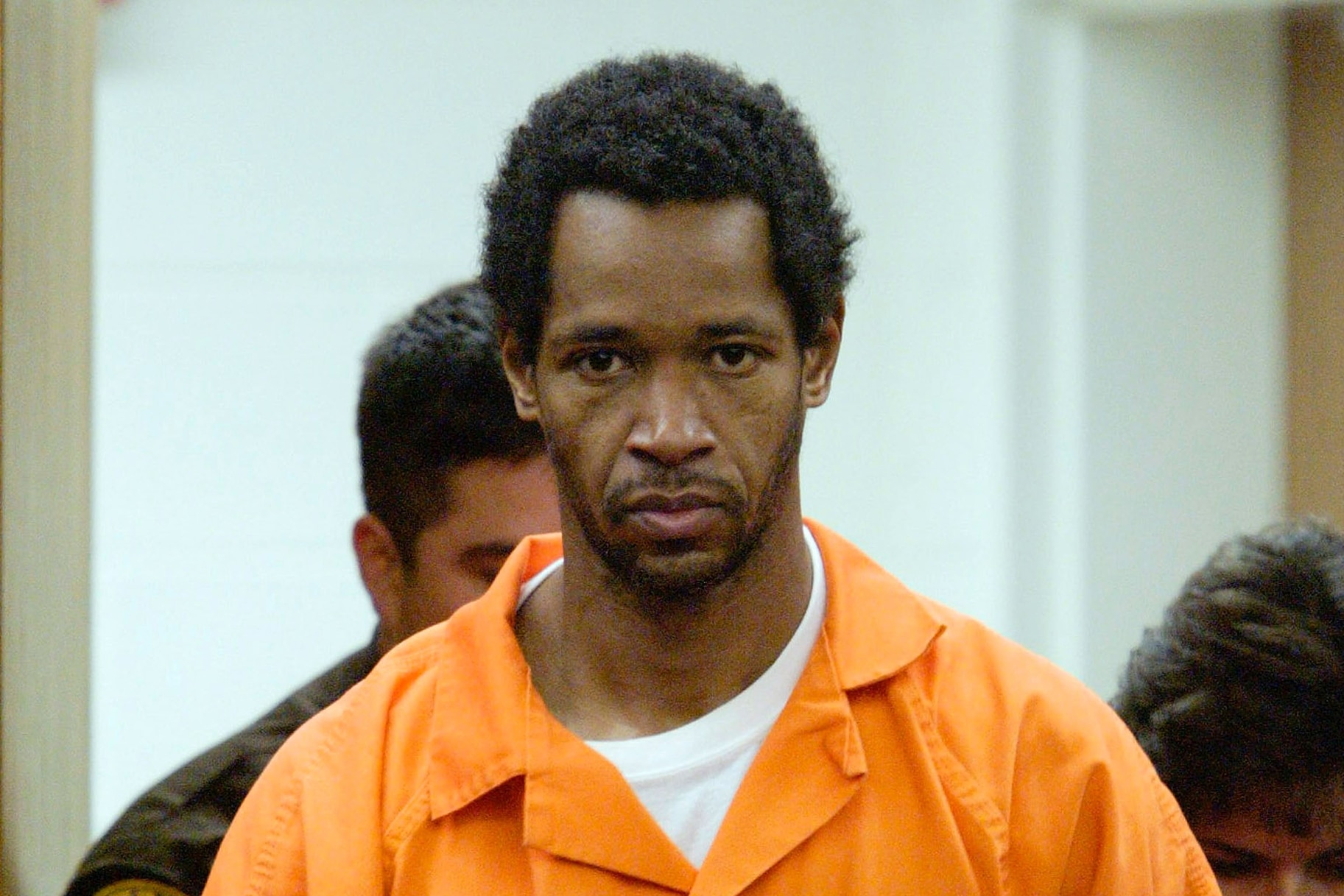
Muhammad was tried first, in Prince William County, Virginia.
The charge was capital murder in connection with the killing of a man at a gas station on October 9, 2002.
The prosecution, led by Paul Ebert, argued that Muhammad was the mastermind of the attacks.
Muhammad was convicted on November 17, 2003, and sentenced to death on March 9, 2004.
Malvo was tried separately in Chesapeake, Virginia, for the killing of a different victim.
He was convicted and sentenced to life without parole on December 23, 2003.
Malvo's defense argued that he was a juvenile who had been manipulated by Muhammad.
Two narratives, then. A mastermind. A manipulated teenager.
The exact degree of that manipulation is a matter of legal argument, not settled fact.
Muhammad's conviction was upheld on appeal.
But in 2017, a federal appeals court ruled that a mental health evaluation should have been allowed during the sentencing phase.
It is a ruling about procedure. It is not a ruling about guilt.
The mastermind was resentenced to life without parole in 2018.
The teenager remains in prison, serving life without parole.
What the jury heard was one story. What the appeals court saw was a question.
Who controlled the rifle? Who controlled the boy?
The record does not resolve it. The record offers two men, two stories, and a Bushmaster rifle in a modified Caprice.
That is what the evidence supports. That is all the evidence supports.
AND THE STORY STILL ISN'T OVER
John Allen Muhammad was executed by lethal injection on November 10, 2009, at Greensville Correctional Center in Virginia.
Lee Boyd Malvo remains in prison, serving life without parole.
In 2021, a federal court ruled that Malvo's sentence was unconstitutional under Supreme Court precedent regarding juvenile offenders.
He was resentenced to life without parole again in 2023.
Mildred Muhammad, John Allen Muhammad's ex-wife, has become an advocate for domestic violence survivors.
She has written a book about her experiences.
The families of the victims have continued to speak publicly about their losses.
Some have expressed frustration over the legal proceedings and the attention given to the perpetrators.
The specific frustrations of individual families are not detailed in the record.
Not because the record hides them. Because the record does not contain them.
The case remains one of the most studied examples of a serial shooting spree in American history.
Studied by law enforcement. Studied by prosecutors. Studied by criminologists.
The question that haunts the case is not a legal question.
Who controlled the rifle? Who controlled the boy?
The trial answered who was convicted. The trial answered who was sentenced.
The trial did not answer who pulled the trigger.
That remains a matter of legal argument, not settled fact.
The record ends with a rifle, a car, and two arrests.
One man is gone. One man remains.
The families carry what the record cannot resolve.
Advertisement
You may also like
The bloody glove found on O.J. Simpson's estate that didn't fit in court
The glove lay on the ground of the estate on Rockingham Avenue. It was a bloody glove, discovered by a detective who had come…
The dentist who was a person of interest in the Black Dahlia case, then quietly cleared
She thought it was a mannequin. A local resident, walking in Leimert Park on the morning of January 15, 1947, saw what looked like…
The Glock Keffe D says he handed over — and the white Cadillac that changed rap history
The white Cadillac moved down the Las Vegas Strip on the night of September 7, 1996. A black BMW 750iL rolled ahead of it,…
The 14-foot aluminum fishing boat Scott Peterson bought weeks before Laci vanished
A 14-foot aluminum fishing boat. That is what Scott Peterson bought weeks before Laci vanished, a documented purchase, not a rumor. On December 24,…
Why a Colorado jury heard a confession that changed everything about the Watts family case
The friend called police on the morning of August 13, 2018. Shanann Watts, 15 weeks pregnant, was missing with her daughters, Bella, 4, and…
The blood on his pajama sleeve that contradicted Jeffrey MacDonald's intruder story
The pajama sleeve was examined under a microscope, and the blood on it held a pattern. The pattern was a transfer, a smear of…