The cell phone video that put Alex Murdaugh at the kennels — and shattered his alibi
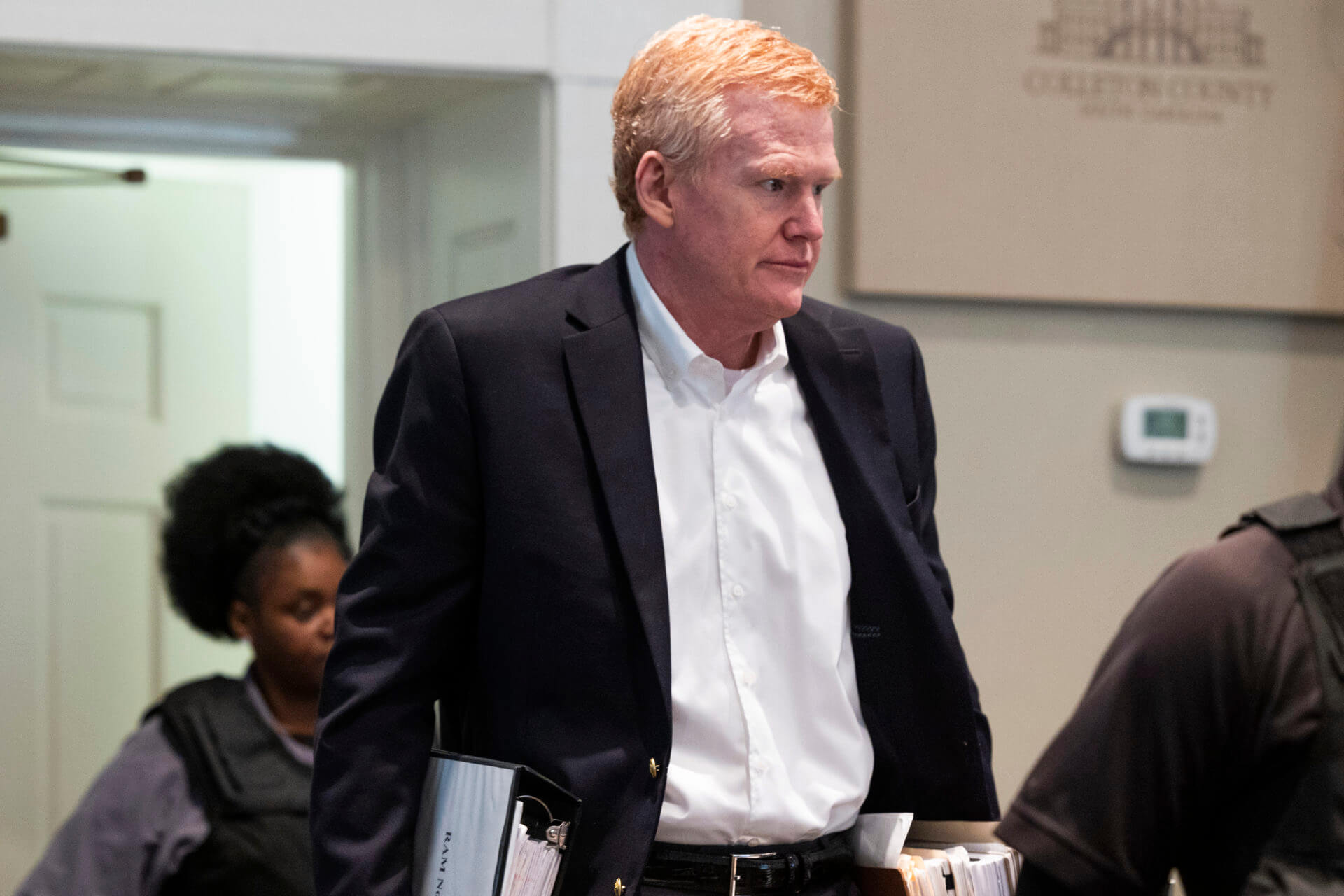
On June 7, 2021, Paul Murdaugh and his mother, Maggie, were found shot to death at the family's hunting estate, Moselle, near Islandton, South Carolina.
Paul, 22, had been shot twice with a shotgun.
Maggie, 52, had been shot multiple times with a rifle.
The bodies were discovered by Alex Murdaugh, Paul's father and Maggie's husband, who called 911 claiming he had found them after returning from visiting his ailing father.
Then the trial produced a cell phone video.
The video was recorded by Paul moments before the killings.
It placed Alex Murdaugh at the kennels near the murder scene.
The exact time the video was recorded is not specified in the source.
What the record does establish is this: the video placed him there, contradicting his alibi that he had been napping at the time.
The prosecution presented the video as key evidence at trial.
A son's own recording, implicating his father.
Not because of online speculation.
Not because of a viral theory.
Because the video was played in court.
The weight of it settled over the courtroom.
One piece of evidence that unraveled everything.
Alex Murdaugh had said he was asleep.
The video said otherwise.
He was at the kennels.
The kennels were near the murder scene.
That is what the record shows.
That is what the jury saw.
THE 911 CALL
The 911 call came from Alex Murdaugh himself.
He told the dispatcher he had found the bodies.
He said he had just returned from visiting his ailing father.
The bodies were his wife, Maggie, and his son, Paul.
He was Paul's father and Maggie's husband.
The exact content of that call is not in the record.
What is known is the sequence: the discovery, the call, the arrival of responders.
The Colleton County Sheriff's Office took the first report.
Then the South Carolina Law Enforcement Division took over the investigation.
That handoff happened early.
That handoff mattered.
The case drew national attention almost immediately.
Not because of the victims alone.
Because of the name.
The Murdaughs were a legal dynasty in South Carolina's Lowcountry.
Prosecutors, judges, and lawyers came from that family for generations.
That prominence shaped the first days of the case.
It also shaped the scrutiny.
Early on, Alex Murdaugh was not publicly named a suspect.
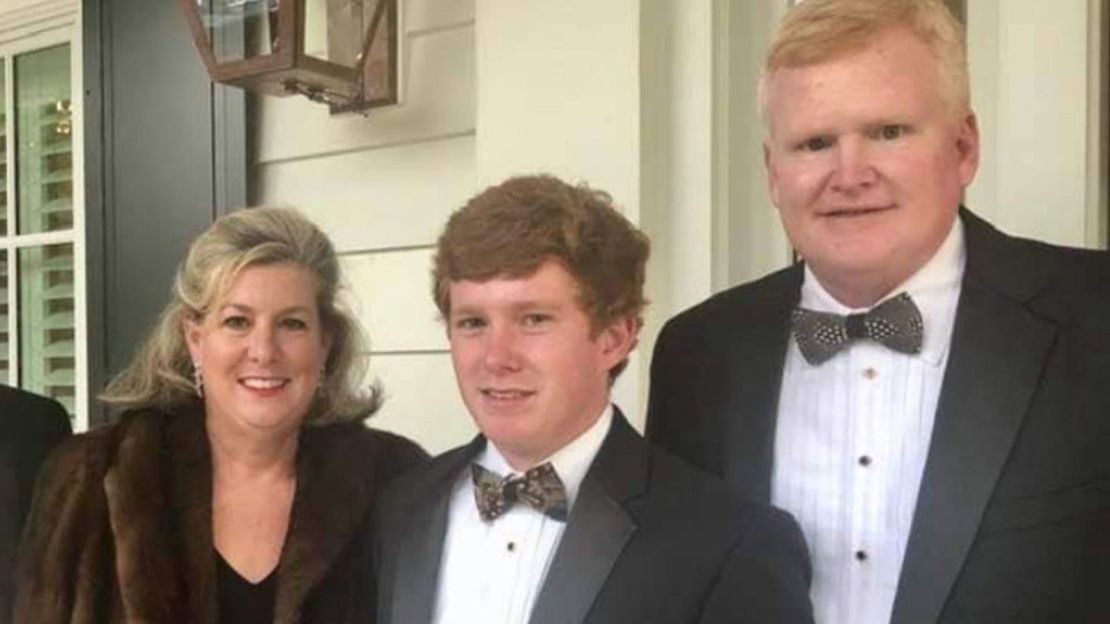
He was the grieving caller.
He was the patriarch who found his wife and son.
He was the man on the phone, not the man in the crosshairs.
The family's legal standing initially shielded him from suspicion.
That is what the record shows.
That is what the fog looked like.
The investigation would not stay in that fog for long.
But in the beginning, the caller was not yet a suspect.
He was the witness.
He was the father.
He was the husband.
The questions came later.
The answers took longer.
THE ROADSIDE SHOOTING
Three months after the bodies were found, Alex Murdaugh was shot on a roadside.
September 2021. A vehicle, a handgun, and a wounded man calling for help.
He survived.
Then he admitted he had orchestrated the shooting himself, with the help of another man.
The man who helped him pleaded guilty to assisting in the scheme.
Prosecutors say the alleged motive was a life insurance payout for his surviving son.
That motive is alleged, not proven in the record.
What the record does establish is the admission itself, and the guilty plea that followed.
The grieving widower became a plotter.
The victim became a suspect.
The investigation pivoted.
Alex Murdaugh had been stealing millions from his law firm and his clients.
The financial fraud was extensive, and it was about to be exposed.
The roadside shooting looked like an attempt to distract, to delay, to buy time.
That is what the prosecution would later argue.
It is a theory of motive, not a documented fact.
But the admission was real. The plea was real. The money was real.
The case twisted, and it kept twisting.
The man who called 911 to report his wife and son dead now stood accused of staging his own shooting.
Not because the evidence said so at the time.
But because he said so himself.
THE TRIAL
The trial began in January 2023 in Colleton County.
Alex Murdaugh was charged with two counts of murder and two counts of possession of a weapon during the commission of a violent crime.
The prosecution presented over 75 witnesses over several weeks.
SLED agents testified about gunshot residue, shell casings, and the trajectory of the shots.
They walked the jury through the kennels video, frame by frame.
The prosecution argued that Alex murdered his wife and son to distract from his mounting financial crimes, which were about to be exposed.

The defense argued that the evidence was circumstantial and that Alex was a devoted family man.
That was the clash: motive against character, trajectory against loyalty.
Not because the state had a confession.
But because the state had Paul's own video, played in court, placing Alex at the kennels.
The defense's counter-narrative beyond "circumstantial" and "devoted family man" is not detailed in the record.
What the jury heard was the weight of testimony.
What they saw was the cell phone video.
On March 2, 2023, the jury found Alex Murdaugh guilty on all four counts.
He was sentenced to two consecutive life sentences without the possibility of parole.
The judge told Murdaugh he had been "lying" and that the verdict was "the only way justice could be served."
The courtroom fell silent.
It is a conviction.
It is also a sentence that ends the trial, not the story.
AND THE STORY STILL ISN'T OVER
The verdict landed on March 2, 2023.
It did not end the case.
Alex Murdaugh has filed appeals, and those appeals remain pending.
His appeals have been denied at the trial level.
They are ongoing in higher courts, though the status of those proceedings is not specified beyond that.
The murder convictions carry two consecutive life sentences without parole.
Those sentences are not the only ones he is serving.
He has pleaded guilty to numerous federal and state financial crimes, including fraud and money laundering.
Those pleas brought additional sentences.
The financial crimes were the motive the prosecution pointed to.
They were also the reason the family's legal legacy collapsed.
Buster Murdaugh, the surviving son, has maintained his father's innocence publicly.
He was the intended beneficiary of the alleged roadside scheme.
That scheme involved Curtis Edward Smith, who pleaded guilty to assisting Alex Murdaugh.
Smith was sentenced to prison for his role.
The roadside shooting is its own chapter.
It is also part of the same story.
The family's name once carried weight in South Carolina's Lowcountry.
That weight is gone.
The case has spawned documentaries, books, and podcasts.
It has been dissected online, in print, and on screen.
What the record shows is narrower than the coverage.
It shows a conviction.
It shows appeals.
It shows financial crimes admitted in court.
It does not show what the higher courts will decide.
That decision is still to come.
The courtroom fell silent at the sentencing.
The story has not fallen silent since.
Advertisement
You may also like
The jailhouse witness and the 31 days Casey Anthony never reported Caylee missing
Cindy Anthony called 911 from her Orlando home on July 15, 2008. She reported that her 22-year-old daughter, Casey Anthony, had stolen her car.…
Baltimore Teen Vanished in 1999, Ex-Boyfriend Convicted in Case That Gripped America
The last bell at Woodlawn High School rang on January 13, 1999, and Hae Min Lee walked out of the building. She was 18,…
The bloody shirt scrap mailed to a newspaper that proved a killer's boast
A scrap of shirt arrived at a newspaper, stiff with dried blood. It was mailed as proof. Proof that the writer was the killer.…
The 2007 deal that kept Epstein's federal case secret — and the phone records that broke it open
In 2005, a mother walked into a Palm Beach police station and told officers her 14-year-old stepdaughter had been sexually abused at a mansion.…
The $5,800 bundle of cash a boy found along a riverbank in 1980
The boy was eight years old, playing along the Columbia River near Vancouver, Washington, in 1980. He found a rotting bundle of cash half-buried…
Why did Susan Atkins confess to a cellmate — and what did Kasabian see?
Virginia Graham had a cellmate who talked. Susan Atkins was in jail in October 1969 on unrelated charges when she told Graham about the…