The pharmacy receipt that tied John Wayne Gacy to Robert Piest's vanishing
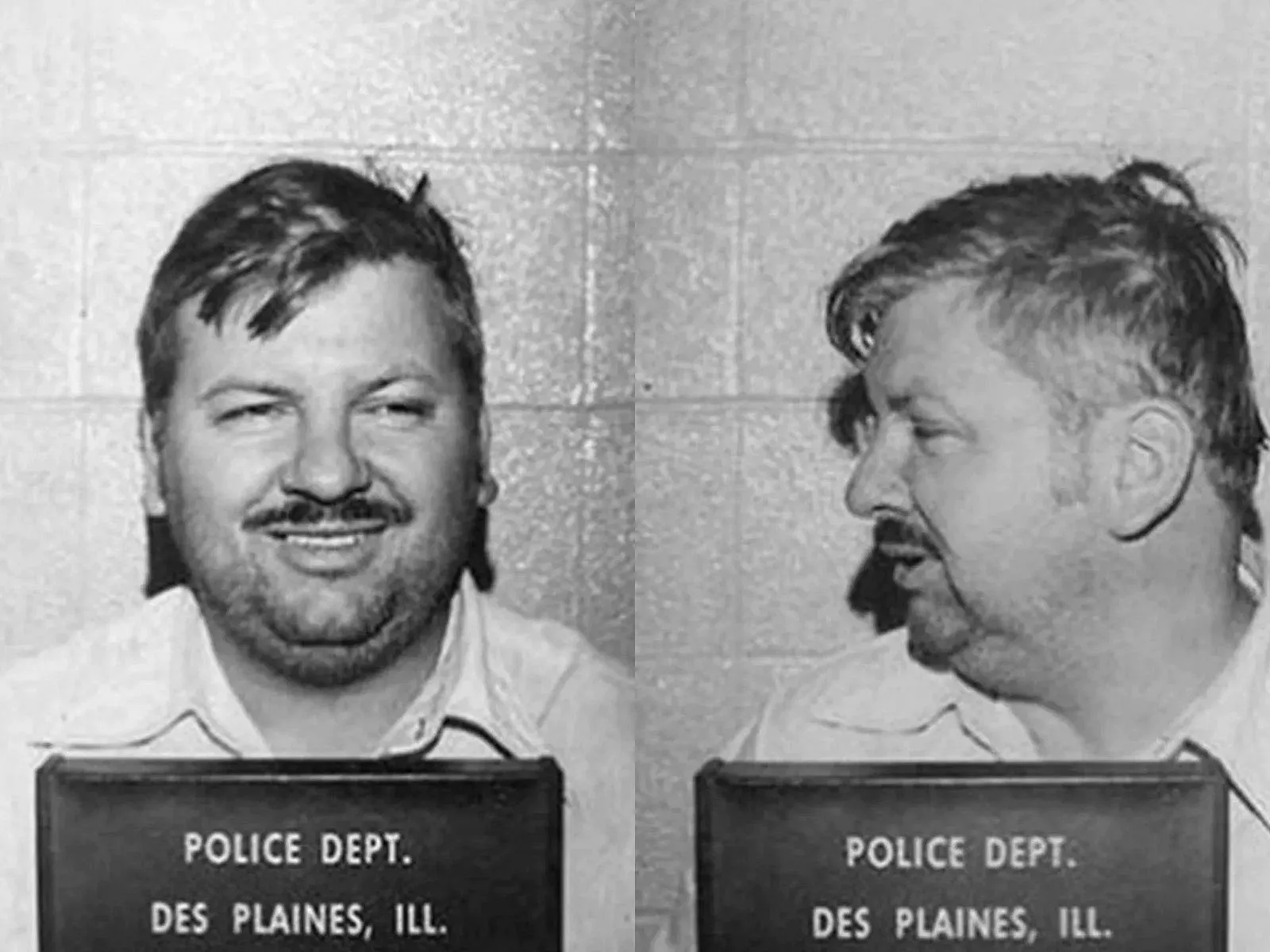
The pharmacy receipt was found in John Wayne Gacy's home.
It was found after Robert Piest, a teenager, was last seen at a pharmacy where Gacy had been doing contracting work.
Piest had told his mother he was going to discuss a contracting job with a man named John Gacy.
That was on December 11, 1978.
He did not return.
The receipt is documented evidence from the investigation.
It links Gacy to Piest's disappearance.
What the receipt says, exactly, is not detailed in the record.
What it proves is not established.
It is a piece of paper.
It is also the reason the case opened at all.
The receipt ties a contractor to a missing teen.
The contractor denied involvement when the lead detective interviewed him.
The teen stayed missing.
A receipt does not confess.
A receipt does not explain how a boy vanishes from a pharmacy parking lot.
It only sits there, in the record, a small paper trail pointing to a man who did contracting work.
The exact contents of the receipt are not detailed in the record.
What it proves is not yet established.
That would require evidence.
THE VANISHING
She reported him missing on December 11, 1978, after he failed to return from his part-time job at a pharmacy.
She told police he had gone to discuss a contracting job with a man named John Gacy.
The lead detective traced Gacy and interviewed him on December 13, 1978.
Gacy denied involvement.
He said he knew nothing about the teenager.
The detective checked Gacy's background anyway.
It was a check that found a prior conviction for sodomy in Iowa and time served.
What exactly Piest and Gacy discussed is not in the record.
That part of the conversation is lost.
The denial held for eight days.
The trail was warm, but it was also stalled.
A mother's report had produced a name, an interview, and a denial.
It had not produced her son.
The detective had a suspect with a criminal history and no alibi that satisfied him.
He had a missing boy who had named the suspect himself.
He did not yet have a body.
He did not yet have a warrant.
He had a denial, a record, and a date on a calendar: December 13, 1978.
The waiting began.
THE SEARCH WARRANT
The warrant was signed on December 21, 1978.
Police entered the house at 8213 West Summerdale Avenue that day.
They had probable cause, a signature, and the missing teenager's case file.
Inside, they found a foul odor.
Then they found human bones in the crawl space.
Gacy was arrested that same day.
In custody, he confessed to killing 33 people, providing detailed accounts of each murder, according to the investigation.
The remains of 29 victims were later recovered from the crawl space and the Des Plaines River.
The exact number of victims is stated as 33 in the confession.
The condition of the remains is not fully detailed in the source.
Neither is the precise count of what was recovered from each location.
The record establishes the confession, the arrest, and the recovery.
It does not establish every detail of what the crawl space held or how each body came to be there.
That would require evidence the source does not provide.
The search warrant was the hinge.
Before it, police had a denial and a calendar date.
After it, they had bones, a confession, and a case that would run for years.
The foul odor was the first indication.
The bones were the second.
The confession was the third.
Each followed the warrant, and the warrant followed the receipt found in the home.
The receipt tied Gacy to Robert Piest's vanishing.
The bones tied him to something larger.
The confession tied him to all of it, in his own words, on the record.
THE TRIAL
The indictment came down on 33 counts of first-degree murder.
The trial opened on February 6, 1980, before Judge Louis Garippo.
The defense argued that Gacy was insane at the time of the murders.
They presented psychiatric testimony that he suffered from a personality disorder.
The prosecution countered with testimony that Gacy had planned the murders carefully.
He had taken steps to conceal them, the state said.
Not because he was out of control.
Because he was in control of every detail.
The receipt.
The bones.
The confession.
Each piece was placed before the jury in turn.
The specific psychiatric testimony is not in the record.
The prosecution's rebuttal details are not in the record either.
What the record shows is the clash itself.
On March 12, 1980, the jury found Gacy guilty of all 33 counts.
The sentencing phase followed.
The jury recommended the death penalty.
Judge Garippo sentenced Gacy to death on March 13, 1980.
The courtroom was the arena.
The evidence met the defense there.
The defense met the evidence there.
The verdict settled which side carried weight.
It is a verdict.
It is not a confession of motive.
The record does not establish what the psychiatrists said.
It establishes what the jury decided.
AND THE STORY STILL ISN'T OVER
The house at 8213 West Summerdale Avenue was demolished in 1979.
The case is closed.
Gacy's appeals were unsuccessful, and he was executed by lethal injection on May 10, 1994, at Stateville Correctional Center in Illinois.
That is where the record ends.
It is not where the story ends.
Several victims remain unidentified.
Forensic anthropologists and genealogists have tried to name them.
They have not succeeded.
The identities of the remaining unidentified victims are not established.
That is what the record says, plainly.
Carole Hoff, Gacy's wife during the murders, was interviewed but not charged.
She has spoken publicly about her marriage.
She was there.
She was not implicated.
The lead detective has given interviews and written about the case in the years since.
The prosecutor has done the same.
They return to it.
Why would they?
The house is gone.
The bodies were exhumed.
The verdict was delivered.
Gacy is dead.
And still, the unnamed victims keep the story alive.
Not because the evidence is in doubt.
But because the names are missing.
What does it mean to close a case with empty spaces?
What does it mean to bury someone without a name?
What does it mean to write the history of a man and leave out the people he took?
That would require evidence.
The record does not establish their names.
It establishes what the jury decided.
It establishes what the state did.
It establishes what the house became.
Nothing but a vacant lot.
The receipt, the crawl space, the trial, the execution.
All of it documented.
All of it closed.
All of it still open.
Advertisement
You may also like
The Bushmaster rifle in a modified Caprice that ended a 23-day terror — and the question that still haunts
The truck driver saw the parked Caprice and called it in. On October 24, 2002, police found the Chevrolet Caprice at a rest stop…
The drifter who confessed to Adam Walsh's murder — then recanted, then confessed again
He was a drifter, a man already serving time for other crimes in 1983. That year, Ottis Toole confessed to abducting and killing six-year-old…
The 'Pig Woman' testimony that sent a widow and her brothers to trial for a priest's murder
She called herself the Pig Woman, and she was dying. In 1926, a farmer's wife known by that name gave testimony that she had…
The jailhouse witness and the 31 days Casey Anthony never reported Caylee missing
Cindy Anthony called 911 from her Orlando home on July 15, 2008. She reported that her 22-year-old daughter, Casey Anthony, had stolen her car.…

Baltimore Teen Vanished in 1999, Ex-Boyfriend Convicted in Case That Gripped America
The last bell at Woodlawn High School rang on January 13, 1999, and Hae Min Lee walked out of the building. She was 18,…

The bloody shirt scrap mailed to a newspaper that proved a killer's boast
A scrap of shirt arrived at a newspaper, stiff with dried blood. It was mailed as proof. Proof that the writer was the killer.…