The manifesto his brother recognized — and the FBI task force that missed the trail for years
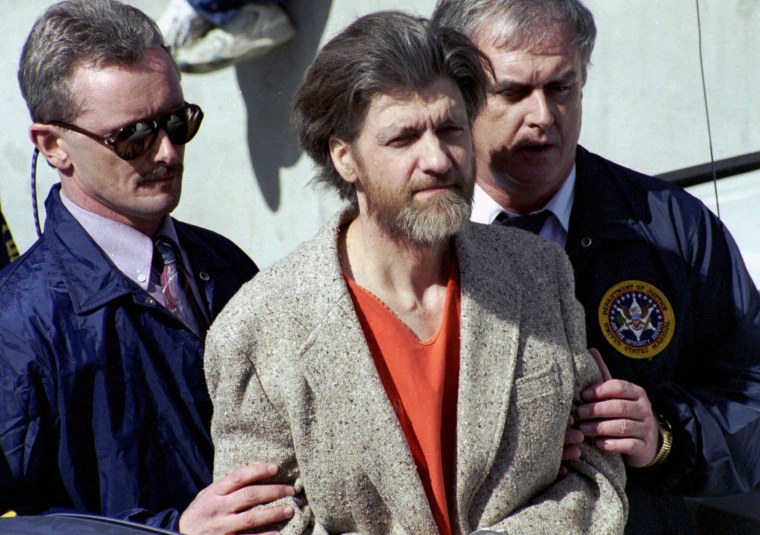
The manifesto was 35,000 words long.
Its title was "Industrial Society and Its Future," and in September 1995, the Washington Post and the New York Times published it together.
They did so at the FBI's urging.
The author was the Unabomber, the man who had sent mail bombs across the United States since 1978, killing three people and injuring 23 others.
The bombs had come in wooden boxes.
They had carried false return addresses.
For sixteen years, the FBI's Unabom task force, formed in 1979, had chased the trail.
It had struggled.
It had focused on other suspects.
One man named in the media as a possible suspect was later cleared.
Then a brother read the published manifesto.
David Kaczynski recognized the writing style.
He recognized it as his brother Theodore's.
According to his later account, he studied the text and saw the phrasing, the arguments, the turns of mind.
He contacted the FBI.
The exact content of that initial contact is not in the record.
What is documented is what followed: agents searched Theodore Kaczynski's remote cabin near Lincoln, Montana, in April 1996.
They found bomb-making materials.
They found journals.
They found a completed bomb.
They found handwritten notes matching the manifesto's language.
Typewriter and handwriting samples were matched.
A federal task force had worked for over a decade.
A family member read the newspaper and solved it in weeks.
Was it luck that the manifesto was published at all?
Was it pressure from the FBI that put it in print?
Was it the author's own demand, his insistence on being heard?
That would require evidence.
The record shows only this: the newspapers printed the words, the brother recognized the voice, and the trail that had gone cold for years suddenly ran straight to a cabin in Montana.
THE BOMBS
The first bomb arrived in a package, and it found a security officer at Northwestern University.
That was 1978.
By the time the trail went cold, the bombs had killed three people and injured 23 others across the United States.
The targets were not random, exactly, but they were varied.
Academics received packages.
Airline executives received packages.
A computer store owner received one too.
The bombs came by mail, or they were placed by hand.
They were often wooden boxes, fitted with pipe bombs or other explosive devices, and they carried false return addresses.
The FBI gave the case a name: Unabomber.
It was a portmanteau of "university" and "airline bomber," the two worlds the early attacks touched.
The final bombing killed a timber industry lobbyist in Sacramento, California, in April 1995.
The names of the dead and injured are not in the record for this section.
Only their roles are known: a security officer, an academic, an airline executive, a computer store owner, a lobbyist.
That is what the record establishes.
The persistence is what unsettles.
Seventeen years of packages, of wooden boxes, of false return addresses.
The randomness of it, the long gaps between explosions.
A bomb in 1978, then another, then another, each one a message sent to someone who had done nothing.
The FBI called it a task force in 1979.
The task force struggled for years.
That is documented.
What is not established is exactly why the trail went cold for so long.
The record shows only the bombs, the victims, and the name the Bureau gave the case.
THE CABIN
Theodore Kaczynski, a former mathematics professor, lived in a remote cabin near Lincoln, Montana.
The cabin was small, roughly ten by twelve feet, with no electricity and no running water.
It was there that David Kaczynski’s alert led federal agents in April 1996.
They searched the cabin and found bomb-making materials.
They found journals.
They found a completed bomb, live and ready.
The evidence included a live bomb, along with handwritten notes matching the manifesto’s language.
Agents also matched typewriter and handwriting samples to Theodore Kaczynski.
The physical case was overwhelming.
The manifesto had been published in 1995, at the FBI’s urging, and David Kaczynski had recognized the prose.
He recognized the style before the Bureau did.
The investigation had run for nearly two decades before that recognition.
The FBI’s Unabom task force had formed in 1979.
It had focused early on other suspects, including a man named in the media who was later cleared.
That man’s identity is not established in the record.
The task force missed the trail for years.

What is documented is the cabin, the bomb, the journals, the handwriting.
What is documented is that a brother’s reading of a public document broke the case open.
What is not fully established is why the Bureau needed that help at all.
The trail was cold for a long time.
Then it was not.
The evidence found in the Montana cabin did not linger in doubt.
It matched the manifesto’s language.
It matched the typewriter.
It matched the hand that wrote the words.
The case moved forward on that physical record.
But the earlier failures remain in the record too, unnamed and unexplained.
THE TRIAL
The trial opened in January 1998 in Sacramento, California.
Theodore Kaczynski faced multiple federal counts: three counts of first-degree murder, two counts of murder by use of a bomb, and various explosives and firearms charges.
The defense sought to present evidence of mental illness.
Kaczynski resisted an insanity defense.
The dispute over that issue broke the trial open.
Kaczynski pleaded guilty to all charges in January 1998.
The plea avoided the death penalty.
The judge sentenced him to life in prison without the possibility of parole.
The plea agreement specified that Kaczynski would not appeal.
It was a resolution, not a verdict.
The trial record does not establish the specific arguments made by the prosecution and defense during the proceedings.
That part is not in the record.
What remains is the shape of the bargain: a guilty plea traded against a sentence, and the death penalty set aside.
The question of intent versus illness was never settled in open court.
It was settled in a plea agreement instead.
The judge accepted the plea.
The sentence was life.
The case ended where the bombs began — in Sacramento, California.
Not because the record explains why. But because the final bombing happened there, and the trial followed.
The defense argued for mental illness; the prosecution argued premeditation.
Those positions are documented.
The arguments themselves, the testimony, the legal sparring — that would require the trial transcript.
The transcript is not in this record.
What is in the record is simpler: the charges, the plea, the sentence, the no-appeal clause.
Kaczynski went from the cabin to the courtroom to federal custody.
He remains there.
The trial was brief. The plea was total. The life sentence was permanent.
AND THE STORY STILL ISN'T OVER
He is serving his life sentence at the Federal Supermax prison in Florence, Colorado.
He has remained in federal custody since his arrest, from the cabin to the courtroom to the cell.
His brother, David Kaczynski, has spoken publicly about the case.
He has expressed grief over the victims.
He has expressed grief over his decision to turn in his brother.
The case changed the FBI.
It led to changes in procedures regarding domestic terrorism.
Kaczynski has occasionally made statements from prison.
No parole has occurred.
No release has occurred.
The victims' families have largely stayed out of the public eye since the trial.
They are absent from the record, and so the record holds only what was said in court.
The plea agreement specified that Kaczynski would not appeal.
Any possibility of future legal motions or appeals is not in the record.
That would require evidence.
The trial was brief.
The plea was total.
The life sentence was permanent.
Justice was served, the prosecution argued, and the defence had sought to present evidence of mental illness, but Kaczynski resisted an insanity defense.
He resisted, and he pleaded guilty to all charges in January 1998, avoiding the death penalty.
The judge sentenced him to life without the possibility of parole.
The story continues in prison.
It continues in memory.
It continues in the quiet of families who have not spoken.
She was on the ground below, one of the injured, and she has not been heard from since the trial.
Not because the case is closed.
But because the case, for them, never opens again.
The manifesto is in the archive.
The cabin is in the record.
The brother is in the public.
The bomber is in Florence.
And the story still isn't over.
Advertisement
You may also like
Why the Amityville jury heard about a personality disorder — and rejected it
The neighbor who called police that morning reported a disturbance at 112 Ocean Avenue in Amityville, New York. It was November 13, 1974. Officers…
In Casey Anthony trial, the trunk evidence that split the courtroom
The trunk of the car was opened in a garage in Orlando, and the air that came out had a smell that witnesses later…
The pharmacy receipt that tied John Wayne Gacy to Robert Piest's vanishing
The pharmacy receipt was found in John Wayne Gacy's home. It was found after Robert Piest, a teenager, was last seen at a pharmacy…
The 8:44 p.m. video on Paul's phone that placed Alex Murdaugh at the kennels
The phone was in Paul Murdaugh’s hand, or near it, at 8:44 p.m. on June 7, 2021. The video it recorded captured voices. Investigators…
Why the BTK killer's floppy disk question sealed his fate — and the trial that followed
The question came in the middle of a taunting exchange, years after the silence ended. In 2004, Dennis Rader resumed sending letters to Wichita…
The cell phone video that put Alex Murdaugh at the kennels — and shattered his alibi
On June 7, 2021, Paul Murdaugh and his mother, Maggie, were found shot to death at the family's hunting estate, Moselle, near Islandton, South…