Why the Amityville jury heard about a personality disorder — and rejected it
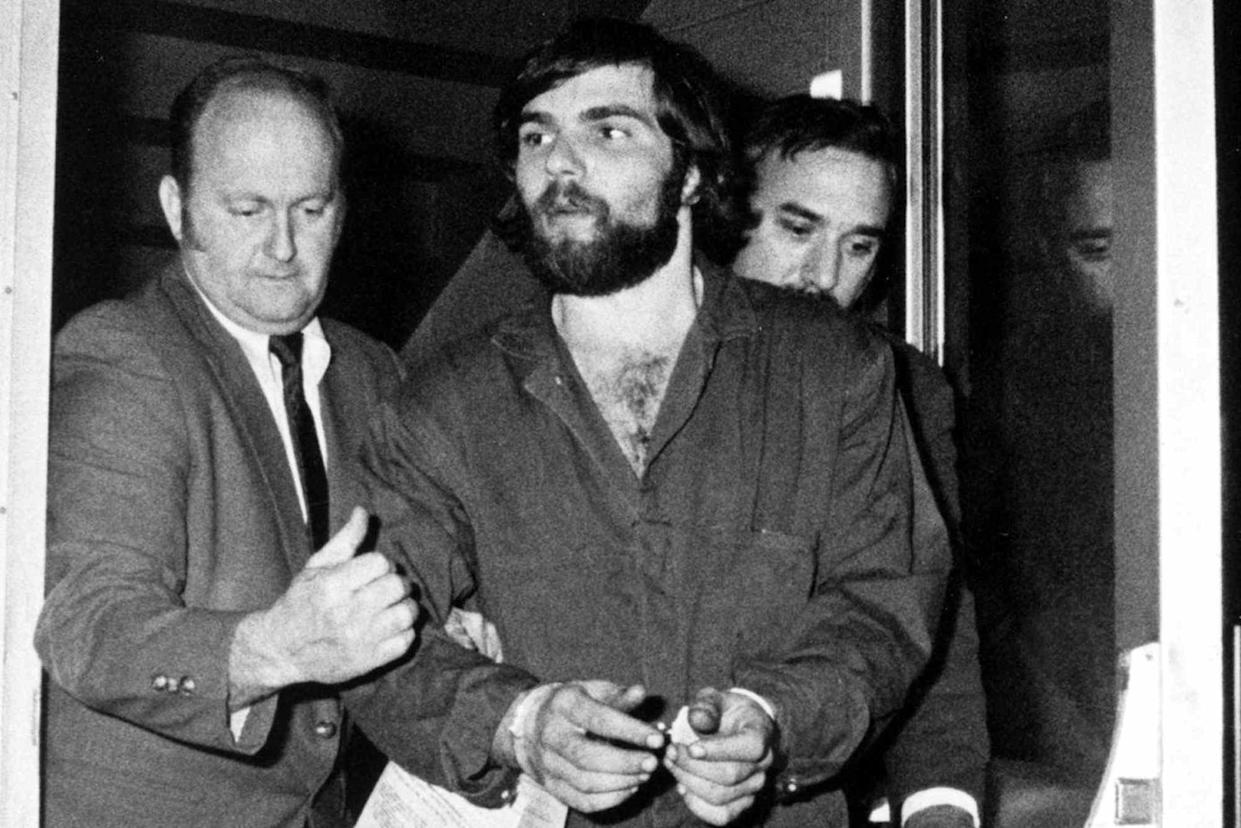
The neighbor who called police that morning reported a disturbance at 112 Ocean Avenue in Amityville, New York.
It was November 13, 1974.
Officers found six bodies inside the house.
Each victim had been shot with a .35-caliber Marlin rifle, according to the police investigation.
The eldest son, Ronald DeFeo Jr., was there.
He told police he had been away from the house during the shootings, according to the police report.
That account did not hold.
He later confessed, though his account of the events shifted, the police investigation stated.
The exact sequence of events inside the house that morning is not established in the record.
Who fired the rifle first, in what order, from where — the record does not say.
What the record shows is the aftermath: six bodies, one rifle, one confession that kept changing.
The house itself would become famous later, but that fame belongs to another story, not to this one.
This story is about a trial.
And before the trial, there was a question the bodies left behind.
Not who did it — he confessed.
But why.
That question would follow Ronald DeFeo Jr. into the courtroom, where the jury would hear about a personality disorder.
And then they would reject it.
THE CONFESSION AND THE RIFLE
He said he had been away.
The police report records that first story, the claim that Ronald DeFeo Jr. was not in the house when the shots were fired.
Then he was taken into custody.
The police investigation records a later account: a confession to the murders of his parents, his two brothers, and his two sisters.
The exact wording of that confession is not in the record.
What is in the record is the weapon.
The .35-caliber Marlin rifle was recovered from the house, according to police evidence.
Each of the six bodies had been shot with that rifle, the investigation found.
The rifle was the tangible thing.
It placed him in the room, whatever his words did not.
He was charged with six counts of second-degree murder, the court record states.
Not first-degree.
Not a charge of premeditation, at least not on paper.
The charge itself was the prosecution's first careful move.
It was a charge that left room for the argument to come.
The confession was a fact.
The rifle was a fact.
The personality disorder was the defence's story, and it would have to survive the weight of both.
THE TRIAL OPENS
The trial opened in October 1975 before Judge Thomas M. Stark.
DeFeo pleaded not guilty by reason of insanity.

The courtroom was a contest of two stories.
The defence argued he was not responsible for his actions.
The defence was led by the defense attorney, who presented psychiatric testimony supporting an insanity defense.
The prosecution was led by the district attorney, who argued that DeFeo had acted deliberately and with premeditation.
The prosecution's story was a plan.
The defence's story was a disorder.
The jury had to choose which one carried the weight of six bodies.
The specific psychiatric diagnoses are not in the record.
The specific testimony details are not in the record.
What remains is the shape of the argument: a man who confessed, and a defence that said the confession did not matter.
It is a plea that asks the law to look inside a mind.
It is a plea that the law rarely accepts.
The judge presided.
The psychiatrists testified.
The prosecution pushed back with deliberation and premeditation.
The defence pushed forward with illness and compulsion.
Both sides spoke to the same twelve jurors.
One story said the rifle was aimed with intent.
The other said the rifle was aimed by something DeFeo could not control.
Which story held?
The record does not say how the jury deliberated.
The record says only what they decided.
THE TWO STORIES
The defence argued that Ronald DeFeo Jr. suffered from a personality disorder and was not responsible for his actions.
That was the trial argument, presented through psychiatric testimony.
The prosecution countered with a different story.
DeFeo had planned the murders, they said.
He was legally sane.
He was responsible.
The jury heard both stories.
They heard psychiatrists describe a personality disorder.
They heard the prosecution describe premeditation.
They heard about the rifle, the confession, the planning.
What made them believe the prosecution’s story?
The jury’s internal reasoning is not in the record.
The record says only what they decided.
They rejected the insanity claim.
They found DeFeo guilty of six counts of second-degree murder.
He was sentenced to six concurrent terms of 25 years to life in prison.
Not because the psychiatric testimony was weak.

Not because the defence failed to present it.
But because the jury weighed it and found it insufficient.
That is the line.
The haunting lore tells a different story.
The book, the film, the house at 112 Ocean Avenue.
Those accounts are separate from the criminal proceedings.
The trial was about a man, a rifle, and six bodies.
The verdict was guilty.
The sentence was six concurrent terms.
The record does not explain the jury’s thinking.
It does not say which psychiatrist they trusted.
It does not say why the personality disorder argument failed.
It says only what they decided.
That was enough.
AND THE STORY STILL ISN'T OVER
An appeal was filed, and the appellate record shows the conviction was upheld.
Ronald DeFeo Jr. remained in prison for the rest of his life.
He died in custody on March 12, 2021, at the age of 69.
The exact cause of death is not in the record.
The house at 112 Ocean Avenue was later sold, and its address was changed due to the notoriety.
The case inspired books and films, but those works are not part of the criminal record.
They are stories built on the story, not the story itself.
The trial record ends where the haunting begins.
The jury heard the psychiatric testimony about the personality disorder, and they rejected it.
They heard the defence and the prosecution, and they decided.
That decision was final.
Not because the record explains every doubt.
But because the record shows what the jury did with those doubts.
The appeal did not undo it.
The conviction stood.
DeFeo died in custody, still serving the six concurrent terms of 25 years to life.
The house changed its number, but not its past.
The books and films found their audience.
The record, meanwhile, holds only what was proven.
It does not hold the ghost.
It does not hold the theory.
It holds a verdict, an appeal, a rejection, and a date of death.
That is what remains when the haunting is set aside.
The rest is not the record.
It is the story the record cannot answer.
That would require evidence.
Advertisement
You may also like
The fishing trip Scott Peterson said he took — and the evidence that says otherwise
He told investigators he spent the morning of December 24, 2002, fishing alone at the Berkeley Marina. That was the claim. It became the…
The carjacking victim who escaped — and what he told police about the Tsarnaev brothers
The Mercedes SUV was stopped on a Boston-area street on the night of April 18, 2013. Dun Meng was inside it. Two brothers took…
The Bushmaster rifle in a modified Caprice that ended a 23-day terror — and the question that still haunts
The truck driver saw the parked Caprice and called it in. On October 24, 2002, police found the Chevrolet Caprice at a rest stop…
The drifter who confessed to Adam Walsh's murder — then recanted, then confessed again
He was a drifter, a man already serving time for other crimes in 1983. That year, Ottis Toole confessed to abducting and killing six-year-old…
The 'Pig Woman' testimony that sent a widow and her brothers to trial for a priest's murder
She called herself the Pig Woman, and she was dying. In 1926, a farmer's wife known by that name gave testimony that she had…
The jailhouse witness and the 31 days Casey Anthony never reported Caylee missing
Cindy Anthony called 911 from her Orlando home on July 15, 2008. She reported that her 22-year-old daughter, Casey Anthony, had stolen her car.…