The carjacking victim who escaped — and what he told police about the Tsarnaev brothers
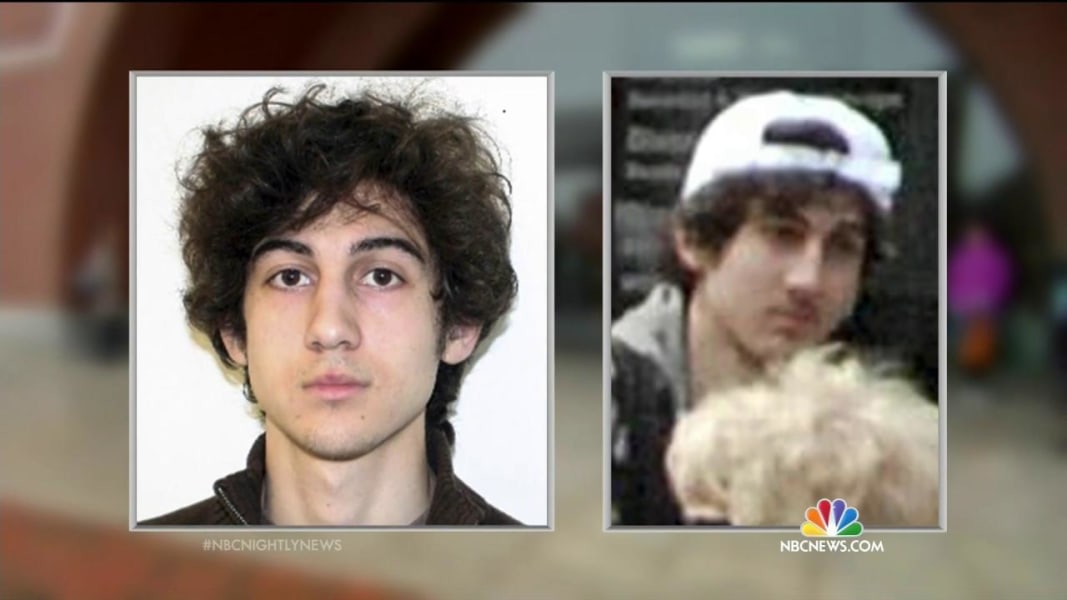
The Mercedes SUV was stopped on a Boston-area street on the night of April 18, 2013.
Dun Meng was inside it.
Two brothers took the vehicle, the case summary states, and they took him with it.
They told him they were responsible for the Boston Marathon bombing.
That was three days after the bombs went near the finish line on Boylston Street.
Three people were dead.
More than 260 were injured.
Dun Meng escaped during the manhunt that followed.
The exact circumstances of that escape are not detailed in the source.
He got out, and he went to the police.
What he told them became part of the prosecution's case at trial.
He testified about what happened in that car.
He testified about what the brothers said.
He was a key witness, according to the case summary.
The man who heard the confession inside a stolen Mercedes.
The man who got away.
What did he hear before he ran?
What did they say, and how?
The record does not establish the details of his flight.
It establishes what he reported.
That was enough to reach a jury years later.
THE BOMBS AND THE MANHUNT

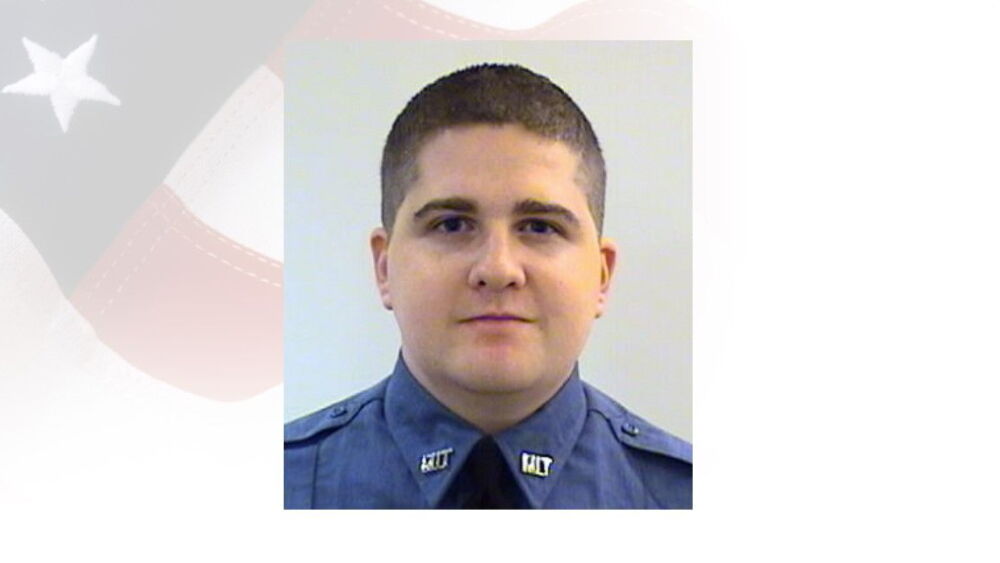
Three days after the bombs, the suspects killed a Massachusetts Institute of Technology police officer, Sean Collier.
On April 18, they carjacked a vehicle.
The ensuing chase led to a shootout in Watertown, Massachusetts.
The blasts themselves came first. On April 15, 2013, two pressure-cooker bombs exploded near the finish line of the Boston Marathon on Boylston Street.
The blasts killed three people and injured more than 260 others.
The bombs were placed in backpacks and detonated remotely.
The case summary records these facts in order. It does not detail every step between the bombing and the carjacking.
The specific sequence of events in those days is not fully established in the source.
What is established is the violence: the finish line, the officer, the stolen Mercedes.
The manhunt that followed was massive.
It ended with one brother dead and the other captured.
That capture came on April 19, a day after the shootout.
The younger brother was found hiding in a boat in a Watertown backyard.
The record does not say what he wrote there.
That would require evidence the case summary does not provide.
THE TESTIMONY
The trial began in March 2015.
Dun Meng took the stand for the prosecution.
He was the man the brothers had taken at gunpoint from his Mercedes SUV on the night of April 18, 2013.
He testified about what happened inside that vehicle.
According to the case summary, he told police the suspects said they were responsible for the bombing.
That statement became critical information during the manhunt.

His testimony was part of the prosecution's case against Dzhokhar Tsarnaev.
He was a witness who had faced the suspects and lived to tell it.
The full content of his testimony is not in the source.
The record does not establish what else he said on the stand.
It does not establish how the prosecution used each detail.
It does not establish how the defence tried to answer him.
That would require evidence the case summary does not provide.
He was one witness among many.
The victims' families also testified.
The boat owner who found the younger brother testified too.
But Dun Meng's account carried a particular weight.
He was not at the finish line.
He was in the car with them.
The record shows he escaped.
It shows he told police what the brothers had told him.
Everything beyond that remains in the transcript, not in the summary.
THE PROSECUTION AND THE DEFENCE
The prosecution argued that the brothers acted together, and that Dzhokhar was a willing participant.
The defense, led by Judy Clarke, did not dispute that Dzhokhar committed the acts.
She argued that Tamerlan was the mastermind, and that the younger brother was influenced by the older one.
The defense sought a life sentence, not the death penalty.
On April 8, 2015, the jury found Tsarnaev guilty on all 30 counts.
The verdict was complete. The reasoning behind it was not recorded in any detail.
Was he a willing actor?
Was he a manipulated younger brother?
The record shows the verdict, not the jury's path to it. That would require evidence the summary does not provide.
AND THE STORY STILL ISN'T OVER
On May 15, 2015, the jury sentenced Dzhokhar Tsarnaev to death.
The trial judge formally imposed the death sentence on June 24, 2015.
Then the story turned again.
In 2020, a federal appeals court overturned the death sentence.
The court ruled that the trial judge had not adequately screened jurors for bias.
The prosecution's case had rested on testimony like Dun Meng's. The defence had argued Tamerlan was the mastermind. The jury had heard it all, and still chose death.
In March 2022, the U.S. Supreme Court reinstated the death sentence.
The case returned to where it had been. It is settled. It is not settled.
Dzhokhar Tsarnaev is on federal death row at the U.S. Penitentiary in Florence, Colorado.
The appeals are over? The record does not say. The current status of any further appeals is not in the source.
What remains is the weight.
A jury decided. An appeals court doubted. The Supreme Court overruled.
Was the screening of jurors adequate? The appeals court said no. The Supreme Court said yes.
That would require evidence beyond the summary.
The families spoke. Some opposed the death penalty. Others supported it.
The verdict stands. The questions do not.
She was on the ground below — no. That is not this story.
This story is a sentence imposed, overturned, reinstated.
It is a man on death row in Colorado.
It is a case that will not close itself.
Advertisement
You may also like
The bloody glove found on O.J. Simpson's estate that didn't fit in court
The glove lay on the ground of the estate on Rockingham Avenue. It was a bloody glove, discovered by a detective who had come…
The dentist who was a person of interest in the Black Dahlia case, then quietly cleared
She thought it was a mannequin. A local resident, walking in Leimert Park on the morning of January 15, 1947, saw what looked like…
The Glock Keffe D says he handed over — and the white Cadillac that changed rap history
The white Cadillac moved down the Las Vegas Strip on the night of September 7, 1996. A black BMW 750iL rolled ahead of it,…
The 14-foot aluminum fishing boat Scott Peterson bought weeks before Laci vanished
A 14-foot aluminum fishing boat. That is what Scott Peterson bought weeks before Laci vanished, a documented purchase, not a rumor. On December 24,…
Why a Colorado jury heard a confession that changed everything about the Watts family case
The friend called police on the morning of August 13, 2018. Shanann Watts, 15 weeks pregnant, was missing with her daughters, Bella, 4, and…
The blood on his pajama sleeve that contradicted Jeffrey MacDonald's intruder story
The pajama sleeve was examined under a microscope, and the blood on it held a pattern. The pattern was a transfer, a smear of…