The duct tape on Laci Peterson's body that led to a conviction, but no cause of death

The duct tape was on her body when she was found.
It was wrapped around her, forensic evidence presented at trial showed.
That much the record establishes.
What the tape was for, and whether it caused or contributed to her death, is not established.
The cause of death could not be determined, despite the tape.
Not because the tape was ignored.
Because the body had been in the water too long.
The forensic findings were blunt: the evidence could not say how Laci Peterson died.
It could only say that the tape was there.
The tape became a focal point for the jury, according to the trial record.
They saw it, weighed it, and returned a verdict.
But the tape itself never spoke.
It did not explain the night of December 23, 2002.
It did not explain the morning of December 24.
It did not say who put it there, or why, or when.
That would require evidence.
The tape sits in the record as a fact and a silence.
It is damning.
It is also mute.
A piece of adhesive, found on a woman eight months pregnant, and no answer attached to it.
She was on the ground below.
The jurors had to decide what the tape meant without ever being told.
They had the tape.
They had the timeline.
They had the two stories.
The tape did not resolve them.
It only made the question heavier.
THE DISAPPEARANCE

It was Christmas Eve, and the report was a missing person.
Laci Peterson, eight months pregnant, was reported missing from her home in Modesto, California, on December 24, 2002.
The report came from her husband, Scott Peterson, according to the police record.
He told investigators he had spent that morning fishing alone at the Berkeley Marina.
A missing-person case does not begin as a murder inquiry.
It begins with a timeline, a house, a routine that broke.
Investigators checked his account and found inconsistencies.
They also noted his purchase of a fishing boat days before she vanished.
That purchase became a fact in the file, documented by the Modesto Police Department.
What exactly happened inside the home on December 24 is not in the record.
No one has established the moment, the sequence, or the cause.
The investigation records show a search, not a scene.
The ordinary turned sinister on a holiday errand.
She was there, and then she was reported gone.

The tape, the bodies, the verdict—none of that existed yet.
Only a husband's story about a marina, and a boat bought in advance.
THE BODIES IN THE BAY
In April 2003, Laci's remains and those of her unborn son, Conner, washed ashore in San Francisco Bay, according to the coroner's report.
The location was near where Scott claimed to have fished, according to trial testimony.
The discovery was a turning point, shifting the case from missing person to homicide, according to investigation records.
The search had ended in a place the husband said he had been.
For four months, the case had been about a woman who vanished from her home.
Now it was about a body recovered from the water.
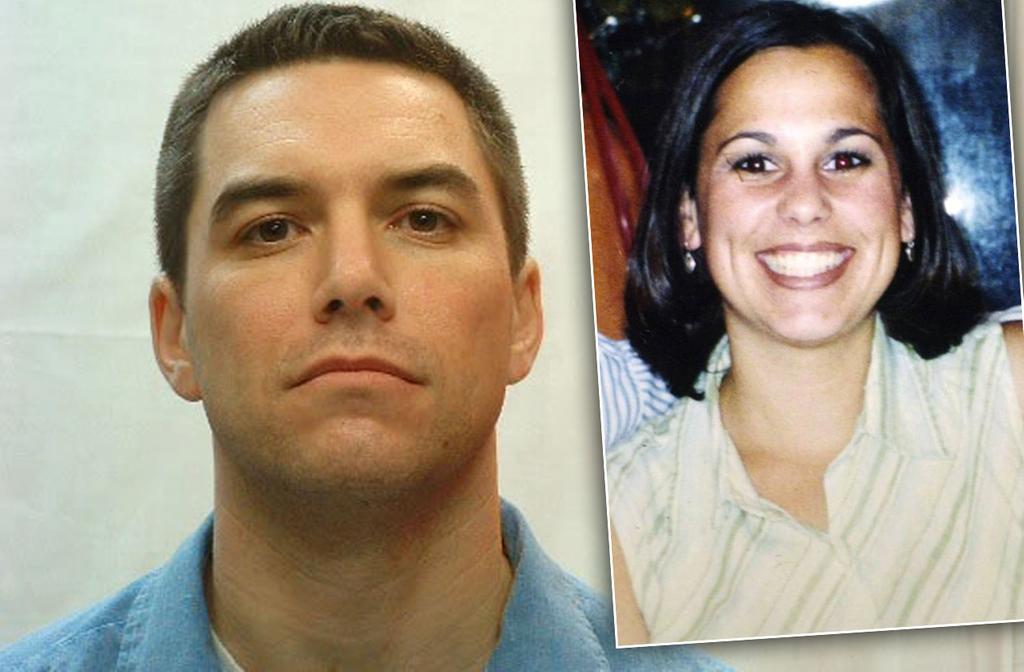
Duct tape was found on Laci's body during the forensic examination, according to trial evidence.
That piece of tape would become a focal point for the jury.
But what the tape did, exactly, was never settled.
The exact cause of death is not established.
How the bodies came to be in the bay is not established.

The coroner could not determine either.
The evidence placed Laci in the water near the marina where Scott said he had gone fishing alone that Christmas Eve morning.
It did not place her there alive, nor did it explain the moments before she entered it.
The tape was a fact.
Its role in her death was not a fact.
The case had changed from a missing-person file to a homicide investigation, and the questions only multiplied.
THE TWO STORIES
The prosecution told the jury one story. Scott Peterson killed Laci in their home, the prosecutors argued, then disposed of her body in San Francisco Bay and staged his fishing trip as an alibi.
The defense told another. Laci was abducted by strangers while walking the dog, they contended, pointing to the absence of forced entry or signs of struggle.
Neither story could explain the duct tape.
The cause of death was never determined, so the tape's role in Laci's death remained a question the evidence could not answer.
The prosecution leaned on what investigators had found. There was the fishing boat, purchased days before the disappearance. There was the affair with Amber Frey, who testified that Scott had told her his wife was dead before Laci was reported missing.
The defense attacked what investigators had not found. Other suspects were never fully explored, they argued, and the investigation had fixed on one man too early.
Two competing narratives, each plausible in its own way.
:max_bytes(150000):strip_icc():focal(749x0:751x2)/Jackie-Peterson-and-Lee-Peterson-leave-the-San-Mateo-Superior-Courthouse-121625-55846a7459e640d79a1b33bfbc8af4b1.jpg)
The jury heard both. On November 12, 2004, they found Scott Peterson guilty of first-degree murder for Laci's death and second-degree murder for Conner's death.
Which story is true is not established beyond the jury's verdict. The defense theory remains unproven, and the record does not settle the question of what happened in that house on Christmas Eve.
The tape was a fact. Its role in her death was not a fact. The case had changed from a missing-person file to a homicide investigation, and the questions only multiplied.
AND THE STORY STILL ISN'T OVER
On November 12, 2004, the jury found Scott Peterson guilty of first-degree murder for Laci's death and second-degree murder for Conner's death.
In March 2005, the judge formally imposed a death sentence.
In 2020, the California Supreme Court overturned that death sentence, ruling that the trial judge had improperly dismissed a juror who expressed doubts about the death penalty.
The court upheld the murder convictions but ordered a new penalty phase.
In December 2021, a new jury resentenced him to life in prison without the possibility of parole.
He remains incarcerated at Mule Creek State Prison in Ione, California.
The murder weapon was never identified.
The cause of death is still not established.
The tape was a fact. Its role in her death was not a fact.
Laci's family, including her mother Sharon Rocha, have continued to advocate for victims' rights and have spoken publicly about the case.
The questions only multiplied.
Which story is true is not established beyond the jury's verdict.
What happened in that house on Christmas Eve is not settled by the record.
The case had changed from a missing-person file to a homicide investigation, and the questions only multiplied.
That would require evidence.
Advertisement
You may also like

The psychologist's patient who said she overheard a confession that broke the Menendez case
Judalon Smyth told police she heard Erik Menendez’s voice through a door. She was a former patient of Dr. Jerome Oziel, the brothers’ psychologist.…
The 1997 Versace murder case: how the FBI's manhunt ended with a suicide, not a trial
The steps of Casa Casuarina were still wet with the morning's humidity. At approximately 8:45 a.m. on July 15, 1997, Gianni Versace was shot…

The trunk hole in a Caprice that turned a car into a shooting blind
There is a hole in the trunk of a blue Chevrolet Caprice sedan. It is a hole cut into the metal, large enough for…

The manifesto his brother recognized — and the FBI task force that missed the trail for years
The manifesto was 35,000 words long. Its title was "Industrial Society and Its Future," and in September 1995, the Washington Post and the New…
The 45-minute deliberation that ended four murder trials in one Kansas courtroom
The jury was out for approximately 45 minutes. Four counts of first-degree murder, two defendants, one verdict on each count. The trial had begun…
Why a cotton gin fan tied with barbed wire still haunts a Mississippi courtroom 70 years on
The cotton gin fan came up with the body on August 31, 1955, tied to the neck with barbed wire. The fan was a…