The former associate’s testimony that could decide the Tupac Shakur murder trial
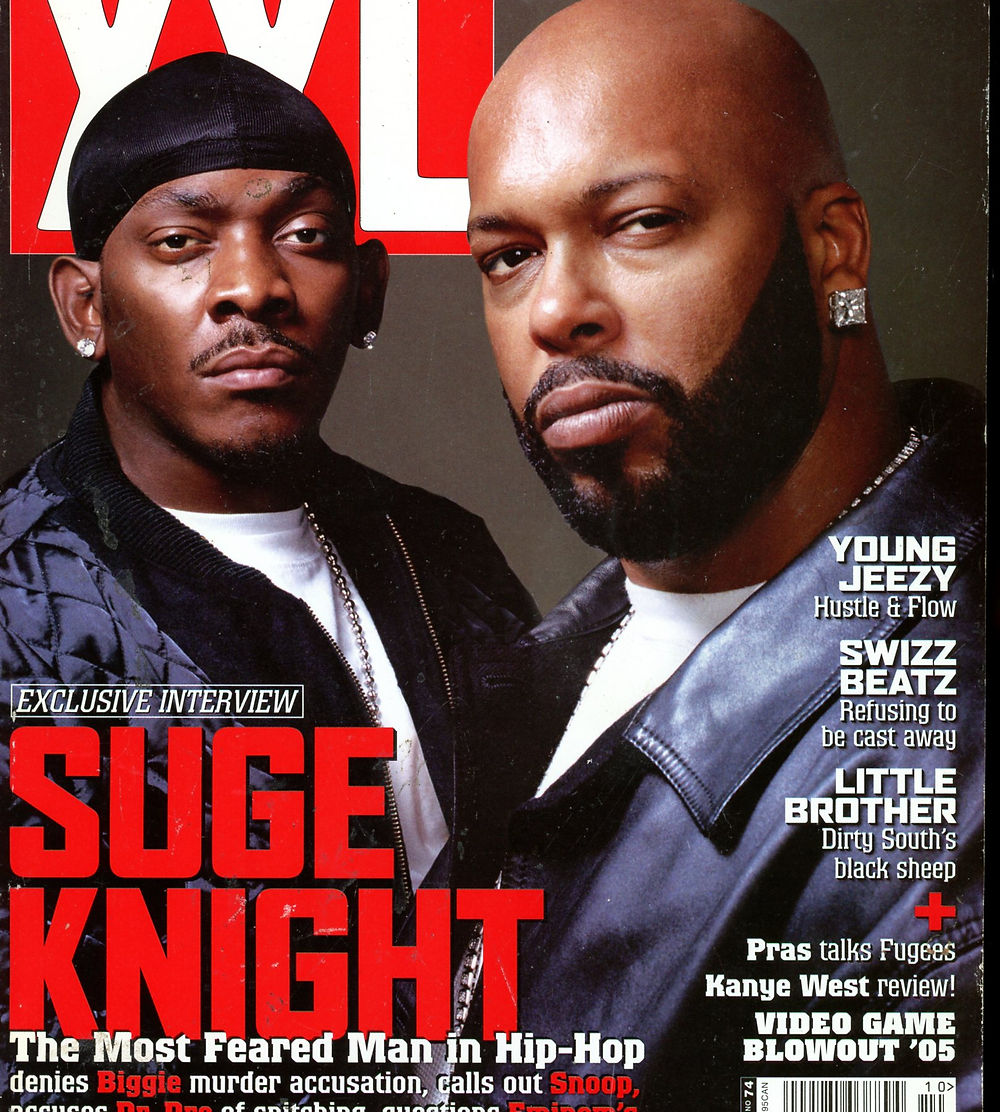
The former associate took the stand in a Las Vegas courtroom and said Duane “Keffe D” Davis admitted to being involved in the shooting of Tupac Shakur.
The trial is underway in Nevada.
Davis is charged with murder with a deadly weapon.
The defense calls the testimony hearsay.
The defense argues it is unreliable.
The witness’s words are the centerpiece of the prosecution’s case.
No physical evidence links Davis to the shooting.
No weapon was produced at trial.
No ballistic match was offered.
The prosecution did not present a single piece of forensic evidence tying Davis to the September 7, 1996, drive-by.
What the associate said beyond that admission?
That is not in the record.
The exact content of the associate’s testimony beyond the admission is not established.
What is established is this: a former associate swore Davis told him he was involved.
Is that enough?
Is one man’s word enough to convict another man decades after the shots?
Is a confession relayed secondhand enough to overcome the absence of everything else?
That would require evidence.
That would require the jury to believe the associate.
That would require them to set aside the defense’s hearsay objection.
The defense will push on the witness’s credibility.
The defense will note the decades between the shooting and the testimony.
The defense will argue Davis’s own public statements were bragging, not confession.
The witness finished testifying.
The courtroom fell quiet.
The case now rests on what one man said another man said.
THE NIGHT OF SEPTEMBER 7, 1996
The BMW sedan stopped at a red light on the Las Vegas Strip.
A white Cadillac pulled up alongside.
A .40-caliber handgun fired from that Cadillac, according to the shooting report.
Tupac Shakur was hit multiple times.
He had just left the MGM Grand after watching a Mike Tyson boxing match.
The car was not discovered by police at the scene.
The crime was not immediately reported as a shooting.
That is the first missed moment.
Shakur was conscious.
He spoke briefly to investigators before surgery.
He never identified his attackers.
The identity of the shooter is not established by the record.
Not by the gun.
Not by the Cadillac.
Not by the testimony the jury would hear decades later.
The chaos of that night is part of the case.
A shooting that almost went undiscovered.
A victim who could speak but did not name a man.
A weapon reported but never tied to a defendant in court.
The scene was loud.
The Strip was crowded.
The moment passed.
Shakur was taken to University Medical Center.
He died on September 13, 1996.
The case went cold.
It stayed cold for years.
THE COLD CASE AND THE CONFESSION
The original investigation was hampered by a lack of cooperation from witnesses.
Suge Knight, who was in the car with Shakur and was wounded, did not cooperate with detectives.
The case went cold.
It stayed cold for years.
In 2018, Davis gave an interview to a documentary series.
In that interview, he described being in the car from which the shots were fired.
He later wrote a memoir with similar accounts.
The exact content of those statements is not in the record.
What is in the record is what happened next.
In 2023, Las Vegas police executed a search warrant and arrested Davis.
They charged him with murder with a deadly weapon.
Davis pleaded not guilty.
The prosecution's case would rest on his own public words.
It would also rest on the testimony of a former associate, who said Davis admitted to being involved.
No physical evidence linked Davis to the shooting.
The defense called the statements unreliable.
The defense called the case hearsay.
The cold case had finally produced a defendant.
The defendant had spent years talking about the night in question.
That was the shock of it: a suspect who spoke publicly about his involvement.
The frustration of the cold case gave way to a trial built on words.
Words Davis said to cameras.
Words Davis wrote in a book.
Words the former associate said Davis spoke to him.
That would be the case the jury heard.
THE TRIAL AND THE TWO STORIES
The prosecution’s case rested on two pillars: Davis’s own public statements and the testimony of a former associate who said Davis admitted to being involved.
That associate’s testimony was the centerpiece of the courtroom narrative, the only witness who placed Davis’s own words at the scene.
The defense argued that Davis’s statements were unreliable, the product of a man seeking attention, and that what the jury heard was hearsay.
Hearsay, the defense said, is not proof.
The prosecution did not present physical evidence linking Davis to the shooting.
No gun.
No fingerprints.
No DNA.
Just words, some of them Davis’s own, some of them the associate’s, and the question of which ones to believe.
The trial began in February 2025, after years of delays that were in part due to Davis’s health issues.
The case had moved slowly, held up by illness, by motions, by the weight of a decades-old murder.
In early 2025, the prosecution announced it would not seek the death penalty, narrowing the stakes but not the tension.
The reliability of the associate’s testimony is not established; it is contested.
That is the fault line the jury had to cross, and neither side could offer a bridge.
The prosecution pointed to Davis’s own public descriptions, his interviews, his book, and said the admission was the admission.
The defense pointed to the same words and called them a story, a boast, a man inserting himself into a legend.
Two narratives, one confession, one hearsay.
The judge presided, the lawyers argued, and the associate’s voice hung in the room, waiting for the jury to decide what it was worth.
AND THE STORY STILL ISN'T OVER
On February 18, 2025, the jury found Davis not guilty.
He was acquitted of all charges.
Davis is the only person ever charged in the murder.
The case is considered closed by Las Vegas police, though no one else has been charged.
Afeni Shakur died in 2016.
Knight is serving a prison sentence in Nevada on an unrelated manslaughter conviction.
The murder of Tupac Shakur remains officially unsolved in the sense that no one has been convicted.
The identity of the actual shooter is not established by the record.
The associate’s testimony was weighed.
The jury heard it and returned its verdict.
The courtroom emptied.
The case is closed.
The murder is not solved.
That is the hollow closure of an acquittal.
The story still isn’t over.
Advertisement
You may also like
The psychologist's patient who said she overheard a confession that broke the Menendez case
Judalon Smyth told police she heard Erik Menendez’s voice through a door. She was a former patient of Dr. Jerome Oziel, the brothers’ psychologist.…
The 1997 Versace murder case: how the FBI's manhunt ended with a suicide, not a trial
The steps of Casa Casuarina were still wet with the morning's humidity. At approximately 8:45 a.m. on July 15, 1997, Gianni Versace was shot…
The trunk hole in a Caprice that turned a car into a shooting blind
There is a hole in the trunk of a blue Chevrolet Caprice sedan. It is a hole cut into the metal, large enough for…
The manifesto his brother recognized — and the FBI task force that missed the trail for years
The manifesto was 35,000 words long. Its title was "Industrial Society and Its Future," and in September 1995, the Washington Post and the New…
The 45-minute deliberation that ended four murder trials in one Kansas courtroom
The jury was out for approximately 45 minutes. Four counts of first-degree murder, two defendants, one verdict on each count. The trial had begun…
Why a cotton gin fan tied with barbed wire still haunts a Mississippi courtroom 70 years on
The cotton gin fan came up with the body on August 31, 1955, tied to the neck with barbed wire. The fan was a…