The deleted file on a floppy disk that led police to the BTK killer
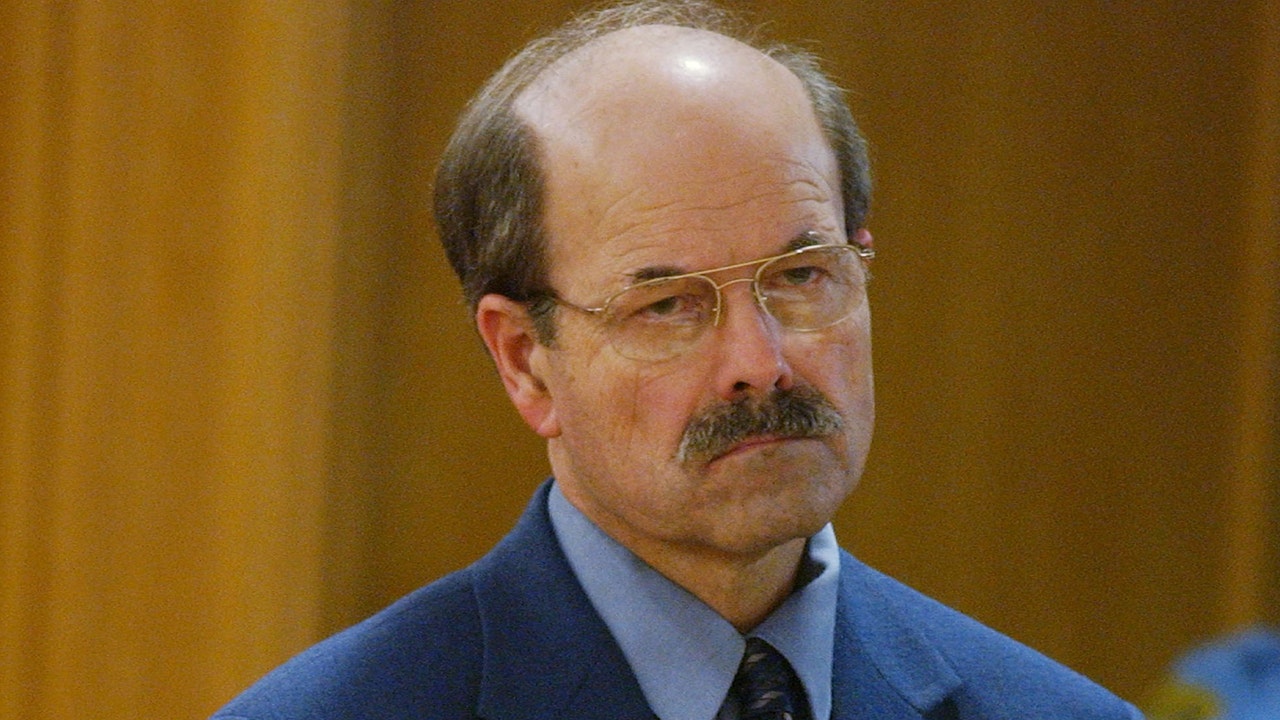
A floppy disk arrived at a local television station in 2004.
It came from the killer known as BTK, who had taunted police and media with letters since 1974.
The disk carried a question: could it be traced?
Police and FBI analysts examined it.
They recovered deleted data from the disk, including a document with metadata.
The metadata identified the document as created by "Dennis" at "Christ Lutheran Church."
That was a name.
That was a place.
The exact contents of the question on the disk are not in the record.
The disk's sender was not immediately known.
A theory circulating online claims the disk alone exposed the killer.
The record shows it was one step in a longer process.
Not the whole process.
The metadata pointed to a man.
The man had a church.
The church had records.
The records had a name: Dennis Rader.
But the floppy disk did not end the case by itself.
It narrowed the search.
It focused the investigation.
It was a break, not a conclusion.
The trail would go from the disk to the church records, and from the church records to DNA.
That would require evidence.
That evidence would come later.
For now, there was only the disk, the deleted file, and the question it asked.
Could it be traced?
It could.
THE LETTERS AND THE COLD DECADES
The Otero family was the first known case.
A father, a mother, two children, killed in their home on January 15, 1974.
The killer sent letters to Wichita media and police.
One letter, from 1974, claimed responsibility for those murders.
The exact contents of that letter are not in the record.
The exact contents of any later letter are not in the record either.
The number of letters he sent is not specified.
Early on, police did not connect the Otero murders to the killings that followed.
A footprint and a palm print were not properly preserved.
That evidence was lost to the investigation.
The case went cold.
Not because the killer was silent.
Because the trail was broken, and the pieces did not fit together.
Between 1974 and 1991, ten people were murdered in and around Wichita.
The killer, later known by the initials BTK, kept writing.
Bind, Torture, Kill.
The letters described the crimes.
The letters taunted the police.
The letters did not give him away.
Decades passed.
Then, in 2004, on the 30th anniversary of the first murders, he wrote again.
A letter arrived at a Wichita newspaper.
It was a resumption.
It was also a mistake.
A new task force was formed.
It was led by Wichita Police Lieutenant Ken Landwehr.
The task force had old files, lost prints, and a killer who could not stop communicating.
The weight of thirty years sat on the investigation.
How could he have evaded capture for so long?
How many letters had he sent?
How many clues had been missed?
The answer would not come from the old evidence.
It would come from the next thing he mailed.
THE METADATA TRAIL
The disk went to a lab.
Police and FBI analysts examined it, and they recovered data the sender thought he had deleted.
Inside that recovered data was a document.
Its metadata identified the author as “Dennis.”
It also named a place: “Christ Lutheran Church.”
A search of church records and public databases followed.
The trail led to Dennis Rader.
Investigators then obtained a court-ordered DNA sample from Rader’s daughter.
That sample matched DNA from the crime scenes.
On February 25, 2005, Rader was arrested.
The killer’s own question — could the disk be traced? — had answered itself.
It was a breakthrough built from his own carelessness.
Not from a single file.
Not from a single database.
But from the combination: deleted data, church records, and DNA.
What the record does not establish is the precise list of church records or public databases searched.
The exact crime scenes tied to the DNA match are also not detailed in the record.
What the record does show is the sequence.
The disk, the metadata, the name, the church, the sample, the arrest.
Each step led to the next.
The cold case had a path at last.
THE TWO STORIES OF THE SAME EVIDENCE
The prosecution’s story was simple: the metadata and the DNA were decisive.
They led to the arrest.
They led to the guilty plea.
Rader was charged with ten counts of first-degree murder.
He pleaded guilty in June 2005, waiving his right to a jury trial.
During the plea hearing, he gave detailed, graphic confessions to each murder.
The judge sentenced him to ten consecutive life terms, with a minimum of 175 years before parole eligibility.
That is the record.
What about the defense?
The defense’s view is not in the record.
No defense strategy is documented.
No alternative interpretation of the evidence is documented.
The source states Rader pleaded guilty and did not appeal.
So what did the defense argue?
What did they say about the metadata?
What did they say about the DNA?
That would require evidence.
The record does not provide it.
It is a case with one story told in full.
It is also a case with another story absent entirely.
The evidence was strong enough that the killer confessed.
The confession was detailed, graphic, and complete.
The judge did not need to hear more.
The question of what a defense might have said remains open.
It remains unanswered.
It remains a silence in the file.
The prosecution’s narrative is the only narrative the record preserves.
That is not a flaw in the case.
It is a fact of the record.
The man is in prison.
The case is closed.
The defense’s perspective is not.
AND THE STORY STILL ISN'T OVER
The man is in prison.
The case is closed.
Rader is incarcerated at the El Dorado Correctional Facility in Kansas.
He has no possibility of parole for at least 175 years.
His family has largely stayed out of the public eye.
His daughter spoke publicly after his arrest.
Some victims’ relatives have spoken about the lasting impact of the crimes.
The ripple effects continue.
No pending motions or hearings are in the record.
The next concrete step is not documented.
Any future legal proceedings or appeals are not in the record.
The current status of the victims’ relatives is not detailed.
That would require evidence.
What remains is what the record holds.
A guilty plea.
Ten consecutive life terms.
A minimum of 175 years.
A man who asked whether a floppy disk could be traced.
It could.
It was.
The digital trail met the church records.
The church records met the DNA.
The DNA met the man.
The man met the sentence.
The sentence is the end of the legal story.
It is not the end of the story.
The unease stays.
Advertisement
You may also like
The circuit board fragment from a toy car that cracked the Boston bombing case
The fragment was small enough to fit in a palm. It was a piece of a circuit board, recovered from the blast sites along…
The 'foolproof suffocation' search that hung over Casey Anthony's trial
The search term sat on Casey Anthony's home computer, logged and time-stamped by forensic examiners. "Foolproof suffocation." Investigators presented it at trial as a…
The love letters found by a crabapple tree — and the witness who said the bodies were moved
The crabapple tree stood in a place people called Lovers' Lane. On September 16, 1922, the bodies were found beneath it, in a secluded…
The night Sharon Tate’s housekeeper found five bodies at Cielo Drive
The housekeeper arrived at 10050 Cielo Drive in Benedict Canyon on the morning of August 9, 1969, expecting an ordinary day of work. She…
The 1980 Columbia River cash that tied a stranger to Cooper's jump
The boy was walking the bank of the Columbia River near Vancouver, Washington, in 1980. He was not looking for anything. He found a…
The cellmate confession that cracked the Tate-LaBianca case
She was in custody on an unrelated charge. Months after the murders at Cielo Drive, Susan Atkins told her cellmate about the killings. The…