The cellmate confession that cracked the Tate-LaBianca case
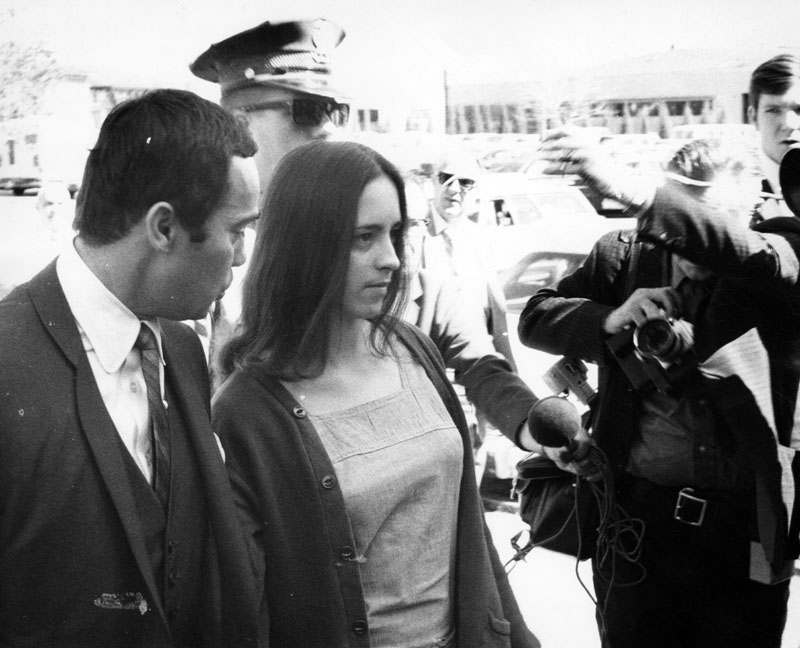
She was in custody on an unrelated charge.
Months after the murders at Cielo Drive, Susan Atkins told her cellmate about the killings.
The cellmate was Virginia Graham.
Graham reported the confession to authorities.
That is how the case turned.
The initial investigation at Cielo Drive had found little physical evidence linking any suspects.
The murders were treated as a drug-related crime.
There was no obvious motive, no witness, no weapon tied to a name.
Then a woman in a jail cell started talking.
What exactly Atkins told Graham is not detailed in the record.
That is not established.
What is established is this: Graham went to authorities, and Atkins later gave a detailed statement to prosecutor Vincent Bugliosi.
A stalled investigation became a prosecution.
One confession, reported by a cellmate, broke the case open.
Not because of forensic science.
Not because of a breakthrough in the lab.
Because someone in custody spoke, and someone else listened.
Was the confession accurate in every detail?
Was it complete?
That would require evidence the record does not contain.
What the record shows is the chain: Atkins talked, Graham reported, Bugliosi listened.
And the line between what is viral and what is documented starts right there.
In a jail cell, months after the murders, with the case going nowhere.
THE NIGHTS OF AUGUST 9 AND 10
On the night of August 9, 1969, five people were murdered at 10050 Cielo Drive in the Benedict Canyon area of Los Angeles.
Actress Sharon Tate, eight and a half months pregnant, was among the dead.
So was coffee heiress Abigail Folger.
So was Folger’s boyfriend.
So was celebrity hairdresser Jay Sebring.
So was a young man visiting the property’s caretaker.
The victims were stabbed and shot.
The word “Pig” was written in blood on the front door.
The following night, August 10, 1969, Leno and Rosemary LaBianca were murdered in their Los Feliz home.
“Death to Pigs” and “Healter Skelter” — misspelled — were written in blood on the walls and refrigerator.
The crimes were discovered the following mornings by housekeepers and family members.
These were not random acts.
They were staged scenes.
The exact sequence of events inside the houses is not fully established in the record.
What the record shows is the aftermath: five bodies at Cielo Drive, two more in Los Feliz.
What the record shows is the blood writing, left like a signature.
What the record shows is a city that did not yet know what it was looking at.
The initial investigation found little physical evidence linking suspects.
The murders were initially treated as a drug-related crime.
The case was going nowhere.
Then, months later, in a jail cell, Susan Atkins talked.
THE EVIDENCE THAT TURNED THE CASE
Months later, Susan Atkins sat in a jail cell, in custody on an unrelated charge.
She told her cellmate, Virginia Graham, about the murders.
Graham reported the confession to authorities.
The exact date and circumstances of that confession are not specified in the record.
What is documented is what followed: Atkins gave a detailed statement to prosecutor Vincent Bugliosi.
That statement gave the investigation its thread.
It was a thread, not a conviction.
The record does not establish that Atkins’s words alone turned the case; it establishes that they moved it.
The key evidentiary turning point, prosecutors would later argue, was the testimony of Linda Kasabian.
Kasabian had been granted immunity.
She described the night’s events in detail from the witness stand.
She drove the car on the nights of the murders.
She did not enter either house.
Her testimony put the accused at the scenes.
The physical evidence began to align with her account.
A .22-caliber revolver used in the murders was later linked to the Family.
Fingerprint evidence was found at the LaBianca house.
The gun matched.
The prints matched.
The story matched.
Not because the confession was enough. But because the confession pointed the investigators where to look, and the evidence followed.
It is a turning point.
It is also a beginning: the trial that would test whether the evidence held.
THE TRIAL AND THE TWO STORIES
The trial began in June 1970.
Manson, Atkins, Krenwinkel, and Van Houten were tried together.
Watson was tried separately later.
The prosecution, led by Vincent Bugliosi, argued that Manson orchestrated the murders to incite a race war.
He called it Helter Skelter, after the Beatles song.
The defense argued there was no direct evidence linking Manson to the killings.
That was the argument in its entirety.
The defense's specific arguments beyond that are not detailed in the record.
So the courtroom held two stories.
One story: a mastermind who never entered either house but commanded the people who did.
Another story: a man with no direct hand in the killings, connected only by the words of accomplices.
Which story held?
The jury heard Linda Kasabian describe the nights.
She had been granted immunity.
She told the court what she saw.
In January 1971, all four defendants were found guilty of first-degree murder.
The jury fixed the penalty at death for all four.
Not because Manson held the knife.
But because the law held him responsible for the hands that did.
In 1972, the California Supreme Court abolished the death penalty.
The sentences were commuted to life in prison.
The mastermind narrative won the verdict.
The no-direct-evidence story lost.
It is a verdict.
It is also a question of what the jury believed, and what the record shows.
AND THE STORY STILL ISN'T OVER
Charles Manson died in prison on November 19, 2017.
He was 83 years old.
Susan Atkins died in prison on September 24, 2009.
Linda Kasabian, the prosecution's key witness, died in 2020.
Patricia Krenwinkel remains incarcerated, repeatedly denied parole.
Tex Watson remains incarcerated, repeatedly denied parole.
Leslie Van Houten was granted parole in 2023 after decades of denials, and was released.
That is where each of them landed.
Not all together.
Not all the same way.
The verdicts stood, and the sentences were commuted to life when California abolished the death penalty in 1972.
The house at Cielo Drive was demolished in 1994.
The books and films and documentaries keep coming.
Vincent Bugliosi's *Helter Skelter* remains the most cited account.
The cellmate's reported confession became sworn testimony.
The sworn testimony became a conviction.
The conviction became a life sentence.
And the life sentences became what they are now: some ended by death, some still running, one ended by parole.
Does the case still resonate?
It does.
Is there a final accounting?
The record shows who died, who remains, and who was released.
The current status of any pending parole hearings or appeals is not specified in the record.
That would require evidence.
The unease is not about the verdict.
It is about what the verdict could not settle.
Advertisement
You may also like
The FBI tape that captured what happened inside the Waco compound before the fire
The infrared footage was shot from above, by surveillance aircraft circling the compound. The audio recordings were captured the same way, microphones picking up…
The boat bought days before Laci vanished — and the alibi that unraveled in court
The mop sat in the garage of the Modesto home, and next to it, a boat trailer with fresh paint. Police found both during…
The beauty queen's parents who spent 25 years demanding a murder trial
On February 17, 1970, at Fort Bragg, North Carolina, Army Captain Jeffrey MacDonald, a Green Beret physician, reported that four intruders — three men…
The grand jury that reviewed Adam Walsh's evidence but issued no indictment
On July 27, 1981, six-year-old Adam Walsh was watching television with other children in the Sears department store at the Hollywood Mall in Hollywood,…
The circuit board fragment from a toy car that cracked the Boston bombing case
The fragment was small enough to fit in a palm. It was a piece of a circuit board, recovered from the blast sites along…
The 'foolproof suffocation' search that hung over Casey Anthony's trial
The search term sat on Casey Anthony's home computer, logged and time-stamped by forensic examiners. "Foolproof suffocation." Investigators presented it at trial as a…