The trapdoor beneath Gacy's floorboards that led police to 27 bodies
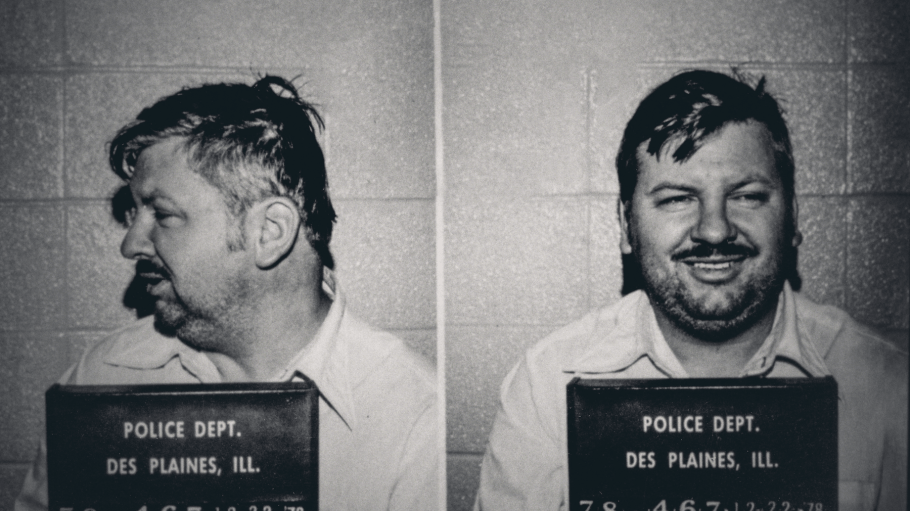
The crawl space was a dirt hole under a suburban house, reachable only through a trapdoor.
On December 22, 1978, police executing a search warrant at John Wayne Gacy's home in Norwood Park Township found that trapdoor.
Beneath it, they found human remains.
They were the first of 27 bodies eventually recovered from the crawl space.
The space was filled with lime and bodies stacked in layers.
Lime does not preserve. It burns.
The smell must have been the first warning.
The ordinary home hid a horror beneath a simple door.
That door was a square of wood in the floor of a house where Gacy lived with his mother.
The discovery came after the disappearance of 15-year-old Robert Piest, who had last been seen speaking with Gacy about a job.
Piest vanished on December 11, 1978.
His mother said he was going to meet a contractor.
Police learned he had spoken to Gacy.
Gacy denied involvement.
A search warrant was obtained.
The exact moment the trapdoor was first opened is not in the record.
No officer's testimony fixes that instant.
No report states who pulled the door back first.
That would require evidence the record does not contain.
What the record does show is what lay beneath.
Bodies. Lime. Layers.
Twenty-seven of them, eventually.
The crawl space was the crime scene.
It was also the proof.
THE DISAPPEARANCE
Robert Piest was fifteen when he left the pharmacy where he worked after school.
He told his mother he was going to meet a contractor about a job.
Exactly what he said about that contractor is not in the record.
It is not established what name he gave her, or where he said the meeting would be.
He never came home.
That was December 11, 1978.
Police learned that Piest had been seen speaking with John Wayne Gacy, a local building contractor who sometimes hired teenage boys.
The lead detective went to Gacy's house.
Gacy denied any involvement.
He said he had offered the boy work, but the boy had left.
It was a denial that lasted one conversation.
The detective asked for a search warrant.
It was granted.
On December 22, 1978, officers entered the house on Summerdale Avenue.
Gacy's wife at the time, Carole Hoff, had already been interviewed by police.
She later testified before the grand jury.
His mother, Marion Gacy, lived in the same house.
She said she was unaware of what was beneath it.
The warrant changed everything.
It was a lawful search.
It was also the beginning of the end.
THE EVIDENCE
The warrant changed everything.
It was a lawful search.
It was also the beginning of the end.
Over the following days, excavators recovered 27 bodies from the crawl space and four from the Des Plaines River.
Two additional victims were identified but never recovered.
The crawl space was filled with lime and buried bodies, many stacked in layers.
The forensic work by the Cook County Medical Examiner and his team was crucial in identifying victims through dental records and other means.
Investigators also found personal items belonging to victims in Gacy's home, including jewelry and clothing.
The exact number of personal items and their specific owners is not fully detailed in the record.
A rope and garrote found in Gacy's home matched the ligature marks on victims.
That match was damning.
That match was physical.
That match was the kind of evidence that connects a body to a tool to a man.
Gacy confessed to the murders in a detailed statement.
He later recanted parts of it.
The confession was videotaped and used at trial.
It was a statement made before the trial.
It was a statement played for the jury.
It was a statement that the defense would spend years trying to explain away.
The scale of the recovery was overwhelming.
Twenty-seven bodies from beneath one house.
Four more from the river.
Two identified but never found.
The record does not establish the full number of personal items or who owned each one.
That would require evidence.
The evidence that exists is heavy enough.
THE TRIAL
The trial began in February 1980.
Gacy was indicted on 33 counts of first-degree murder.
The prosecutors presented over 100 witnesses.
Forensic experts took the stand. Family members of victims took the stand.
The defense argued that Gacy was legally insane.
They claimed multiple personality disorder.
The prosecution countered that Gacy was sane.
They argued he had carefully planned the murders.
The specific testimony of the medical examiner is not detailed in the record.
That would require evidence.
The evidence that exists is heavy enough.
The jury deliberated for less than two hours.
They convicted on all 33 counts.
The same jury recommended the death penalty.
The judge sentenced Gacy to death on March 13, 1980.
Was it the rope and garrote that matched the ligature marks?
Was it the confession, videotaped and later recanted in part?
Was it the layers of lime and bone beneath the floorboards?
The record does not say which single exhibit turned the jury.
It says they were back in under two hours.
That is a statement of fact, not a theory.
The verdict was swift. The deliberation was short.
The case was heavy enough to end quickly.
AND THE STORY STILL ISN'T OVER
He was executed by lethal injection on May 10, 1994, at Stateville Correctional Center.
That was the end of the trial. It was not the end of the record.
After his death, DNA testing in 2011 and 2012 identified several previously unknown victims. One set of remains was returned to his family. The number of still-unidentified victims is not specified in the record.
The house in Norwood Park Township was demolished in 1979. The crawl space was filled in. The trapdoor was gone.
But the search for names continues. The case remains one of the most studied in American criminal history. The investigation techniques used have influenced modern forensic practices. The dental records. The excavation methods. The recovery of personal items. These are the tools that now bear his name in textbooks.
Who was under the floorboards? That question was answered in part. Who remains unnamed? That question stays open.
The trapdoor closed. The lime was removed. The bodies were counted, catalogued, and claimed. Some were not claimed. Some were not named.
The confession was videotaped. The rope and garrote matched the ligature marks. The jewelry and clothing belonged to the missing. The evidence was enough to convict. It is not enough to close every file.
He said he was sorry. He recanted parts of it. He was convicted anyway.
The house is gone. The crawl space is gone. The bodies are mostly identified. The record is not complete.
That is a statement of fact. It is also a statement of what remains.
Advertisement
You may also like
The boat bought days before Laci vanished — and the alibi that unraveled in court
The mop sat in the garage of the Modesto home, and next to it, a boat trailer with fresh paint. Police found both during…
The beauty queen's parents who spent 25 years demanding a murder trial
On February 17, 1970, at Fort Bragg, North Carolina, Army Captain Jeffrey MacDonald, a Green Beret physician, reported that four intruders — three men…
The grand jury that reviewed Adam Walsh's evidence but issued no indictment
On July 27, 1981, six-year-old Adam Walsh was watching television with other children in the Sears department store at the Hollywood Mall in Hollywood,…
The circuit board fragment from a toy car that cracked the Boston bombing case
The fragment was small enough to fit in a palm. It was a piece of a circuit board, recovered from the blast sites along…

The 'foolproof suffocation' search that hung over Casey Anthony's trial
The search term sat on Casey Anthony's home computer, logged and time-stamped by forensic examiners. "Foolproof suffocation." Investigators presented it at trial as a…
The love letters found by a crabapple tree — and the witness who said the bodies were moved
The crabapple tree stood in a place people called Lovers' Lane. On September 16, 1922, the bodies were found beneath it, in a secluded…