The .35 caliber Marlin rifle that silenced six beds in Amityville
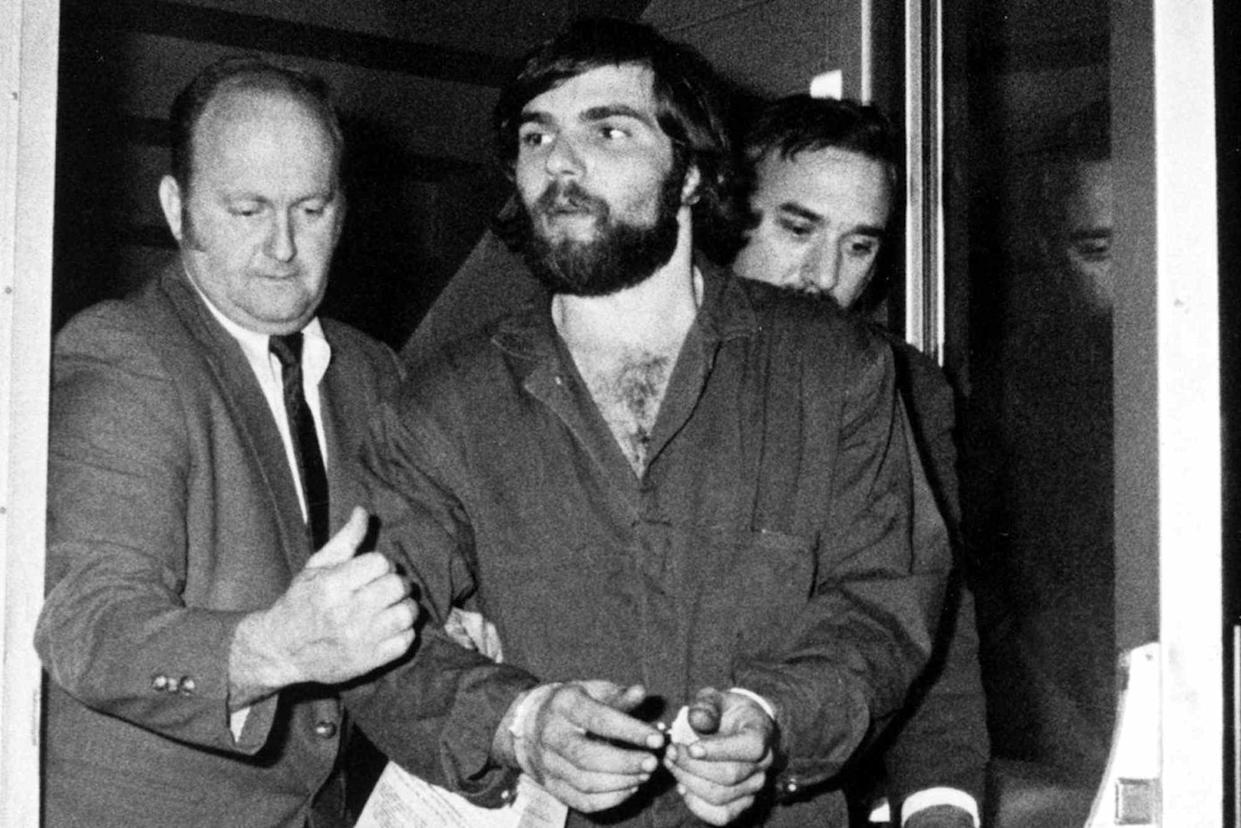
The call came on November 13, 1974.
Police were sent to 112 Ocean Avenue in Amityville, New York, after the DeFeo family failed to show up for work.
Inside the large Dutch Colonial house, officers found six members of that family shot dead in their beds.
The parents.
Four of their five children.
All of them had been shot with a .35 caliber Marlin rifle at close range.
The shots, the record shows, were fired around 3:00 a.m. that morning.
Six beds.
Six bodies.
The only family member not found dead was 23-year-old Ronald DeFeo Jr., the eldest son.
He was taken into custody later that day.
Who moved through that house?
Who raised the rifle in the dark?
The identity of the shooter is not stated in the record at this point.
That part of the story comes later.
For now, there is the weapon: a .35 caliber Marlin rifle, recovered from the house.
There is the hour: 3:00 a.m.
There is the silence, because the rifle had been muffled.
It is a scene of methodical violence.
It is also a scene the record will have to explain.
THE CALL AND THE CONFESSION
The call came from a man named Joe Yeswit.
He had been asked by the DeFeo family's employer to check on them.
When police arrived at 112 Ocean Avenue, they found the bodies.
They quickly focused on Ronald Jr.
He was acting erratically.
He claimed he had been outside the house when the shootings occurred.
He told police he had been awakened by noises.
He said he had seen a figure fleeing.
His story unraveled under questioning.
Then came the turning point.
Ronald Jr. confessed.
He admitted to the killings.
The relief of a confession.
Then the unease.
He later changed his story.
He claimed his sister Dawn had been the shooter.
He said he had only helped dispose of the weapon.
That claim was never substantiated.
No evidence supported it.
The record does not establish that Dawn was the shooter.
It establishes only that Ronald Jr. said so.
It establishes that he confessed to the killings first.
It establishes that the story shifted after the confession.
Was the first story true?
Was the second?
The record does not resolve it.
The record holds the confession, and the record holds the shift.
THE BALLISTICS
The rifle was a .35 caliber Marlin, recovered from the house.
Ballistics testing confirmed it as the murder weapon, the case record states.
The victims were shot while sleeping.
There were no signs of a struggle.
The shooter moved methodically from room to room.
The shots were fired at close range.
The rifle had been silenced with a cloth or pillow to muffle the sound.
Who placed that cloth or pillow is not specified in the record.
It is not established.
What the record does show is a sequence: beds, rooms, a single weapon, a single morning.
Investigators found no evidence that anyone else handled the rifle, according to the case record.

No defensive wounds on the victims, no overturned furniture, no alarm raised.
Six people in six beds, each shot at close range, each shot while asleep.
The weapon was in the house.
The ballistics matched.
The confession came later, and the confession shifted — but the rifle did not.
A .35 caliber Marlin does not move from room to room on its own.
The record holds the cloth.
The record holds the close range.
The record does not hold who placed the cloth.
That would require evidence.
TWO STORIES, ONE TRIAL
The prosecution argued that Ronald Jr. had acted alone.
The motive was control, and possibly money.
He stood to inherit the family's assets, the prosecutor said.
That was argued.
The record does not establish it as proven fact.
The defense told another story.
Attorney William Weber argued that Ronald Jr. was insane at the time of the killings.
He cited a history of drug use.
He cited erratic behavior.
The jury heard the confession.
The jury heard the ballistics.
The jury heard the insanity claim, and they rejected it.
In 1975, DeFeo was convicted of six counts of second-degree murder.
The sentence was six consecutive life terms.
Twenty-five years to life on each count.
The conviction was upheld on appeal.
What drove the shooter?
Was it control?
Was it money?

Was it madness?
That would require evidence the trial did not produce.
The jury decided what the law allowed them to decide.
They decided he was responsible.
They decided he acted alone.
The claim that his sister was the shooter came later, and it was never substantiated.
The courts dismissed it.
The record holds the verdict.
The record does not hold the motive as fact.
The record does not hold the insanity as fact.
It holds the rifle, the confession, and the sentence.
That was enough for six counts.
That was enough for a lifetime.
AND THE STORY STILL ISN'T OVER
He died on March 12, 2021, at the age of 69, in a New York correctional facility.
He was still serving the six consecutive life sentences.
The house at 112 Ocean Avenue was sold.
It was renovated, and the address was changed to 108 Ocean Avenue to discourage curiosity seekers.
The paranormal claims were widely debunked.
The record does not establish any supernatural events at the house.
What the record does establish is a rifle, a confession, and a conviction.
The family's surviving relatives have largely stayed out of the public eye.
The case remains one of the most notorious mass murders in New York history.
Journalists and investigators have repeatedly challenged the supernatural narrative that grew around it.
Not because the story needed a ghost.
But because the story already had a weapon.
A .35 caliber Marlin rifle, recovered from the house.
Confirmed by ballistics.
It holds the rifle, the confession, and the sentence.
That was enough for six counts.
That was enough for a lifetime.
The rest is legend.
Advertisement
You may also like
The circuit board fragment from a toy car that cracked the Boston bombing case
The fragment was small enough to fit in a palm. It was a piece of a circuit board, recovered from the blast sites along…
The 'foolproof suffocation' search that hung over Casey Anthony's trial
The search term sat on Casey Anthony's home computer, logged and time-stamped by forensic examiners. "Foolproof suffocation." Investigators presented it at trial as a…
The love letters found by a crabapple tree — and the witness who said the bodies were moved
The crabapple tree stood in a place people called Lovers' Lane. On September 16, 1922, the bodies were found beneath it, in a secluded…
The night Sharon Tate’s housekeeper found five bodies at Cielo Drive
The housekeeper arrived at 10050 Cielo Drive in Benedict Canyon on the morning of August 9, 1969, expecting an ordinary day of work. She…
The 1980 Columbia River cash that tied a stranger to Cooper's jump
The boy was walking the bank of the Columbia River near Vancouver, Washington, in 1980. He was not looking for anything. He found a…
The cellmate confession that cracked the Tate-LaBianca case
She was in custody on an unrelated charge. Months after the murders at Cielo Drive, Susan Atkins told her cellmate about the killings. The…