The hatchet head found in the cellar that never matched the Borden murders
The hatchet head sat in the cellar of 92 Second Street, a broken handle beside it.
It was found on August 4, 1892, the same day Andrew Jackson Borden and his second wife, Abby Durfee Borden, were discovered murdered in their Fall River, Massachusetts home.
Andrew Borden’s body was found first, around 11:00 a.m., on a couch in the sitting room.
He had been struck repeatedly in the head with a hatchet-like weapon.
Abby Borden’s body was found later that morning in an upstairs guest bedroom.
She had been killed earlier, likely between 9:00 and 10:30 a.m., with similar blows.
The hatchet head was there, in the cellar.
No blood was conclusively linked to it.
No specific weapon was ever conclusively identified.
That the hatchet head was the murder weapon is not established by the record.
Why was it there?
Why the broken handle?
Why no blood?
That would require evidence the record does not provide.
The case remains officially unsolved.
The hatchet head remains a detail without a match, a tool that fits the wound but not the proof.
It is a fact of the scene.
It is not a fact of the crime.
THE MORNING OF AUGUST 4
The morning of August 4, 1892, began with a house that was not quiet.
Lizzie Andrew Borden, the 32-year-old daughter, was present in the house.
She reported finding her father’s body.
The body was on a couch in the sitting room, discovered around 11:00 a.m.
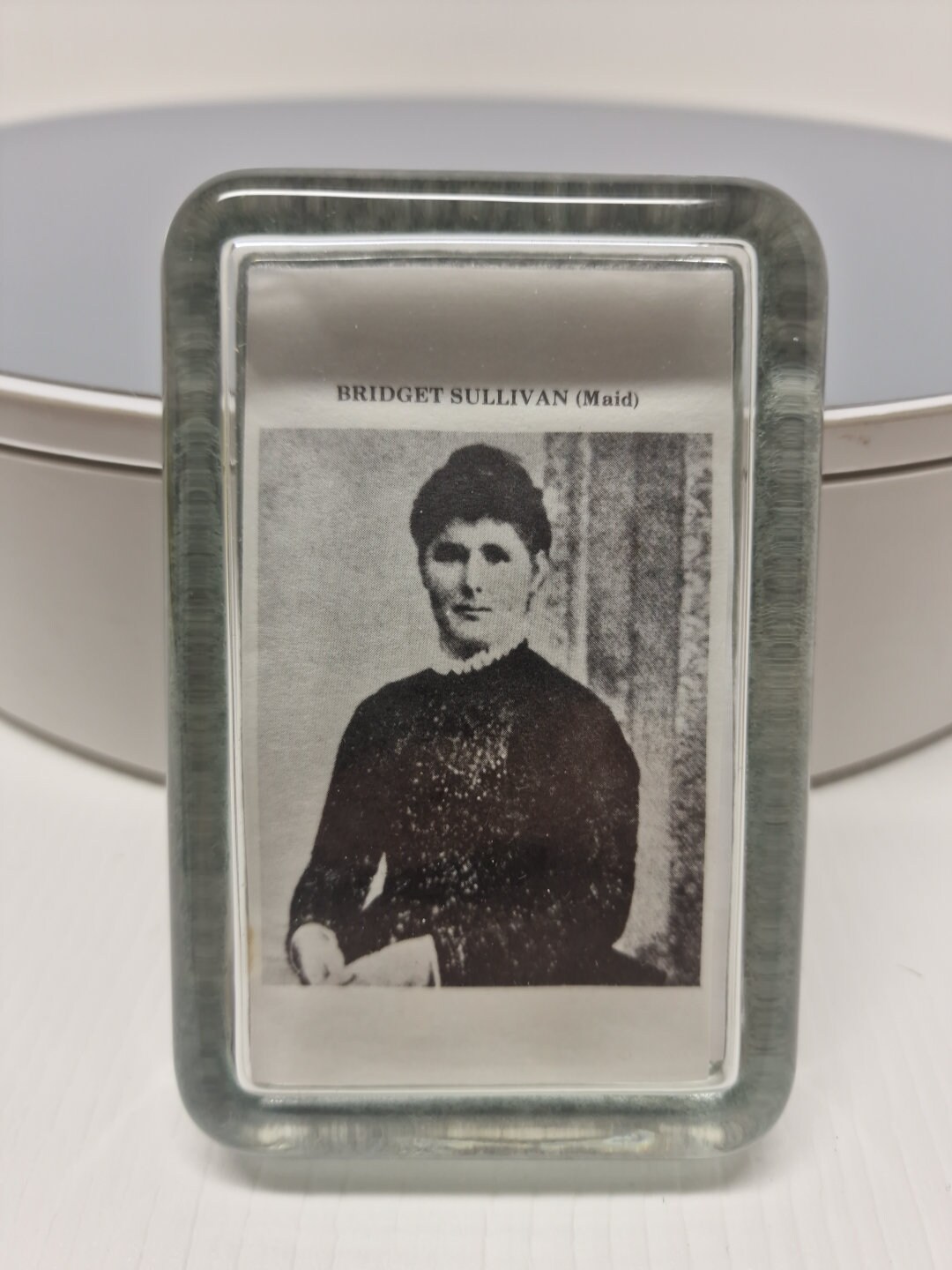
A family servant, Bridget Sullivan, was also in the house.
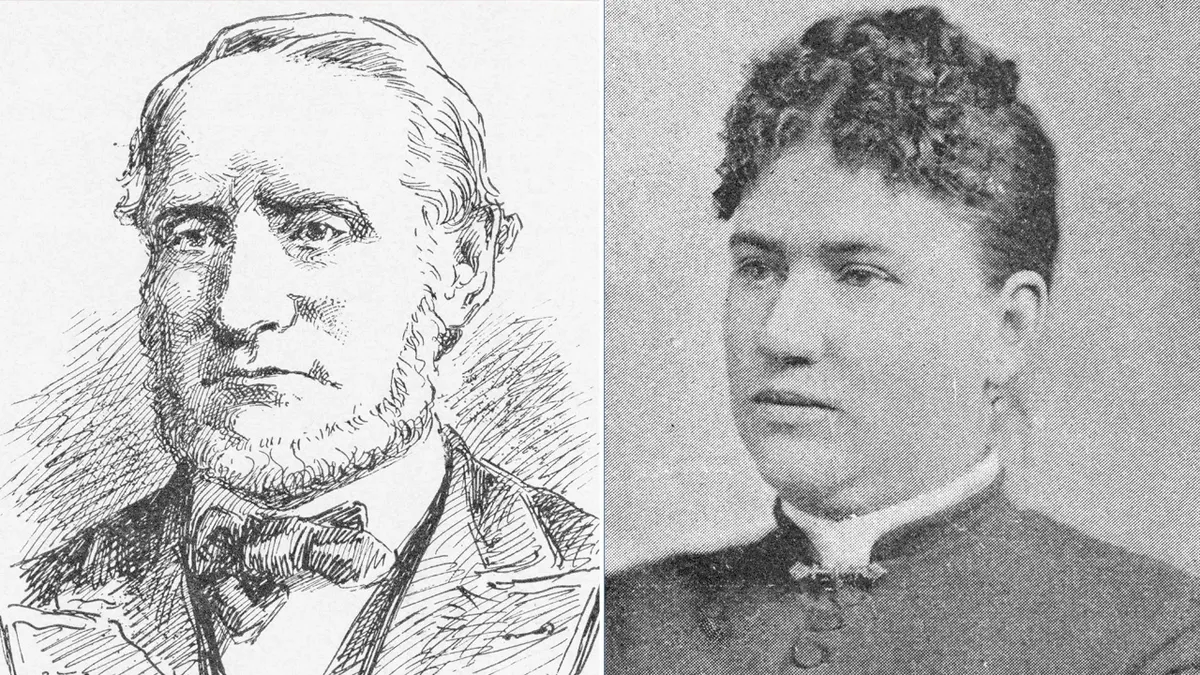
She testified to the day’s events.
The timeline narrows from there.
Abby Borden was killed earlier, likely between 9:00 and 10:30 a.m.
Andrew Borden was killed later.
His body was found around 11:00 a.m.
The window between those hours is the whole case.
What happened in that window?
Who was where?
The exact sequence of the murders is not in the record.
Only the approximate times of death are given.
That is not established.
Lizzie’s older sister, Emma Lenora Borden, was away at the time of the murders.
She later supported Lizzie publicly.
The family’s strained relationships were a focus of coverage.
Not because the record proves they mattered.
But because the coverage made them matter.
A daughter in the house.
A servant in the house.
A stepmother dead upstairs.
A father dead downstairs.
The proximity is the dread.
The timing is the accusation.
The record does not close the gap.
THE ARREST AND THE EVIDENCE

Eleven days after the bodies were found, the daughter was arrested.
Lizzie Andrew Borden was taken into custody on August 11, 1892, and charged with the murders of her father and stepmother.
The investigation was led by the Fall River police, under the city's chief law enforcement officer.
The medical examiner performed autopsies on both victims and testified about the nature of the wounds.
The prosecution's case was largely circumstantial.
She had been alone with her father at the time of his death.
She had reportedly attempted to purchase prussic acid, a poison, days earlier.
The report of the poison purchase is not confirmed in the record; it is a reported allegation, nothing more.
A hatchet head and a broken handle were found in the cellar.
No blood was conclusively linked to that weapon.
It is a hatchet head in a cellar.
It is not a proven murder weapon.
A key piece of evidence was Lizzie's own testimony at the inquest.
That testimony was later ruled inadmissible at trial.
The police were criticized for failing to secure the crime scene.
Family members were allowed to move about the house before a thorough search was conducted.
What was moved?
What was washed?
What was lost?
The record does not say.
The proximity is the dread.
The timing is the accusation.
The evidence is the gap.
THE TRIAL AND THE VERDICT

The indictment came in December 1892.
A grand jury charged Lizzie Borden with two counts of first-degree murder.
The trial opened on June 5, 1893, in New Bedford, Massachusetts.
The judge was Josiah Coleman Blaisdell.
The prosecution was led by the district attorney, with the attorney general assisting.
The defense was headed by a former governor of Massachusetts.
The trial lasted thirteen days.
The medical examiner had testified about the wounds.
The servant testified about the day's events.
The inquest testimony was ruled inadmissible.
The specific arguments of each side are not detailed in the record.
The record does not establish what either lawyer said in full.
What is known is the general shape: the defense argued Lizzie was not physically capable, and that an intruder could have done it.
The prosecution's case was circumstantial.
A hatchet head and broken handle sat in the cellar.
No blood was conclusively linked to it.
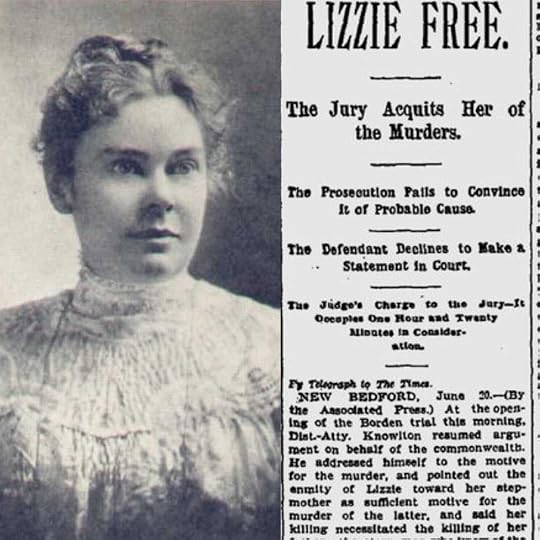
On June 20, 1893, the jury returned.
They had deliberated for about an hour and a half.
The verdict was not guilty.
She was acquitted of both murders.
The deliberation was brief.
The release was absolute.
She walked out of that courtroom acquitted.
The case was never tried again.
No one else was ever charged.
The record holds the verdict, and it holds the gap.
It does not hold the answer.
AND THE STORY STILL ISN'T OVER
She was never retried.
No one else was ever charged.
She and her sister Emma inherited the family estate, and Lizzie purchased a new home in Fall River, which she shared with Emma until a falling-out in the early 1900s.
Lizzie died in 1927 and was buried in Fall River's Oak Grove Cemetery.
The case remains officially unsolved.
That is not a theory.
That is the record.
The Borden house at 92 Second Street is now a museum and bed-and-breakfast.
Guests sleep in the rooms where the bodies were found, and the cellar where the hatchet head sat.
The hatchet head is the detail that never left.
No blood was ever conclusively linked to it.
The viral claim that it was the murder weapon is not established by the record.
The case has been the subject of numerous books, films, and documentaries.
Each retelling asks the same question, and each retelling ends the same way.
No new evidence has ever been formally presented.
The investigation has not been reopened.
Not because the answer was found.
But because the answer never arrived.
What would reopen it?
That would require evidence.
The house still stands.
The verdict still stands.
The gap still stands.
She was on the ground below, and the hatchet head was in the cellar, and neither ever spoke again.
Advertisement
You may also like
The dog walk that ended a young couple's life — and the DNA match 40 years later
She was on the ground below. Katie Maggiore and her husband were murdered in 1978 while walking their dog in Sacramento. The couple's deaths…
The ransom note left on a nursery windowsill — and the 20-month-old who vanished
The note sat on the nursery windowsill, a sheet of paper in the dark. It demanded $50,000. The crib was empty. Charles Lindbergh Jr.…

The freshly painted boat at the center of Laci Peterson's disappearance
On December 31, 2002, police searched the Peterson home and found a freshly painted boat. It was a 14-foot aluminum boat, purchased shortly before…
The $50,000 ransom note left on a nursery windowsill — and the 11-hour jury deliberation that followed
On the evening of March 1, 1932, a ransom note demanding $50,000 was found on a nursery windowsill in the Lindbergh home near Hopewell,…

A mother's shopping trip, a Sears toy aisle, and the six-year-old who never came home
The Sears store at the Hollywood Mall had an air-conditioned hum and a toy aisle that ran long and bright. On July 27, 1981,…
The traffic stop that caught a bombing suspect before the FBI did
The trooper saw the plate first, or rather, he didn't see it. The 1977 Mercury Marquis had no license plate, and that was enough.…