Jeff Saturday: Rodgers-McCarthy Friction Is Familiar, Not a Surprise
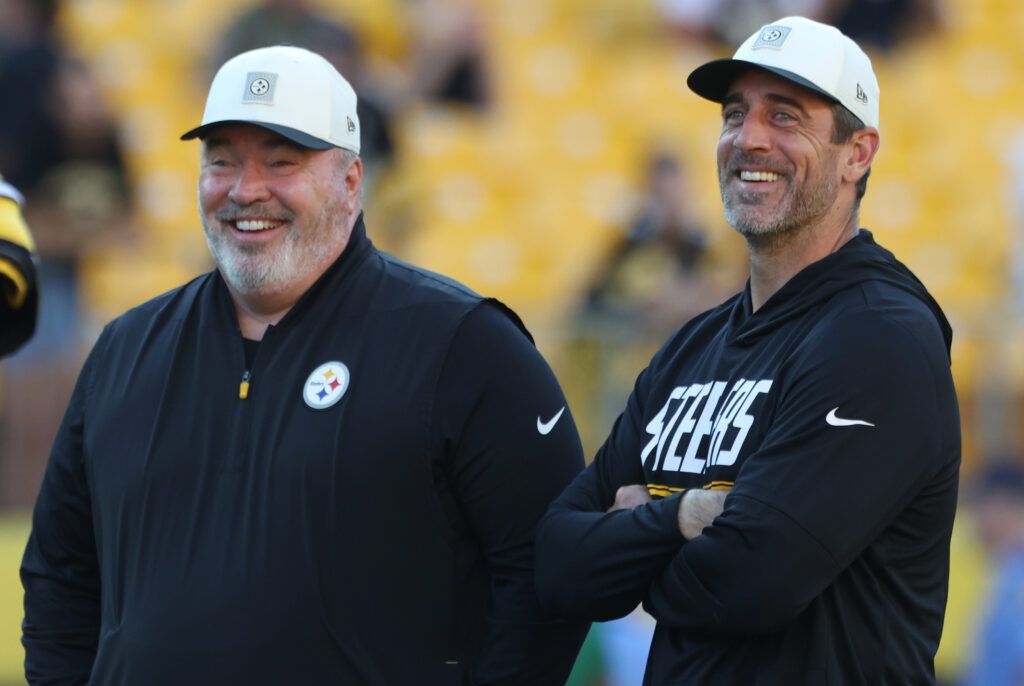
Jeff Saturday has seen this movie before, and he knows the stars well.
The former Green Bay Packers center reacted to the heated exchange between Aaron Rodgers and Mike McCarthy during Pittsburgh's 27–24 loss to the Cleveland Browns on Thursday night, appearing on ESPN's Big Day via www.profootballnetwork.com. The specific words exchanged on the sideline are not confirmed, but Saturday didn't need them to recognize the dynamic.
"I played under McCarthy and with Aaron. And so, this is not a surprise," Saturday said. "I mean, we can church it up however we want. The facts are this is not the first time they've been upset with each other."
Saturday's read carries weight because he was in the room for the original run. He spent the 2012 season in Green Bay, starting 14 games and earning his sixth Pro Bowl selection while snapping the ball in the very offense Rodgers and McCarthy were running together. That puts him in a small group of people who have seen both sides of this relationship up close, not just the camera angles.
THE SIDELINE CLASH
The footage from Thursday night gave the cameras plenty to work with. Rodgers became visibly frustrated while waiting for a play call during Pittsburgh’s 27–24 loss to Cleveland, per www.profootballnetwork.com, and McCarthy appeared to respond with an insult of his own.
Saturday suggested the disagreement involved the timing or sequence of the calls, though he left room for uncertainty about the specific conversation. The exact content of the exchange is not confirmed, and Saturday did not claim to know everything said through the headset.
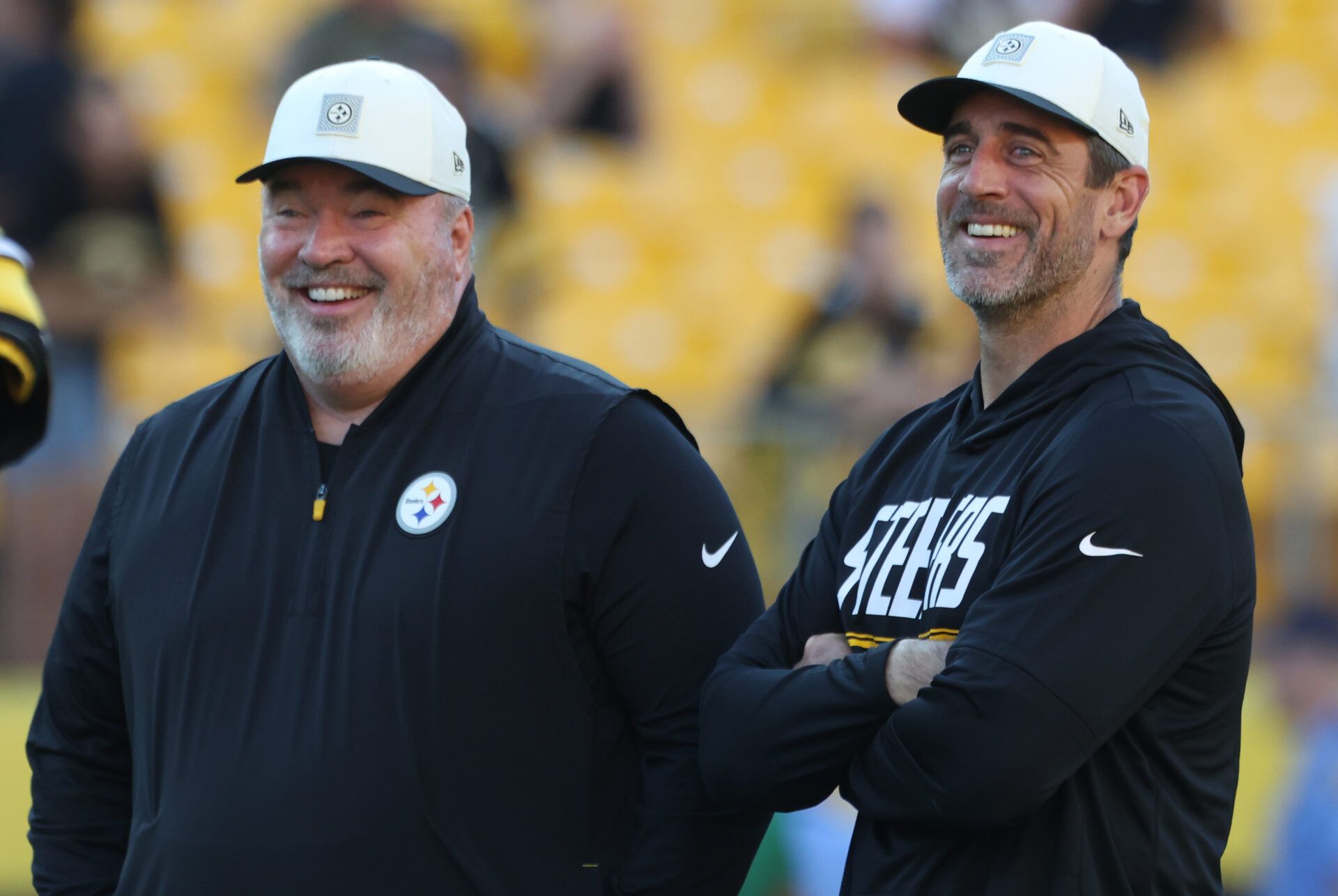
The moment drew widespread attention, with much of the conversation focused on sideline lip-reading. Fans and analysts alike tried to piece together what was said from a distance, parsing body language and camera angles for clues.
Saturday’s read on the dynamic was simpler: a quarterback and play-caller failing to get through to each other, with frustration boiling over in real time. He did not describe a previously undisclosed incident, but he didn’t need one to recognize what he was seeing.
A FAMILIAR PATTERN
Saturday spent the 2012 season in Green Bay, starting 14 games and earning his sixth Pro Bowl selection, according to www.profootballnetwork.com. That put him directly in the offense Rodgers and McCarthy were running together.
He saw the partnership from the inside, week after week, as the center relaying protections and reading fronts alongside both men. So when Saturday says the Thursday night exchange did not surprise him, he is speaking from a seat few others occupied.
“The facts are this is not the first time they’ve been upset with each other,” Saturday said.
That is the extent of what he confirmed. He did not describe a previously undisclosed incident from his time in Green Bay, and no specific past moment is identified in the source. It is not confirmed which prior situations Saturday refers to — only that, based on his firsthand experience, this friction has a history.
What he offered instead was context. The 2012 season was not a smooth ride for the Packers’ offense, and Saturday lived through the push and pull of Rodgers demanding precision and McCarthy calling the shots. Familiarity, for him, is not about replaying one old fight. It is about knowing how these two operate when communication breaks down.
That is why he recognized the pattern Thursday night — not because he knew the exact words exchanged, but because he had seen the dynamic before.
PRESSURE AND COMMUNICATION
Saturday put it bluntly: “You’re trying to get something effectively communicated that’s not being communicated effectively.”
“And all of a sudden, everybody feels pressure. Everybody’s intense,” he added.
His broader point was that frustration builds fast when a quarterback and play-caller both sense they are failing to get through to each other. That is the moment the sideline becomes a pressure cooker, not a stage.
He also pushed back on the notion that players and coaches are constantly aware of the cameras. The intensity of the moment, he argued, overrides any thought about how a reaction might look on television. The exchange Thursday was not performance — it was the byproduct of two people trying to solve a problem in real time and failing to connect.
That combination of urgency and failure is what makes the dynamic familiar to him. It is also why he reads the confrontation as a symptom of a larger issue in Pittsburgh, not a one-off explosion.
WHAT TO WATCH NEXT
The source material offers no timeline for what comes next. No upcoming game, roster move, or decision is referenced for the Steelers, Rodgers, or McCarthy.
What remains clear is that the focus will stay on how the quarterback and head coach communicate during games. Saturday’s comments point to a dynamic that does not resolve itself overnight, but the article provides no specific next event to watch for.
Per the source, Pittsburgh has communication problems to fix on the field. No date is attached to that work, and no deadline is given for when the issue might be addressed.
No return date for any player, no future matchup, and no organizational decision are mentioned in the source material. Any such details have not been confirmed and are simply not part of what was reported.
What is left is the open question of whether Rodgers and McCarthy can find a way to connect before the next sideline moment arrives. Saturday’s familiarity with both men suggests the tension will persist until the communication improves — but when that might happen, or what it might look like, remains unsaid.
Advertisement
You may also like
Yankees turn to Carlos Rodon for must-win Game 4
Carlos Rodon will start Game 4 of the ALDS against the Rays if necessary, per Bryan Hoch on Twitter, as reported by www.fantasypros.com. The…
Josh Naylor undergoes wrist surgery, expected back for Spring Training
Josh Naylor had surgery on his right wrist on Saturday, according to Mariners PR on Twitter. The procedure was reported via the team's official…

Cal Raleigh's shoulder surgery may explain his season-long struggles
Cal Raleigh had left shoulder surgery on Saturday, according to Mariners PR on Twitter. The procedure was reported by Ari Koslow, Mariners Correspondent for…

Seth Johnson undergoes left knee surgery, expected fully healthy for next season
Seth Johnson had left knee surgery over the weekend, according to Ari Koslow, Athletics Correspondent, citing Jason Burke on Twitter. The procedure was performed…
Padres pull Randy Vasquez from NLDS roster, activate Walker Buehler
The Padres removed Randy Vasquez from their NLDS roster, according to www.fantasypros.com. The corresponding move was activating Walker Buehler from the paternity list, making…
Ben Johnson's ego costs him a shot at NFL history with Bears
Ben Johnson has avoided joining an elite list of NFL coaches, per Ben Solak of ESPN. The Chicago Bears head coach could have become…