Julius Erving Reveals His $6M Nickname Was a Myth, He Made Just $500K a Year
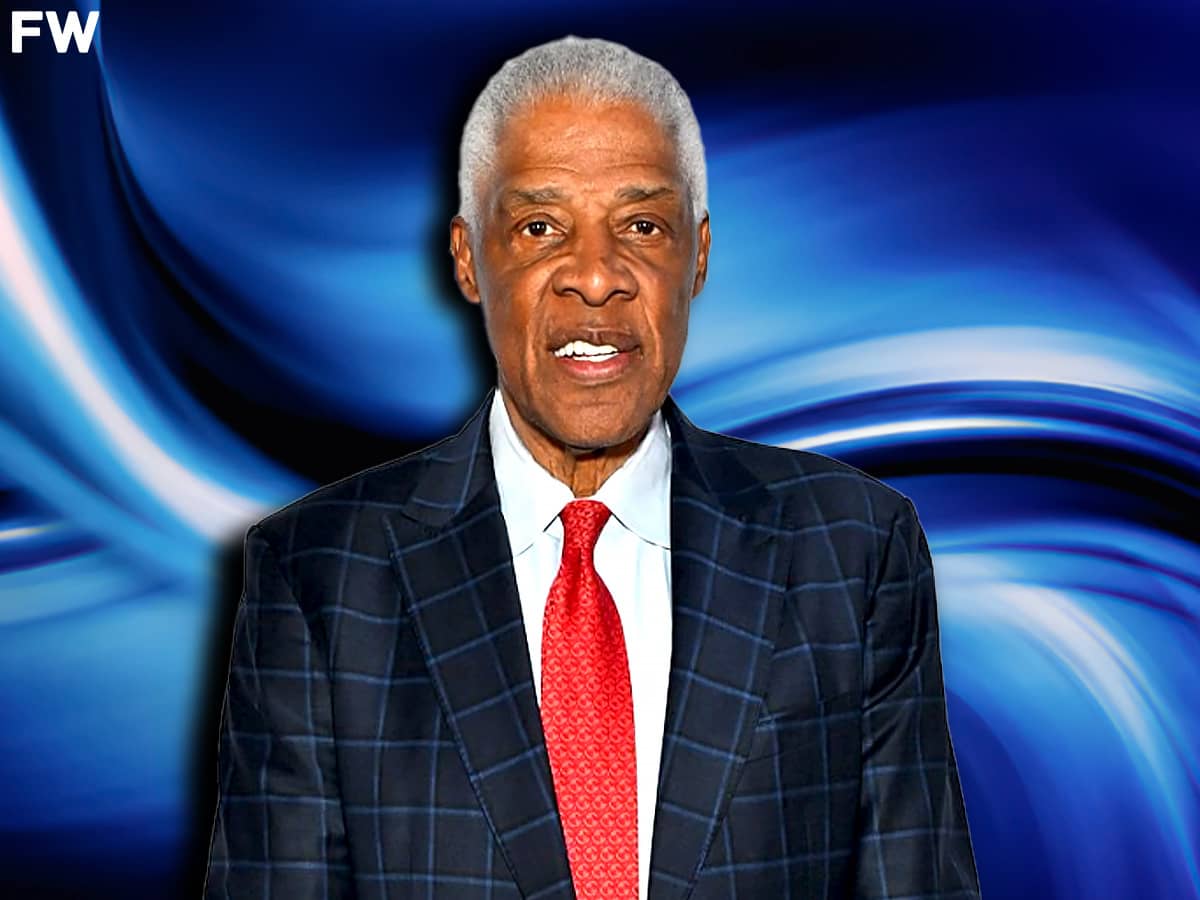
Julius Erving says the nickname was a myth — and he has the math to prove it.
During an appearance on the Beyond the Curve show with Sanya Richards-Ross, Erving explained that the "Six Million Dollar Man" label that followed him from his 1976 move to the Philadelphia 76ers never matched what he actually earned. The $6 million figure, he said, represented the total deal that took him from the New York Nets to the Sixers — not his salary.
"So the Nets got three million dollars, and I got a five-year contract for three million dollars," Erving said. "So I don't know why they call me the Six Million Dollar Man."
Erving's actual pay: roughly $500,000 per year, per his own account. The separate $3 million compensation to the Nets has not been independently confirmed beyond Erving's description of the deal.
"That's how news gets reported. Exaggeration," Erving said. "So I'm walking around with this six million on my back, and I ain't even close to six million. I'm getting like five hundred thousand a year, which was okay."
The nickname stuck partly because of the popular TV series *The Six Million Dollar Man*, which aired in the same era. For a player whose athleticism seemed superhuman, the comparison was too fitting to fade — even if the paycheck told a different story.
In the 1970s, $500,000 a year was still a substantial salary. But Erving's point is that perception and reality were wildly different. The label made him sound like the highest-paid figure in sports when, by his account, the real number was a fraction of it.

THE REAL NUMBERS
The numbers behind the deal were split down the middle. Half of the famous $6 million went to the Nets as compensation for Erving. The other $3 million was his five-year contract with the Sixers, per his account on *Beyond the Curve*.
That worked out to roughly $500,000 per year. Erving said he was "getting like five hundred thousand a year, which was okay."
In the 1970s, that was still an enormous salary. But the gap between the label and the check was stark — the public heard "six million" and assumed Erving was pocketing it all, when the actual breakdown left him with a fraction.
The exact annual figure is only approximate. The source does not provide a precise contract breakdown beyond Erving's own words, so the $500,000-per-year number has not been confirmed as the exact terms of the deal. What is clear is that the $6 million was never his personal paycheck — it was the total cost of moving him from New York to Philadelphia, with the Nets taking their share first.
WHY THE LABEL STUCK
The nickname carried extra weight because of timing. *The Six Million Dollar Man* was one of the most popular shows on television during that same era, so the label landed with a built-in cultural hook.

For a player as spectacular and seemingly superhuman as Dr. J, the comparison naturally stuck. When a man is floating through the air and finishing dunks that look physically impossible, calling him a "six million dollar man" makes sense — even if the math never did.
Erving explained the disconnect plainly. "That's how news gets reported. Exaggeration. So I'm walking around with this six million on my back, and I ain't even close to six million."
The public heard the headline number and attached it to the player. The reality was that half of the $6 million went to the Nets as compensation, while Erving's own contract was worth $3 million over five years. The label stuck because it was catchy, not because it was accurate.
The source does not confirm when the nickname was first used or by whom. What is clear is that the TV show, the spectacular style of play, and the large round figure combined into a story that outlived the actual details of the deal.
THE DEAL'S IMPACT
By the time the Sixers landed him, Erving had already established himself as the ABA’s biggest attraction with the Nets. The move across the league in 1976 came just as the ABA-NBA merger was reshaping the professional game.
The acquisition transformed the direction of the Sixers. Erving became the centerpiece of a franchise that had been searching for an identity, and he delivered almost immediately.

He won the 1981 MVP award, then helped the Sixers capture the 1983 championship alongside Moses Malone. That title run capped a dominant stretch that cemented his place in Philadelphia lore.
Beyond the trophies, Erving’s combination of athleticism, creativity, and brilliance influenced a generation of players who came after him. The style he brought to the court changed how the game was played and watched.
The source does not specify the exact terms of the trade or the merger details beyond what Erving stated about the $6 million figure. What remains clear is that the deal, however the money was split, reshaped both his career and the Sixers' future.
WHAT TO WATCH NEXT
Erving’s clarification arrives nearly five decades after the move, during a recent appearance on *Beyond the Curve* with Sanya Richards-Ross. For fans waiting on a follow-up, the source offers no timeline.
No upcoming events, games, or announcements involving Erving are mentioned in the discussion. The interview stands as the latest word on the matter, with no indication that the Sixers or Erving plan to address the historical figure further.
Any future statements from Erving, the Sixers, or additional reactions to the $6 million correction are not in the source and remain unconfirmed. For now, the record rests where Dr. J left it: the nickname was always more fiction than paycheck.
Fans may look for further comments from Erving or the Sixers about the deal, but none are reported. The story, like the man himself, appears content to let the myth fade into history.
Advertisement
You may also like

Chourio's walkoff single off Miller puts Brewers on brink of NLCS
Jackson Chourio hit a two-out, two-run walkoff single off Mason Miller in the bottom of the ninth, scoring Christian Yelich and Sal Frelick and…
Bears LB Calls Week 4 Win 'One of the Easiest NFL Games I Ever Played In'
Devin Bush called the Bears' Week 4 win over the New York Jets "one of the easiest NFL games I ever played in," according…
Bears Bullets: Backup QB Dominance, O-Line Love, and a Win Monday
Mondays are better when the Bears win. It's a proven fact, per www.bleachernation.com. The source opens with a personal anecdote about a photographer who…
Red Sox's Wild Card collapse was foreshadowed all season long
Nothing that happened across those two Wild Card losses in New York was a surprise. Not to www.justbaseball.com, which wrote that every collapse over…
Spencer Knight Stands on Head but Blackhawks Fall to Sabres 4-3
The Blackhawks fell 4-3 to the Sabres in Buffalo, according to www.bleachernation.com, a loss that shouldn’t have been this close. Spencer Knight was fantastic…
Blackhawks return home 0-3-0 after better effort in Buffalo loss
The Blackhawks wrapped their season-opening road trip with another loss, dropping a 4-3 regulation decision in Buffalo, according to www.bleachernation.com. The effort was better…