Marsch seeks referee coping strategies as Canada rebuilds for 2030 World Cup
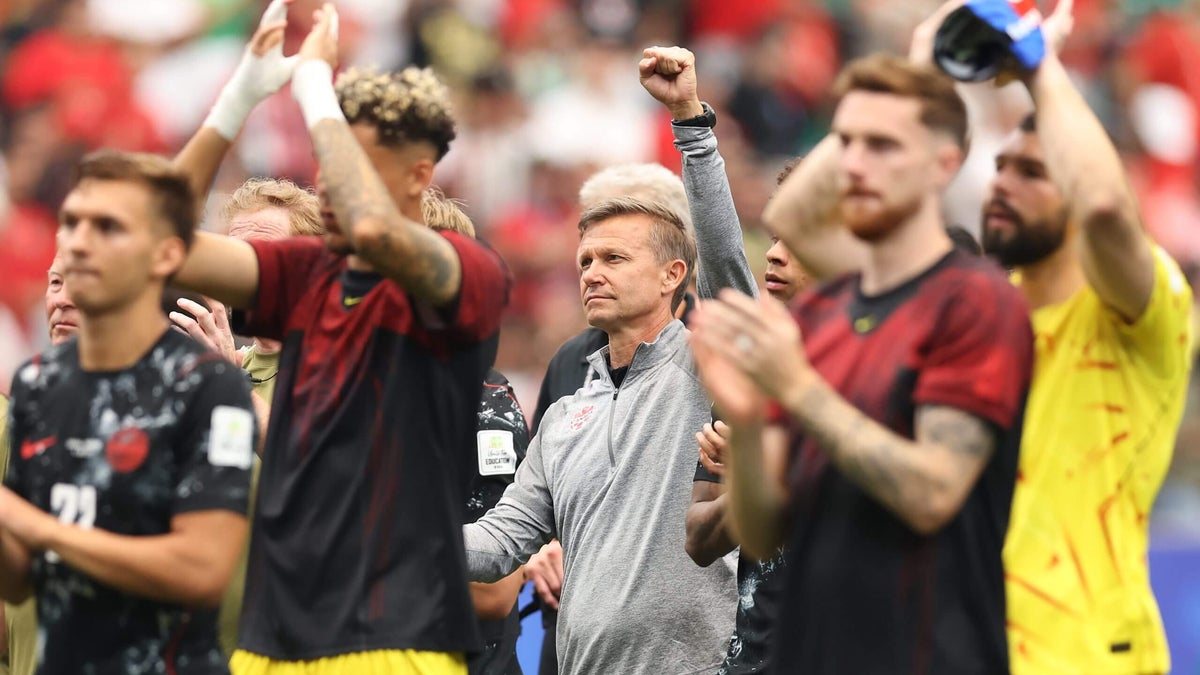
When Jesse Marsch arrived in Canada camp in September, he cleared his schedule for a meeting that could help define his next four years. As the head coach began his first full World Cup cycle, he sat across from the team psychologist.
“I’m trying to get her to help me understand how I can better deal with referees,” Marsch said with his characteristically sly grin.
“It was reminder that I’m now going to be competing in Concacaf in difficult situations. I’m trying to come up with strategies on how to deal with frustration and what I consider both incompetence and unfairness, right? Those are two things that, at the core, bother me.”
No specific referee incidents are named in the source. Marsch’s frustration is general, but pointed. He shakes his head when he talks about it, a man bracing for what he knows is coming.
“I realized that this is not going to be the easiest four years in terms of managing what some of these experiences will be like,” Marsch said. “So I’m working on how I’m going to deal with that.”

The road between now and the next World Cup could be a long one. Marsch wants to be ready for every step of it.
THE ROAD AHEAD
Marsch led Canada to a program-best round of 16 at the 2026 World Cup. Now the work begins again.
Canada is no longer a co-host, so the team must return to qualifying for 2030. That shift changes everything about the next four years.
“I realized that this is not going to be the easiest four years in terms of managing what some of these experiences will be like,” Marsch said.

The current international window is partly about re-introducing Canada to the public that fell for the team during the World Cup. That support is real, but it only matters if the program can build on it.
No specific qualifying schedule or opponents are mentioned in the source. The path back to the tournament is not yet mapped out in detail.
What is clear is that Canada’s run to the last 16 cannot be a one-off. The organization does not want it to be an anomaly, and the entire Canada Soccer setup must elevate itself in an increasingly competitive international landscape.
Marsch has plenty to deal with between now and 2030. The window has revealed how Canada is charting its course, and the next four years will define whether that evolution actually happens.
THE 2030 GOAL

Marsch’s target for 2030 is specific: a Pot 2 seeding in the World Cup draw, provided the tournament stays at 48 teams.
Canada Soccer believes that seeding would produce a more favorable draw and, theoretically, an easier path deeper into the knockout rounds.
Australia was the lowest-ranked Pot 2 team in the 2026 draw, a useful benchmark for what that tier looks like.
Qualifying for 2030, however, is not a given. Canada’s current FIFA ranking and the exact requirements for Pot 2 are not confirmed in the source.
Marsch’s ambition is clear, but the road to that seeding runs through a qualifying campaign that no longer carries co-host protection.

REBUILDING THE PROGRAM
Canada Soccer does not want the round-of-16 run to be an anomaly. Internally, the organization sees multiple reasons for promise and multiple opportunities for the program to “categorically change,” per The Athletic.
That change will not happen on the field alone. The entire Canada Soccer organization must elevate itself in an increasingly competitive international landscape, the source notes. No specific internal changes or new initiatives are detailed in the source.
Marsch has already acknowledged the weight of the task. “I realized that this is not going to be the easiest four years in terms of managing what some of these experiences will be like,” he said.
Whether that evolution and improvement take place will define the next four years. The window against the United States is not just a friendly — it is a first public step in proving that the program’s breakthrough was a foundation, not a peak.

WHAT TO WATCH NEXT
Canada plays a friendly against the United States, its border rival to the south, in what the source frames as a revealing window into how the program is charting its course toward 2030. The date, venue, and result of that match are not confirmed in the source.
Ahead of the game, The Athletic spoke to multiple people throughout Canada Soccer to understand the questions the program must answer between now and 2030. The conversations centered on one theme: how Canada can ensure its round-of-16 run was not an anomaly.
Marsch, for his part, is working on how he will deal with the challenges of the next four years. He has already sought out the team psychologist to build strategies for managing frustration — particularly with referees in Concacaf — and has said plainly that this cycle will not be easy.
The friendly against the United States is the first public step in that process. It is a chance to re-introduce the team to a Canadian public that fell for it during the World Cup, and a test of whether the program’s breakthrough was a foundation or a peak.
Advertisement
You may also like

Joe Mazzulla Just Dropped the Most Brutally Honest Quote in Sports History
Joe Mazzulla does not do fake. While the rest of the NBA drowns in preseason sunshine, the Celtics head coach just looked into the…

Brewers caught Mason Miller's pitch tell in the 9th and won the game
MILWAUKEE — The box score will show a blown save, a walk-off single, and a Padres team heading home down 0-2. But the real…

Giants Stole Arvell Reese at 5th Pick—His 80s Throwback Highlights Are Pure Carnage
Fourth game as a pro. Already a monster. And now he's doing it in a Giants 80s throwback, wearing No. 52, delivering hits that…
Oregon State's 5-10 freshman WR is nearly matching Jeremiah Smith's stats
Jesse Legree is keeping pace with Jeremiah Smith for the title of best wide receiver in the nation, according to www.barstoolsports.com. The Oregon State…

Urban Meyer: Michigan's offense is a 'train wreck' with no fast fix
Urban Meyer did not hold back when assessing Michigan’s offense after Saturday’s 20-14 loss to Minnesota. On this week’s episode of “The Triple Option”…

Austin Reaves and Jenna Barber Announce Big Move Before Lakers' New Era
Austin Reaves is entering the most important season of his career, and he’s doing it with a major life change off the court. His…