The 'pig' in blood on a headboard: the Green Beret's story that didn't add up
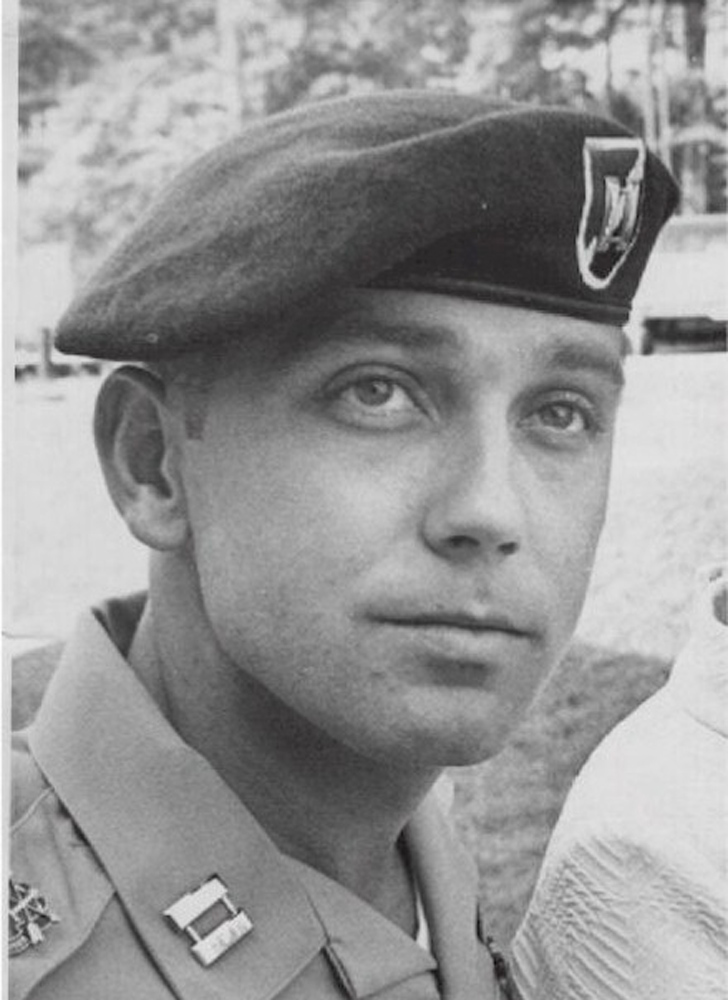
The word was there, in blood, on the headboard of a bed in a Fort Bragg apartment.
"Pig."
It was February 17, 1970, and military police had responded to a call from the residence of Army Captain Jeffrey MacDonald, a Green Beret physician.
Inside, they found the bodies of MacDonald's pregnant wife, Colette, and their two daughters, 5-year-old Kimberly and 2-year-old Kristen.
MacDonald was alive but injured.
He told investigators that a group of hippies had attacked the family, chanting "acid is groovy" and "kill the pigs."
He said he had been beaten, that his wife and daughters had been stabbed and bludgeoned.
The scene showed signs of a struggle.
The word in blood was a documented crime-scene detail.
Who wrote it is not established by the record.
It is part of the accused's account, a story told by the man who would be charged with the murders.
Not a confirmed fact.
The scene held a question that the first report could not answer.
Was the word a message left by intruders?
Or a stage prop in a story that would not hold?
The word sat on the headboard, and the case would turn on what it meant.
For now, there was only the apartment, the bodies, and the single word in blood.
THE FIRST REPORT
The call came in on February 17, 1970.
Military police responded to the MacDonald residence at Fort Bragg, North Carolina.
They found Colette MacDonald dead.
They found Kimberly dead.
They found Kristen dead.
Jeffrey MacDonald was alive.
He was injured, but he was alive.
He told investigators a story.
A group of hippies had attacked the family, he said.
They chanted "acid is groovy" and "kill the pigs."
He said he had been beaten.
He said his wife and daughters had been stabbed and bludgeoned.
The Army's Criminal Investigation Division took his account.
They accepted it, at first.
The story had a shape that fit the times.
Hippies, drugs, a violent intrusion.
It seemed plausible.
It seemed like something that could happen.
The exact details of the dispatch call are not in the record.
The record holds what the officers found, and what MacDonald said.
Nothing more, at that first hour.
The word on the headboard was there.
The bodies were there.
MacDonald's story was there, too.
It would take time to test it.
THE STORY UNRAVELS
The first check was the door.
No forced entry. No broken lock. No sign that anyone had to work to get inside.
The crime scene showed no signs of forced entry, contradicting the hippie attack story.
Blood spatter analysis told a different story, too.
The attacks occurred in different rooms, not in a single struggle.
Not one chaotic encounter. Separate scenes, separate moments.
MacDonald's injuries were superficial compared to his family's fatal wounds.
He was alive. He was talking. His wife and daughters were not.
The Army CID initially accepted MacDonald's account, but the physical evidence kept pulling at the thread.
In 1970, the Army charged MacDonald with murder.
After a hearing, the charges were dropped due to insufficient evidence.
The specific reasons for the initial charges being dropped are not detailed in the record beyond 'insufficient evidence.'
That would require documentation the record does not provide.
The victims' mother and stepfather became vocal advocates for prosecution.
They pressured the Department of Justice to reopen the case.
They believed MacDonald was guilty, and they said so.
In 1974, a federal grand jury indicted MacDonald.
The story he told in February 1970 had held for four years.
Then it was tested again.
THE TRIAL AND THE VERDICT
The federal trial began in July 1979 in Raleigh, North Carolina.
The prosecution presented fibers from a pajama top found at the scene.
Those fibers matched MacDonald's own pajamas.
A witness, Helena Stoeckley, claimed she had been at the house that night.
She was deemed unreliable due to drug use.
The prosecution argued MacDonald killed his family in a rage.
The exact nature of that rage is not detailed in the record; it is the prosecution's argument.
The defense argued the physical evidence was mishandled.
The defense pointed to Stoeckley's claim as proof of intruders.
It was the story against the fibers.
It was the word of the accused against the pattern of the blood.
In August 1979, the jury found MacDonald guilty of three counts of first-degree murder.
He was sentenced to three consecutive life terms.
A decade of investigation had ended.
The story he told in February 1970 had been tested again.
It did not hold.
In 1982, the Fourth Circuit Court of Appeals affirmed the conviction.
The verdict stood.
The life sentences stood.
The record would not change it.
AND THE STORY STILL ISN'T OVER
Jeffrey MacDonald remains incarcerated, serving his three life sentences.
He has maintained his innocence and has filed numerous appeals, all unsuccessful.
He later sought DNA testing and other post-conviction relief, but his appeals were consistently denied.
In 1984, author Joe McGinniss published "Fatal Vision," which concluded MacDonald was guilty.
MacDonald sued McGinniss for breach of contract, arguing McGinniss had deceived him into cooperating, but the courts ruled against him.
The case remains a subject of true-crime interest, with ongoing debate about the evidence, but no new trial has been granted.
The word "pig" in blood on the headboard is documented.
Who wrote it is not.
The record does not establish that any group of hippies wrote it, nor does it establish who did.
That would require evidence.
The verdict stood, and it still stands.
Not because the story is closed.
But because no court has reopened it.
The next concrete step in the case is not specified in the record.
No new trial has been granted.
MacDonald's appeals were consistently denied, and the courts ruled against him in the contract suit.
The case is debated.
It is also unresolved.
She was on the ground below.
The children were on the ground below.
The word remains on the headboard, in the photographs, in the testimony, in the record.
It is a fact of the scene.
It is not a fact of the story.
Advertisement
You may also like
The cell phone logs that placed Adnan Syed in Leakin Park — and the alibi witness his lawyer never called
She was on the ground below. Hae Min Lee, an 18-year-old senior at Woodlawn High School in Baltimore County, Maryland, disappeared on January 13,…

The notebook Brian Laundrie carried into the swamp that named the killer of Gabby Petito
The notebook was found in the swamp, near the remains, on October 20, 2021. Brian Laundrie’s body was discovered in the Carlton Reserve in…
A 15-year-old boy stepped out to meet a contractor. His mother never saw him again.
She watched him walk out. December 11, 1978, and Robert Piest was leaving his shift at the pharmacy in Des Plaines, Illinois. He was…
The mother who spent 47 years searching a moor for her son's body
She walked the same ground for 47 years. Winnie Johnson went back to Saddleworth Moor, again and again, looking for her son. Her son…
Caylee Anthony's grandmother reported her missing 31 days after she was last seen
Caylee Marie Anthony was two years old. Her family last saw her in mid-June 2008, in Orlando, Florida. On July 15, 2008, her maternal…
The radio and binoculars that led police to the Clutter killers
The Sunday bell did not ring for the Clutter family. On the morning of November 16, 1959, neighbors and friends came to River Valley…