Plague lab worker dies; US, Europe monitor Russia outbreak

A laboratory worker at the Irkutsk Anti-Plague Institute of Siberia and the Far East died suddenly of an unknown illness, according to Rospotrebnadzor, Russia's health and consumer protection agency. The worker was a woman in her late 20s, per the agency.
The institute studies the plague and other infectious diseases, according to Rospotrebnadzor. That detail has put the death squarely on the radar of international health officials.
A State Department spokesperson said the U.S. is "aware of reports of a fatal case of suspected pneumonic plague" in Russia and is monitoring developments alongside the Centers for Disease Control and Prevention and other agency partners.
The cause of death is not confirmed. It is only "suspected pneumonic plague" according to reports.
European officials are watching too. European Commission spokesperson Eva Hrncirova said on Oct. 5: "We are aware of the reports concerning the laboratory incident in Russia, seemingly involving a pathogen-causing plague."
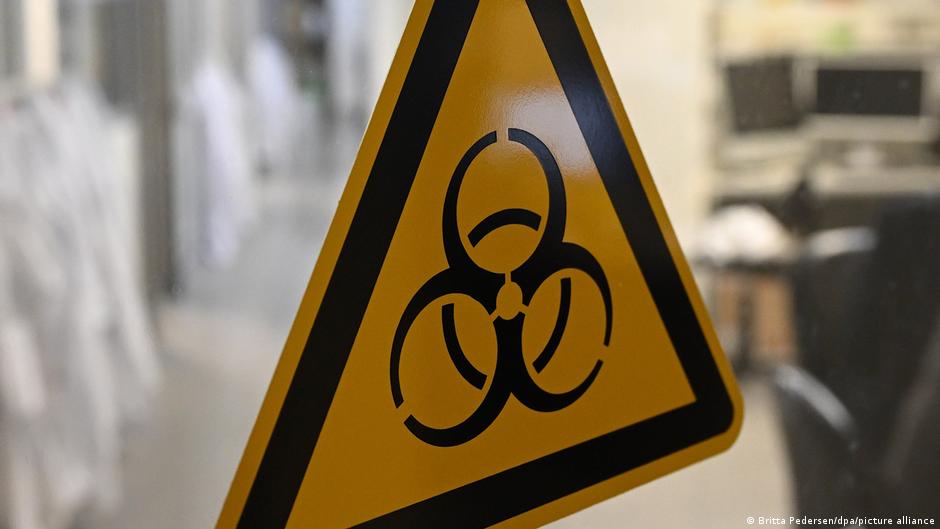
Hrncirova said the Commission is in touch with experts from the European Center for Disease Prevention and Control. The dual alerts from Washington and Brussels underscore how a single unexplained death at a pathogen research facility can trigger international concern.
WHAT HAPPENED IN IRKUTSK
Russian authorities said on Oct. 4 that the situation in Irkutsk is stable after the death prompted local officials to impose a "special set of measures" to contain a dangerous infection. The exact cause of the woman's illness and death is not confirmed.
Rospotrebnadzor has described the illness that caused the woman's death as "pneumonia of unknown origin." The research institute at the center of the incident is located in the Siberian region of Irkutsk, roughly 150 miles from Russia's border with Mongolia.
The worker, a woman in her late 20s, was an employee at the Irkutsk Anti-Plague Institute of Siberia and the Far East, which studies the plague and other infectious diseases, according to Rospotrebnadzor. Local officials said authorities have implemented "anti-epidemic measures" in the region to contain the infection.
Igor Kobzev, the governor of Irkutsk Oblast, said on Oct. 2 that authorities identified dozens of people who came into contact with the laboratory worker. Those contacts were subsequently placed under medical observation, according to the Russian state news agency Tass.
The containment effort has moved quickly since the woman's death, with officials moving to trace and monitor anyone who may have been exposed. The location of the institute, near the Mongolian border, adds to the concern — though authorities have stressed the situation remains under control.
CONTACTS IN QUARANTINE, NO SIGNS OF INFECTION
Governor Igor Kobzev said on Oct. 2 that authorities identified dozens of people who came into contact with the laboratory worker. Those contacts were placed under medical observation, according to the Russian state news agency Tass.
The exact number of contacts has not been specified in the source; officials have only confirmed that there were "dozens."
As of Oct. 5, people in quarantine have not shown any signs of infection, according to Maxim Modin, mayor of the nearby town of Shelekhov. Modin said the town's medical facilities have reopened for normal operations.
The containment effort has moved quickly since the woman's death, with local officials saying authorities have implemented "anti-epidemic measures" in the region to contain the infection. The research institute sits in the Siberian region of Irkutsk, roughly 150 miles from Russia's border with Mongolia.
OFFICIALS RESPOND, BUT DETAILS REMAIN SCARCE
Kremlin spokesman Dmitri Peskov offered few details about the potential plague case during a briefing with reporters on Oct. 5, saying only that Rospotrebnadzor was monitoring the situation.
Across the Atlantic, a State Department spokesperson said the U.S. is "aware of reports of a fatal case of suspected pneumonic plague" and is monitoring developments alongside the CDC and other agency partners. That word — "suspected" — is the key caveat. Whether the case is actually pneumonic plague has not been confirmed.
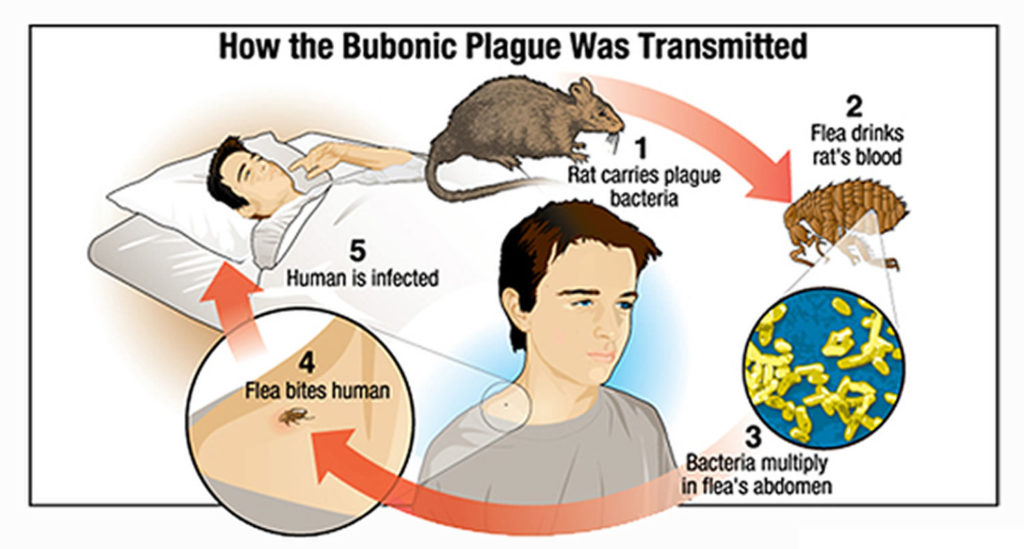
:max_bytes(150000):strip_icc()/how-is-bubonic-plague-spread-2860699-5c45500dc9e77c0001daad0a.png)
European Commission spokesperson Eva Hrncirova said on Oct. 5: "We are in touch with our experts from European Center for Disease Prevention and Control." The commission had earlier acknowledged the reports "seemingly involving a pathogen-causing plague."
Russian authorities said on Oct. 4 that the situation in Irkutsk is stable. Rospotrebnadzor has been more guarded in its public description, calling the illness that killed the woman "pneumonia of unknown origin."
The gap between those two characterizations — a stable situation versus an unknown pneumonia — reflects how little has been officially confirmed about what happened inside the institute. Officials have not specified the exact number of people under observation, only that there were "dozens."
WHAT TO WATCH NEXT
People in quarantine have not shown any signs of infection as of Oct. 5, according to Maxim Modin, mayor of the nearby town of Shelekhov. Modin said the town's medical facilities have reopened for normal operations.
Russian authorities said on Oct. 4 that the situation in Irkutsk is stable. The State Department said it is monitoring developments alongside the Centers for Disease Control and Prevention and other agency partners.
European authorities are keeping an eye on the situation as well. European Commission spokesperson Eva Hrncirova said they are in touch with experts from the European Center for Disease Prevention and Control.
What remains unresolved is the diagnosis itself. Rospotrebnadzor has publicly described the illness as "pneumonia of unknown origin," and the final cause of the worker's death has not been confirmed.
Whether the infection has spread beyond the identified contacts also remains unconfirmed. Officials have not stated what specific next steps they will take beyond continued monitoring and the "anti-epidemic measures" already imposed in the region.
The coming days will show whether the quarantine holds and whether the stable situation in Irkutsk persists.
Advertisement
You may also like

Jordin Canada reveals DeWanna Bonner's halftime speech sparked Dream's comeback win
Jordin Canada revealed what sparked the Atlanta Dream's 92-82 Game 2 win over the New York Liberty: a halftime message from DeWanna Bonner. "DB…

Gabby Williams' 25 points lead Valkyries to Game 1 win over Aces
No. 2 Golden State defeated No. 3 Las Vegas 71-60 in Game 1 of the WNBA semifinals, grabbing a one-game lead in the best-of-five…

Angel Reese first of WNBA's new stars with real shot at title
Angel Reese is the first of the WNBA's new stars with a real shot at a title, according to www.highposthoops.com. The Atlanta Dream are…

Angel Reese leads Dream to 92-82 upset over Liberty in semifinal opener
The Atlanta Dream opened the WNBA semifinals with a 92-82 upset of the New York Liberty at State Farm Arena on Oct. 4, 2026.…

No. 1 combo guard King Gibson commits to LSU over Arkansas, Louisville, Providence
King Gibson, the No. 1 ranked combo guard in the 2027 class, has committed to LSU, he told Rivals. The 6-foot-4 senior out of…

Dan Hurley compares NIL roster costs to a poker game: 'Hard to know what's real'
Speaking at Big East Media Day, UConn coach Dan Hurley compared NIL roster cost conversations to a poker game, per sports.yahoo.com. "I look at…