Dan Hurley compares NIL roster costs to a poker game: 'Hard to know what's real'
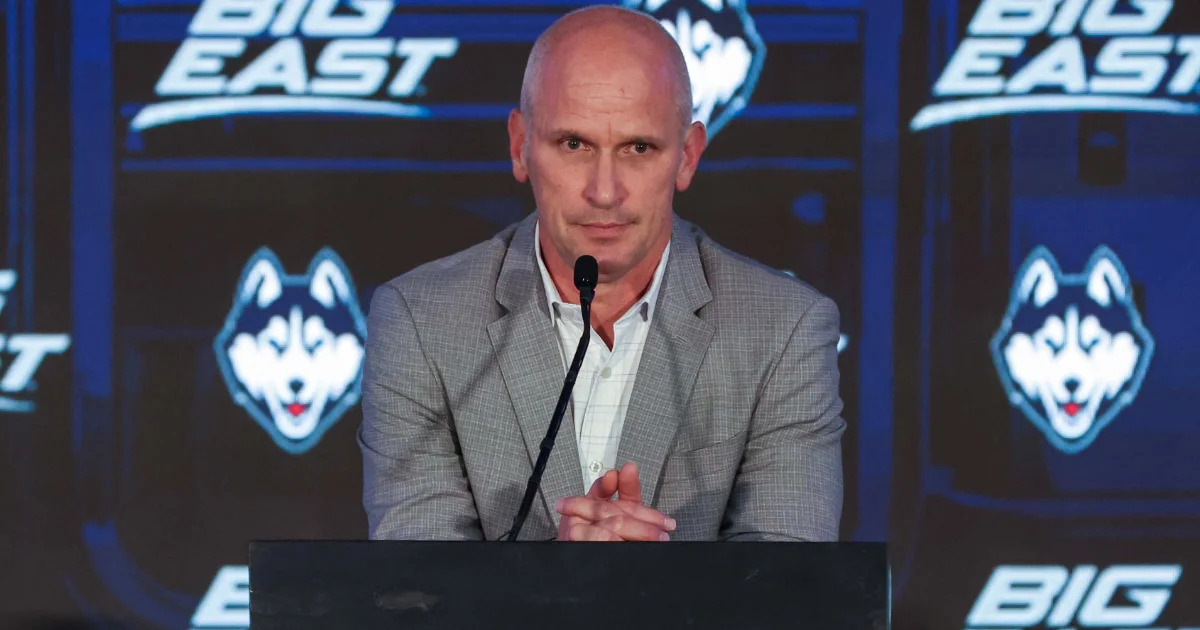
Speaking at Big East Media Day, UConn coach Dan Hurley compared NIL roster cost conversations to a poker game, per sports.yahoo.com.
"I look at it like it's a poker game. There's a certain amount that you probably need to have to get in the game," Hurley said.
He then laid out the stakes: "Is that number $14 million? Is that number $18 million to get to a Final Four? I don't know exactly what that number is."
Hurley admitted it's hard to quantify the exact cost to reach the NCAA Tournament, saying "you're just not sure what's real and what's not real." The specific dollar amount needed to reach the NCAA Tournament or Final Four is not confirmed.

THE HIDDEN NUMBERS
Part of the reason the number is so hard to pin down, Hurley said, is that coaches keep their exact figures close to the vest, according to sports.yahoo.com.
Some coaches will say they spend more than they actually do, while others might suggest a lower number, he explained. That leaves the public guessing at what is real.
"Some of the things you see online are not accurate," Hurley said. "They're either inflated – coaches are either going to inflate what other coaches are paying their players and then, they're going to, like … say you paid less and that other people paid more. So it's hard to really know."

Specific team NIL spending figures are not confirmed, and Hurley's comments are his own observations of how the landscape operates. The poker game, in other words, is played with bluffs on both sides of the table.
THE GOING RATE
The exact figures are hard to pin down, but the known numbers are starting to surface. Texas coach Sean Miller said earlier this summer he expects a number of teams to top the $20 million mark, according to sports.yahoo.com. That figure is a projection, not confirmed data.
Every team in last year's Final Four, including UConn, spent more than $8 million, On3's Pete Nakos reported at the time. Former Michigan coach Dusty May also confirmed the Wolverines had a roster cost of more than $10 million during their title run. Both figures are reported, not official.

Hurley acknowledged that while a total number is tough to quantify, certain roles carry a clearer price tag. "There's certainly a going rate at certain positions, if you want to try to put together an elite number or an elite roster," he said.
That going rate helps explain why the gap between the reported Final Four spending and Miller's $20 million projection is so wide. The top teams are paying premiums at specific spots, not evenly across the roster.
The sense this year is that the cost of a college basketball roster could climb even higher. Hurley's poker analogy may be apt, but the chips on the table keep getting bigger.
A GOOD TIME FOR PLAYERS
.jpg)
Despite the uncertainty around the numbers, Hurley sees a clear upside for everyone involved. "The players right now, I mean, it's never been better to be a college basketball or a college football player or a college football or a college basketball coach," he said. "I think we're just all very grateful."
The 2026-27 season is the second for college basketball in the revenue-share era, according to sports.yahoo.com. The exact revenue-share details have not been confirmed, and the average men's basketball NIL figure from Opendorse data ahead of the 2026 NCAA Tournament is not fully stated in the source.
That leaves the sport in a strange place: flush with money, yet still guessing at the price of a contender. Hurley's poker analogy may be apt, but the chips on the table keep getting bigger.
WHAT TO WATCH NEXT

The sense, according to sports.yahoo.com, is that the cost of a college basketball roster could climb even higher this year. Last season’s Final Four teams all spent more than $8 million, and former Michigan coach Dusty May confirmed the Wolverines exceeded $10 million on their way to the title.
Hurley’s comments land as the 2026-27 season approaches — the second in the revenue-share era. He remains unsure whether the price of a Final Four run is $14 million or $18 million, admitting he doesn’t know exactly what that number is.
The question of what specific dollar amount is needed to compete stays open. No specific upcoming game, date, or decision is confirmed in the source; future roster cost figures remain speculative.
What fans should watch instead is the trend itself. Coaches keep their true figures close, some inflating what rivals pay, others downplaying their own outlay. Hurley’s poker analogy cuts to the heart of it: everyone is betting, but no one is showing their cards.
There is, at least, one anchor. Hurley said there is a going rate at certain positions for those trying to build an elite roster. That suggests the market is not entirely a bluff — just one where the full table stakes stay hidden until the next hand is dealt.
Advertisement
You may also like
Dave Portnoy Says Ohio State Got Him Kicked Off Fox's Big Noon
Dave Portnoy, Barstool Sports founder, revealed Friday night that The Athletic’s Andrew Marchand was about to report he had been removed from Fox’s Big…

Good Good Golf Keeps Winning Views After Losing Sponsors
The fallout hit Good Good Golf fast. On Aug. 21, the brand posted a promotional video for its new Callaway driver showing co-founder Garrett…

NCAA wins Ohio appellate ruling, but eligibility chaos persists nationwide
On Friday, an Ohio appellate court reversed a preliminary injunction that had allowed Xavier basketball player Filip Borovicanin and nearly two dozen other college…

Romo likely to collect big chunk of CBS money after settlement
Tony Romo may no longer be CBS’s top NFL analyst, but he’s likely still collecting a hefty share of the network’s money. According to…
Belichick's dry third-down answer gets instantly punished by Notre Dame touchdown
Bill Belichick gave Taylor McGregor a classic non-answer on Saturday, and Notre Dame made him pay for it before the words had time to…

Lions' defense worst in NFL, yet Campbell refuses to make changes — wasting a Super Bowl window
Through Week 4, no team in the NFL has surrendered more points or yards than the Detroit Lions, according to www.cbssports.com. After a 32-26…