The slow-motion Bronco chase that began after O.J. Simpson was charged with murder
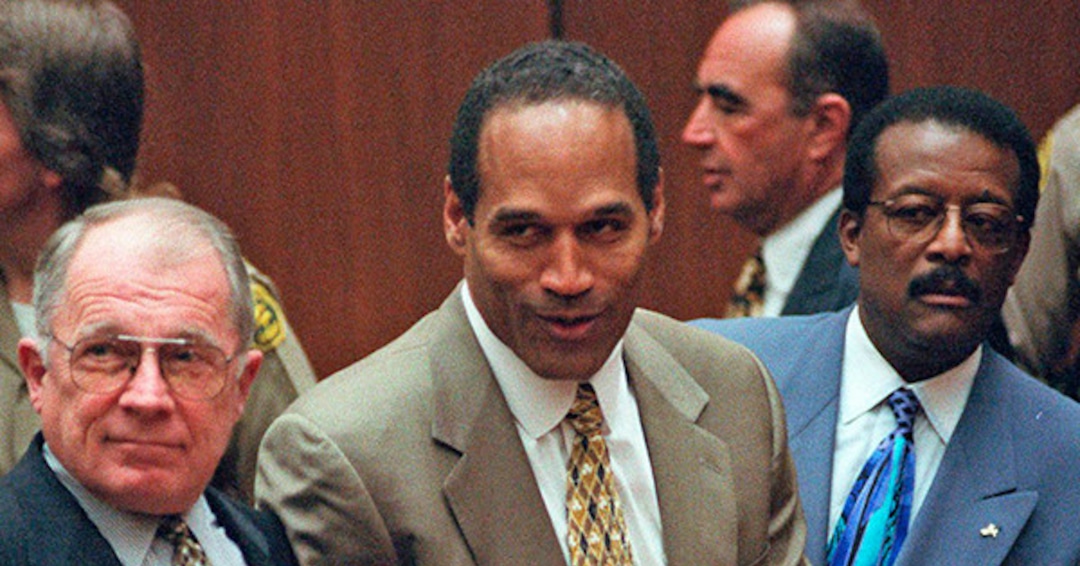
The Bronco drifted down the freeway at 35 miles an hour, a white speck trailed by a line of police cars.
Al Cowlings was behind the wheel. O.J. Simpson sat in the passenger seat, holding a phone to his ear.
On June 17, 1994, five days after the murders, Simpson had failed to surrender to police.
He had been charged with two counts of first-degree murder for the deaths of Nicole Brown Simpson and Ronald Goldman.
Instead of turning himself in, he ran.
The chase was broadcast live on television. Millions watched the slow procession wind through Los Angeles before it returned to Simpson's Brentwood estate.
What Simpson was thinking during those hours is not in the record.
Not the words he said into the phone. Not the moment he decided to run. Not the reason he stopped.
The Bronco itself became a symbol of the case, the image replayed for decades.
It is a strange thing to watch a man accused of two murders lead police on a tour of the city's freeways, and to see it as entertainment.
At the end, the Bronco pulled into the driveway. Simpson got out. The police took him into custody.
The chase was over. The legal saga was just beginning.
THE FALL FROM GLORY
Orenthal James Simpson was known as O.J.
He was a former Heisman Trophy-winning football player.
He was also an actor and a sports broadcaster.
That is the public record of his success.
The private record was different.
He had a history of domestic violence against Nicole Brown Simpson.
That history included a 1989 incident.
For that incident, he pleaded no contest to spousal battery.
The exact circumstances of that 1989 incident are not detailed in the source.
Nicole Brown Simpson was his ex-wife.
Ronald Goldman, a 25-year-old waiter, was the second victim.
On the night of June 12, 1994, they were found stabbed to death outside Nicole’s condominium on Bundy Drive in Brentwood.
A neighbor walking her dog discovered the bodies around midnight.
Nicole was found at the base of the steps to her front door.
Goldman lay nearby.
He had returned a pair of sunglasses Nicole’s mother had left at a nearby restaurant.
Both had been killed with a knife.
The murder weapon was never recovered.
The contrast is stark.
A man who ran through defenses on a football field.
A man who stood accused of running through a life.
The public success was real.
The private violence was also real.
Both were part of the same man.
The record holds both, side by side, without reconciling them.
THE EVIDENCE AND THE ACCUSATION
The lead detectives were Philip Vannatter and Tom Lange.

They found a bloody glove at Simpson’s estate.
They found a matching glove at the crime scene.
Blood drops led away from the bodies.
DNA evidence linked Simpson to the victims, according to the prosecution’s case.
A pair of bloody socks was found in Simpson’s bedroom.
Simpson was charged with two counts of first-degree murder.
The trial began in January 1995.
It was broadcast live on television.
Prosecutors Marcia Clark and Christopher Darden built their case on motive, opportunity, and DNA.
The defense attacked the evidence itself.
They argued that detective Mark Fuhrman had planted the glove.
They argued that the LAPD mishandled blood samples.
Whether the glove was actually planted is not established by the record.
It was a defense argument, made in court.
The defense also noted that the murder weapon was never recovered.
Fuhrman’s recorded use of racial slurs, and his denial of that use under oath, became a turning point.
The weight of the evidence was heavy.
The attack on its integrity was heavier still.
Both were presented to the jury.
The record holds both, side by side, without reconciling them.
THE TRIAL AND THE VERDICT
The prosecution, led by Marcia Clark and Christopher Darden, presented a case built on motive, opportunity, and DNA evidence.
The defense argued that Simpson was framed and that the police had mishandled evidence.
Detective Mark Fuhrman’s recorded use of racial slurs and his denial of same under oath became a turning point.
That denial severely damaged the prosecution’s credibility.
The defense also highlighted that the murder weapon was never found.
A knife, never recovered.
The trial began in January 1995 and was broadcast live on television.
On October 3, 1995, the jury acquitted Simpson of both murder charges after deliberating for less than four hours.
The verdict was widely controversial.
The jury’s reasoning for the acquittal is not in the record beyond the verdict itself.
Why so fast?
Why so short?
Why so absolute?
That would require evidence the record does not contain.
It is a criminal acquittal.
It is also a civil liability.
In a subsequent civil trial in 1997, a jury found Simpson liable for the wrongful deaths of Nicole Brown Simpson and Ronald Goldman.
That jury ordered him to pay $33.5 million in damages to the families.
Two juries.

Two standards of proof.
One set of deaths.
The criminal case ended with Simpson walking free.
The civil case ended with his name attached to the deaths, in writing, with a dollar amount.
The record holds both, side by side, without reconciling them.
The murder weapon was never found.
The glove was planted, the defense said.
The blood was mishandled, the defense said.
The detective lied under oath, the record shows.
The prosecution’s case leaned on DNA.
The defense’s case leaned on doubt.
Doubt carried the day in the criminal courtroom.
Liability carried the day in the civil one.
She was on the ground below.
That much was never in dispute.
AND THE STORY STILL ISN'T OVER
The civil judgment followed him for the rest of his life.
The Goldman family kept pursuing it.
They pursued it through bankruptcy claims, through asset seizures, through the years he spent in prison.
Simpson largely avoided paying.
In 2008, he was convicted of armed robbery and kidnapping in Las Vegas for attempting to retrieve sports memorabilia he claimed was his.
He was sentenced to 33 years in prison, with parole eligibility after nine.
He was granted parole in 2017 and released.
He died on April 10, 2024, at age 76, after a battle with cancer.
The Goldman family continued to pursue the civil judgment against his estate.
It was a pursuit that outlived him.
The murder case remains officially unsolved in the sense that no one else was ever charged.
The civil court found Simpson liable for the deaths.
Whether anyone else was involved is not established.
No one else was charged.
Not because the record proves a single actor.
But because the record proves nothing more than what it proves.
The verdict was not a finding of innocence.
It was a finding of reasonable doubt.
The civil judgment was not a finding of guilt beyond it.
It was a finding of liability.
Simpson is gone.
The families remain.
The Goldman family's pursuit of the judgment continues against his estate.
She was on the ground below.
That much was never in dispute.
What else happened that night remains a question the record does not answer.
Advertisement
You may also like

Shanann Watts left her ring, phone, and purse — and her husband's story cracked
The ring was still on the nightstand. The phone was on the charger. The purse was on the counter. Shanann Watts left her home…

The anti-government writings that put Timothy McVeigh on the FBI's radar
9:02 a.m., April 19, 1995. A truck bomb detonated outside the Alfred P. Murrah Federal Building in Oklahoma City. The blast killed 168 people,…

The vacant lot where LAPD found Elizabeth Short's body, and the confession that never held
The morning of January 15, 1947, a woman's body was found in a vacant lot at 39th Street and Norton Avenue in the Leimert…

The 1996 Tupac shooting: one man awaits trial, but the getaway car's driver remains a question
The white Cadillac pulled up beside the BMW at the red light. The shots came from that Cadillac, according to the source. A .40-caliber…
O.J. Simpson's bloody glove that didn't fit — what it revealed in court
He held up his left hand, palm flat, and pushed it into the glove. The glove was a bloodstained leather one, found on the…

California Supreme Court voided his death sentence, but the resentencing that could end his death row stay remains unfinished
On April 13, 2003, the bodies of Laci Peterson and her unborn son, whom the couple had planned to name Conner, washed ashore in…