Why the folded pajama top in the Fort Bragg home still haunts the MacDonald case
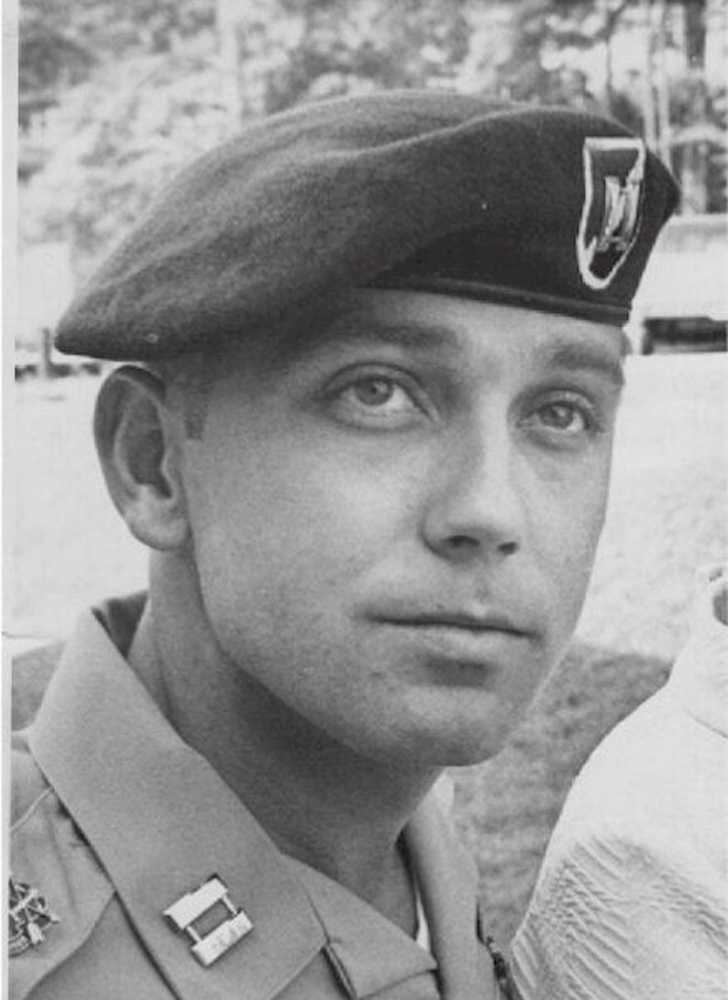
The folded pajama top was found in the house at 544 Castle Drive.
February 17, 1970. Military police were called to the Fort Bragg home of Green Beret physician Captain Jeffrey MacDonald.
Inside, they found Colette MacDonald and her two daughters, 5-year-old Kimberly and 2-year-old Kristen, dead from multiple stab wounds and bludgeoning.
MacDonald was alive with injuries.
He said a group of drug-crazed hippies had attacked the family, chanting "acid is groovy" and "kill the pigs."
He said he fought them off before losing consciousness.
His pajama top was torn.
He said the attackers tore it.
The top was found folded at the scene.
A folded pajama top after a violent struggle.
A man who just fought off intruders folds his torn pajama top before losing consciousness?
Why fold it?
Why fold anything at all?
The detail has haunted the case for decades.
It is a physical object that seemed to contradict the doctor's account.
Not because it proves anything on its own.
But because it sits against the story of chaos and struggle.
What exactly the folded pajama top proves is not established by the record.
It is a piece of physical evidence.
Its meaning is contested.
That is what the record shows: the top was there, folded, inconsistent with his story.
The rest is interpretation.
THE 911 CALL AND THE SCENE
The call came in on February 17, 1970.
Military police were dispatched to 544 Castle Drive, Fort Bragg, North Carolina.
Inside, they found Colette MacDonald and her daughters, Kimberly, 5, and Kristen, 2.
All three were dead from multiple stab wounds and bludgeoning.
Jeffrey MacDonald was alive, injured, and talking.
He said drug-crazed hippies had attacked the family.
He said they chanted "acid is groovy" and "kill the pigs."
He said he fought them off before losing consciousness.
The murder weapons were found in the home.
A paring knife and a wooden club, both in the house.
No evidence of intruders was found.
Blood spatter patterns suggested the attacks occurred in different rooms than MacDonald claimed.
His pajama top was folded at the scene.
Not torn in a struggle, as he said.
Folded.
That is the detail the record preserves.
What happened in those rooms, in what order, at what hour — that is not established.
The sequence of events inside 544 Castle Drive that night remains unproven.
Was it a drug-crazed gang?
Was it one man in a rage?
The physical evidence points one way.
The testimony points another.
The exact sequence does not exist in the record.
That would require evidence the case does not provide.
MacDonald said he fought.
The blood said otherwise.
The weapons said otherwise.
The folded pajama top said otherwise.
What the scene shows is a family dead and a man alive.
What the scene shows is a story and a contradiction.
What the scene shows is not a verdict.
THE INVESTIGATION AND THE STALL
The CID agents began their work in the rooms of 544 Castle Drive.
They examined the blood spatter, the paring knife, the wooden club.
They examined the pajama top, folded, not torn as the man had said.
The physical evidence contradicted MacDonald's account.
The Army concluded that MacDonald himself had committed the murders.
Not because of a confession.
Because the scene did not match the story.
The case was complicated by jurisdictional questions.
The Army decided to discharge MacDonald rather than court-martial him.
So the case stalled.
It stalled for years.

Jurisdictional disputes sat between the Army and the federal system.
In 1974, a federal grand jury finally indicted MacDonald.
Four years after the bodies were found.
One name surfaced during that long wait: Helena Stoeckley.
She told investigators she had been at the scene with others.
Her accounts were inconsistent.
She was never considered a reliable witness.
Whether she was actually present at the scene is not established.
Her testimony was never deemed credible by the prosecution.
That would require evidence.
The case moved slowly, caught in the machinery of who had the authority to try it.
A family dead and a man alive.
A story and a contradiction.
And still no verdict.
THE 1979 TRIAL
Nine years after the murders, the trial finally began.
MacDonald was tried in 1979 in federal court in Raleigh, North Carolina.
Prosecutors argued that MacDonald killed his family in a rage.
The defense argued that intruders committed the murders.
Two stories, one jury, and a decade of contradiction in the evidence.
The prosecution built its case on physical evidence.
An FBI chemist testified about his analysis of blood and fiber evidence.
The record does not detail his specific testimony beyond that analysis.
What it shows is a jury that believed the physical evidence over the story.
The jury convicted MacDonald on all three counts of first-degree murder.
He was sentenced to three consecutive life terms.
A conviction, at last, after nine years of waiting.
It would not hold for long.
But in that courtroom, in that moment, the weight came down on one side.
The folded pajama top had done its work.
The verdict was read, the sentence passed, and the case closed.
For a time.
AND THE STORY STILL ISN'T OVER
The Fourth Circuit Court of Appeals overturned the conviction in 1980.
The ruling was not about the blood, the fibers, or the folded pajama top.
It was about time.
MacDonald had been denied a speedy trial, the court ruled, and the conviction fell.
The government appealed.
In 1982, the Supreme Court reinstated the conviction.
The case was back where it had been.
MacDonald has maintained his innocence throughout.
His parole requests have been denied.
He remains in federal custody.
The years passed, and the arguments did not stop.
Subsequent appeals, including claims of newly discovered evidence, were rejected.
The record does not establish whether MacDonald is guilty or innocent.
He was convicted.
He maintains his innocence.
Both things are true at once.
The case became a story told and retold.
Joe McGinniss's "Fatal Vision" appeared in 1983, concluding MacDonald was guilty.
MacDonald sued McGinniss, claiming the author had promised a sympathetic book.
The case settled.
The books kept coming.
The documentaries kept coming.
The folded pajama top kept appearing in each retelling.
It was folded at the scene, consistent with nothing MacDonald described.
It was evidence of a story that did not match.
What it proved was never settled by the record.
The verdict was read.
The sentence was passed.
The appeals were rejected.
The man remains in prison.
The pajama top remains folded in the photographs.
The case remains argued.
That is where it stands.
Advertisement
You may also like
The cell phone logs that placed Adnan Syed in Leakin Park — and the alibi witness his lawyer never called
She was on the ground below. Hae Min Lee, an 18-year-old senior at Woodlawn High School in Baltimore County, Maryland, disappeared on January 13,…

The notebook Brian Laundrie carried into the swamp that named the killer of Gabby Petito
The notebook was found in the swamp, near the remains, on October 20, 2021. Brian Laundrie’s body was discovered in the Carlton Reserve in…
A 15-year-old boy stepped out to meet a contractor. His mother never saw him again.
She watched him walk out. December 11, 1978, and Robert Piest was leaving his shift at the pharmacy in Des Plaines, Illinois. He was…
The mother who spent 47 years searching a moor for her son's body
She walked the same ground for 47 years. Winnie Johnson went back to Saddleworth Moor, again and again, looking for her son. Her son…
Caylee Anthony's grandmother reported her missing 31 days after she was last seen
Caylee Marie Anthony was two years old. Her family last saw her in mid-June 2008, in Orlando, Florida. On July 15, 2008, her maternal…
The radio and binoculars that led police to the Clutter killers
The Sunday bell did not ring for the Clutter family. On the morning of November 16, 1959, neighbors and friends came to River Valley…