The $100,000 payment for eleven children's graves that haunted a Canadian police force
November 1980.
A child disappears from a community in British Columbia's Lower Mainland.
The record does not give a specific date for that first disappearance, nor a precise location.
Another child vanishes.
Then another, and another, and another.
Between November 1980 and July 1981, eleven children and teenagers disappeared from communities in the Lower Mainland and Vancouver Island regions, according to the case summary.
The victims ranged in age from 9 to 18.
A nine-year-old.
An eighteen-year-old.
The disappearances initially baffled police, the case summary states.
Each case was handled as a separate missing-persons file.
A missing child in one town.
A missing teenager in another.
No connection drawn between them.
Not because the evidence pointed elsewhere.
But because no one yet saw the pattern.
The RCMP formed a special task force in early 1981, according to the investigation section.
The number of missing children had grown.
Eleven names on a list.
Eleven families waiting.
How did these cases stay separate for so long?
How did a pattern go unseen for months?
How did eleven children vanish before anyone connected the dots?
That would require evidence the record does not provide.
What the record does show is the slow accumulation of loss.
One case at a time.
Each one isolated.
Each one unexplained.
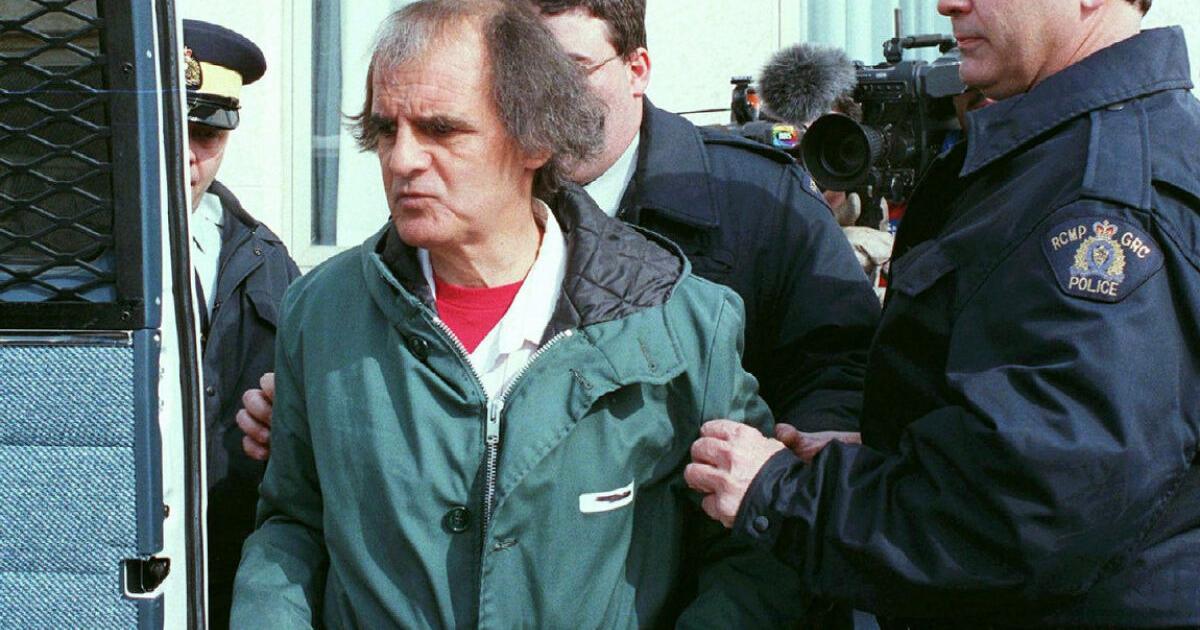
THE ARREST AND THE OFFER
He was already on parole when the children disappeared.
On August 12, 1981, police arrested him on an unrelated parole violation.
The arrest came after eleven children and teenagers had vanished over nine months.
During interrogation, he made an offer.
He would lead police to the bodies of the missing children.
The price: $100,000, paid to his wife.
Staff Sergeant Fred Maile led the RCMP team that agreed to the deal.
The arrangement was simple: $10,000 per body recovered.
Maile negotiated the payment directly with the suspect.
The RCMP accepted the terms.
The exact wording of the offer is not in the record.
The internal debate within the RCMP over whether to pay is not in the record either.
What is documented is the bargain itself.
Police agreed to pay a man for the locations of graves.
The money went to his wife, not to him.
He then directed police to eleven burial sites.
The bodies were found in shallow graves in remote bush areas.
His confessions matched the physical evidence at the sites.
The deal bought closure for families.
It also put a price on eleven children.
The payment would haunt the force for decades.
ELEVEN GRAVES
He led them to the first site.
Then the second. Then the third.
Eleven burial sites in all, in shallow graves along the Lougheed Highway and elsewhere in the province.
The confessions were detailed. They matched the physical evidence at the sites, including the personal belongings of the victims.
Each body was a line item. Ten thousand dollars per grave, paid to his wife.
The lead investigator, RCMP Staff Sergeant Fred Maile, had negotiated the arrangement. The payment was $100,000 for eleven locations.
It was a transaction. The deal bought closure for families, and it put a price on eleven children.
The payment arrangement was later widely criticized. It meant Olson profited from his crimes. The RCMP was accused of compromising the integrity of the investigation.
Did the money taint the evidence? Did the deal corrupt the search? Did the price change what the police were willing to believe?
That would require evidence. The record shows the deal was made; it does not show what Olson did with the money.
The specific methods Olson used at each site are not consistently reported in mainstream coverage. That detail is not established.
What is established: he directed police to the graves. What is established: the bodies were found. What is established: the physical evidence matched his words.
The graves were shallow. The locations were remote. The children were gone.
She was on the ground below. He was paid per body.
The payment would haunt the force for decades.
THE GUILTY PLEA
The date was January 11, 1982.
Olson stood in the British Columbia Supreme Court and pleaded guilty to all eleven counts of first-degree murder.
There was no trial.
The prosecution, led by Bruce MacFarlane, did not present evidence in open court.
The guilty pleas meant the families never heard the details laid out before a jury.
Justice Harry McKay accepted the pleas.
He sentenced Olson to life imprisonment for each count, to be served consecutively.
There was no possibility of parole for 25 years — the maximum sentence available under Canadian law at the time.
It was the harshest penalty the court could give.
It was also, in a sense, the only one that mattered.
In 1982, Olson was declared a dangerous offender.
The designation meant he would never be released.
Not after 25 years. Not ever.
The defence attorney, Robert Shantz, was present during the proceedings.
What strategy he pursued, what arguments he made — that is not in the record.
Only his presence is documented.
The plea was entered. The sentence was read.
Eleven graves. Eleven counts. One guilty plea.
She was on the ground below. He was paid per body.
The payment would haunt the force for decades.
AND THE STORY STILL ISN'T OVER
He was still in prison when the cancer took him.
Clifford Olson died on September 30, 2011, at the age of 71.
The man was gone. The money was not.
The payment arrangement with the RCMP haunted the force for decades.
Victims' families expressed outrage that Olson's wife received the money.
Dave Hatch, a former RCMP officer, became a prominent advocate for victims' rights.
Hatch campaigned against the payment system.
What June Olson did with the $100,000 is not stated in the record.
Did she keep it?
Did she spend it?
Did she give it away?
That would require evidence.
The case outlived the man in other ways, too.
Canadian law changed.
The "faint hope" clause was removed for multiple murderers.
Police negotiations with suspects came under increased scrutiny.
Eleven graves.
Eleven counts.
One guilty plea.
One payment that would not stop being paid, in the public mind, long after the cheques stopped.
The families carried it.
The force carried it.
The law carried it.
And Olson carried nothing, because he was in the ground.
The story was never over.
Advertisement
You may also like
The $50,000 ransom note found on a nursery windowsill — and the carpenter who would stand trial
The nursery window was open. On the evening of March 1, 1932, Charles Lindbergh Jr., the 20-month-old son of aviator Charles Lindbergh and Anne…
The bedspread fibers that tied Wayne Williams to two Atlanta river murders
He was 23, a freelance photographer and music promoter, stopped on a bridge over the Chattahoochee River. The sound came first: a loud splash,…
A confession, a hunting knife, and the details only the killer could know in the 1964 Genovese case
The knife was a hunting knife, and it was recovered only after the confessed killer led police to where he had disposed of it,…
The blood-written word that turned a mother into a voice for victims
The housekeeper arrived that morning and found the front door marked with a word written in blood. The word was "PIG." On the night…

Coco Gauff Fights Back After Racist Abuse Over Replayed Point at China Open
Coco Gauff shared a post on X hitting back at racist abuse she received online after her China Open win over Sun Xinran in…
NHL Hart Trophy: Oilers' Bouchard, Senators' Stutzle Lead Early Rankings
The 2026-27 NHL regular season is officially a week old, and every team has played multiple games, according to thehockeynews.com. Andre Leal of thehockeynews.com…