The $50,000 ransom note found on a nursery windowsill — and the carpenter who would stand trial
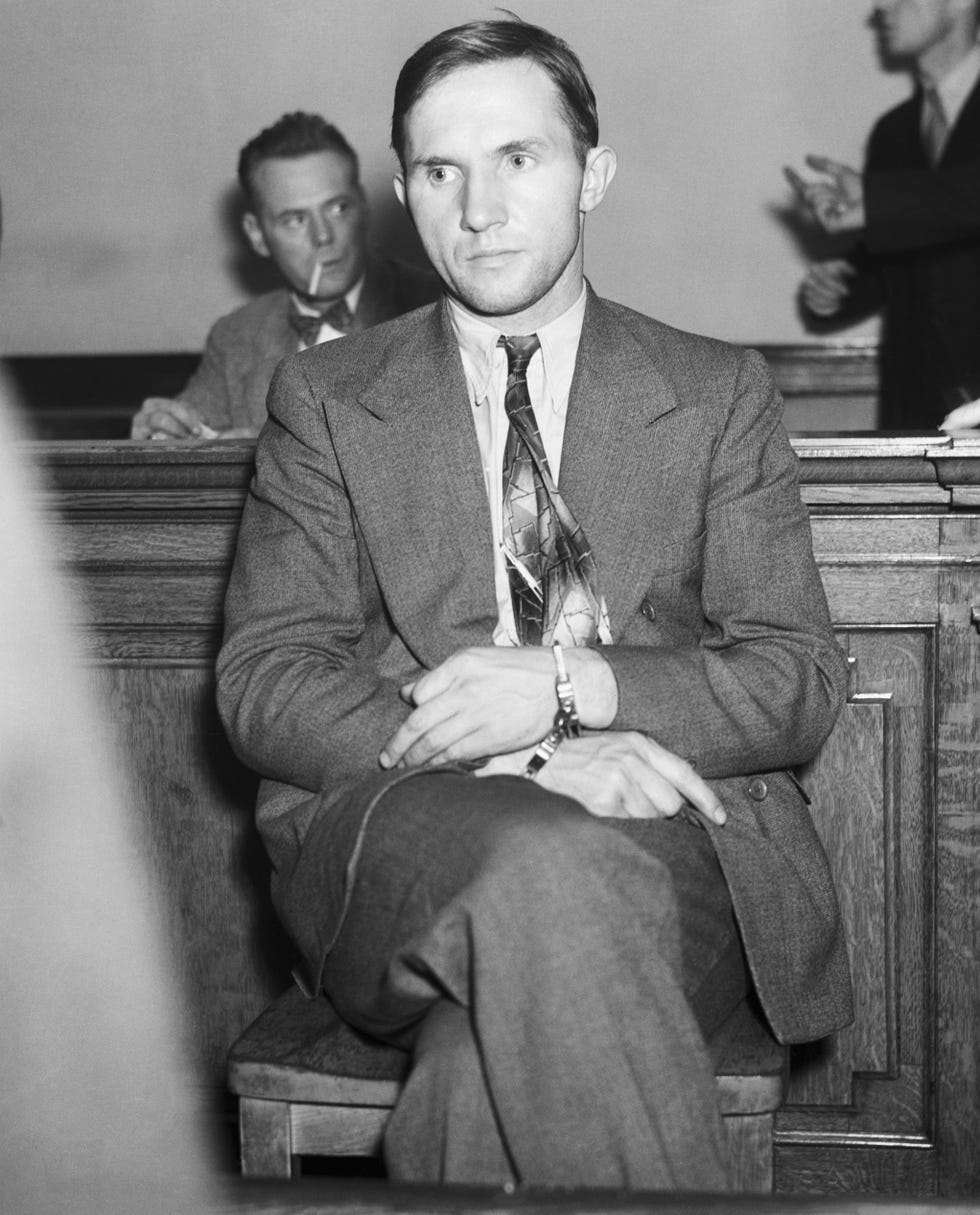
The nursery window was open.
On the evening of March 1, 1932, Charles Lindbergh Jr., the 20-month-old son of aviator Charles Lindbergh and Anne Morrow Lindbergh, was taken from his crib in the family's home near Hopewell, New Jersey.
Anne discovered the child missing around 10 p.m.
A ransom note demanding $50,000 was found on the nursery windowsill.
The note was there, in the room where a baby had slept.
Who wrote it is not established in the record.
Not the note's author. Not the hand that left it.
The demand is documented. The writer is not.
A window sill is a small thing.
It is where a child might press a palm.
It is where a stranger left paper.
The note asked for money.
It did not ask for anything else.
The room held a crib. The crib was empty.
Anne found the room that way.
She was on the ground below, in the house she lived in.
The window was the way in. The window was the way out.
A ladder would have been needed.
That would come later.
For now, only the note, the crib, the missing child.
The note demanded $50,000.

It promised the child's return.
That promise would not hold.
THE SEARCH AND THE RANSOM
The search began that night, with state police and volunteers fanning out across the fields and woods near Hopewell.
Dogs were brought in. Airplanes circled overhead.
The child was not found immediately.
Charles Lindbergh himself joined the negotiations, speaking to go-betweens and waiting by the telephone for word of his son.
Dr. John F. Condon, a retired Bronx schoolteacher who volunteered his services, served as the intermediary.
He delivered the ransom.
The payment was made in gold certificates, and their serial numbers were recorded before the money changed hands.
Those numbers would matter later.
For weeks, the family held onto hope.
The note had promised the child's return. That promise would not hold.
On May 12, 1932, the body was found in woods about four and a half miles from the home.
A truck driver made the discovery, and he called the authorities.
The child had been dead for some time.
The cause of death was a skull fracture.
Whether that fracture came from a blow or a fall is not established in the record.
No weapon was ever identified.
The exact circumstances of the child's death remain unknown.
What is known is the sequence: the note, the negotiation, the payment, the body.

The serial numbers on the gold certificates were recorded.
They would not surface for more than two years.
Then a gas station attendant in the Bronx noticed one of them.
He wrote down a license plate number.
That plate led to a carpenter.
But that part of the story comes later.
THE CARPENTER AND THE LADDER
In September 1934, a gas station attendant in the Bronx noticed a gold certificate and wrote down the customer's license plate number.
That plate led to Bruno Richard Hauptmann.
He was a German-born carpenter living in the Bronx.
The bill was part of the $50,000 ransom paid in gold certificates, their serial numbers recorded.
The police searched his garage.
They found $14,590 in ransom gold certificates.
Handwriting analysis linked him to the ransom notes.
There was also a ladder.
A homemade wooden ladder, built to reach the nursery window.
A wood expert testified at trial.
He said the ladder's wood matched floorboards in Hauptmann's attic.
He pointed to a distinctive plane mark.
He pointed to the nail holes.
The match was specific, not general.
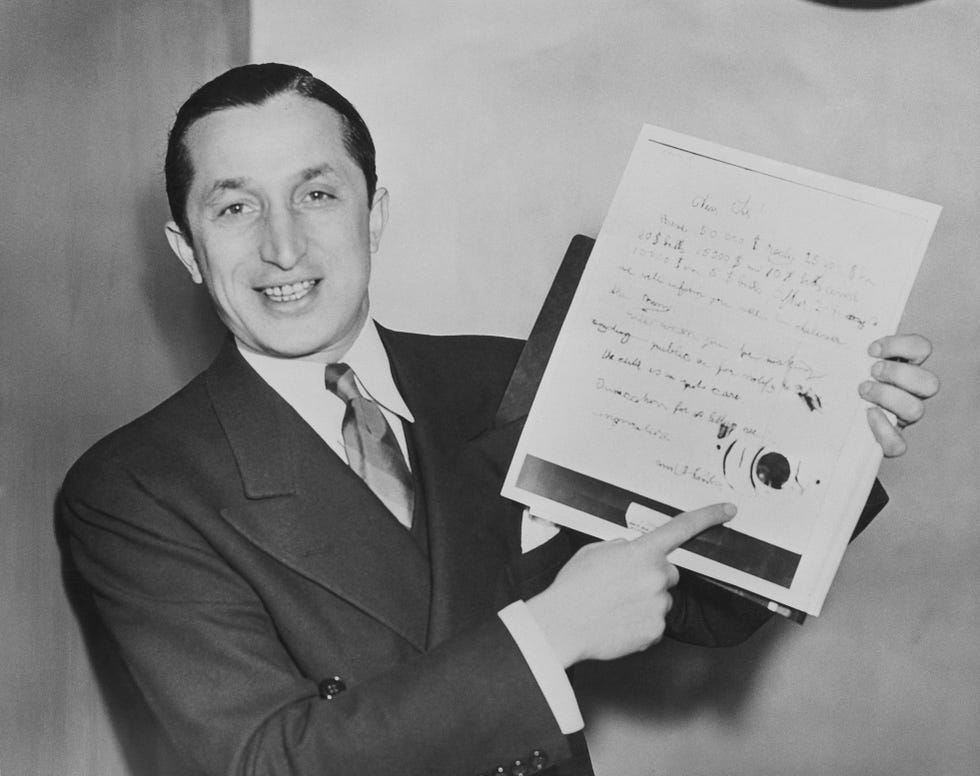
The net was closing slowly.
It was closing on a carpenter.
The ladder was his trade.
The money was in his garage.
The notes bore his hand.
The expert's testimony tied the wood to his home.
It was meticulous.
It was slow.
It was a closing net.
What remains unproven is a theory, circulating online, that Hauptmann was framed.
The record does not establish that.
The documented evidence led to his conviction.
THE TRIAL AND THE TWO STORIES
The trial opened in Flemington, New Jersey, in early 1935.
Hauptmann was charged with murder and kidnapping.
The prosecutor, David T. Wilentz, presented more than 160 witnesses.
Wilentz argued that Hauptmann had acted alone.
The defense, led by Edward J. Reilly, told a different story.
Reilly argued the evidence was circumstantial.
He claimed Hauptmann was framed.
He claimed the ransom money belonged to a friend.

Two irreconcilable versions of the same facts sat before the jury.
The prosecution had the ladder wood, the handwriting, the gold certificates.
The defense had a carpenter who said he was a scapegoat.
Not because the evidence was weak. Because the defense said it was planted.
The jury deliberated for about eleven hours.
They convicted him of first-degree murder.
The trial judge sentenced him to death.
The record does not establish that Hauptmann was framed.
The record does not establish that the money belonged to the friend.
It establishes a conviction, a sentence, and an execution to come.
What the jury believed was that one man climbed a ladder to a nursery window.
What the defense insisted was that the ladder, the notes, and the cash had all been arranged.
One set of facts. Two stories. One verdict.
AND THE STORY STILL ISN'T OVER
On April 3, 1936, Bruno Richard Hauptmann was executed in the electric chair at the New Jersey State Prison in Trenton.
He maintained his innocence to the end.
Anna Hauptmann, his wife, continued to fight to clear his name until her death in 1994, filing multiple appeals and lawsuits.
Some later writers and researchers have argued that Hauptmann was innocent or that others were involved.
No court has overturned the conviction.
That is where the record stands.
The claims of innocence by later writers are not established by the record.

They are theories, argued in books and documentaries, not findings in a courtroom.
The Lindbergh family later endured the 1935 kidnapping of their second son.
That child was found safe after a ransom was paid.
The Hopewell house was later donated to the state of New Jersey.
It is maintained as a historic site.
Visitors walk the rooms where a nursery once held a sleeping child.
They stand where a ladder once leaned against a window.
The case is closed.
It is also never settled.
A conviction stands.
A wife spent fifty-eight years trying to undo it.
A series of theories asks what the jury never considered.
What if the ladder was planted?
What if the cash was placed?
What if one man did not act alone?
That would require evidence a court accepted.
No court has.
So the questions remain questions, and the verdict remains the verdict.
One man died insisting he was innocent.
His widow died insisting the same.
The house remains, and the story remains, and the weight of it does not lift.
Advertisement
You may also like
The bedspread fibers that tied Wayne Williams to two Atlanta river murders
He was 23, a freelance photographer and music promoter, stopped on a bridge over the Chattahoochee River. The sound came first: a loud splash,…
The $100,000 payment for eleven children's graves that haunted a Canadian police force
November 1980. A child disappears from a community in British Columbia's Lower Mainland. The record does not give a specific date for that first…
A confession, a hunting knife, and the details only the killer could know in the 1964 Genovese case
The knife was a hunting knife, and it was recovered only after the confessed killer led police to where he had disposed of it,…
The blood-written word that turned a mother into a voice for victims
The housekeeper arrived that morning and found the front door marked with a word written in blood. The word was "PIG." On the night…

Coco Gauff Fights Back After Racist Abuse Over Replayed Point at China Open
Coco Gauff shared a post on X hitting back at racist abuse she received online after her China Open win over Sun Xinran in…

NHL Hart Trophy: Oilers' Bouchard, Senators' Stutzle Lead Early Rankings
The 2026-27 NHL regular season is officially a week old, and every team has played multiple games, according to thehockeynews.com. Andre Leal of thehockeynews.com…