The 14-year-old boy Milwaukee police returned to Dahmer hours before his death
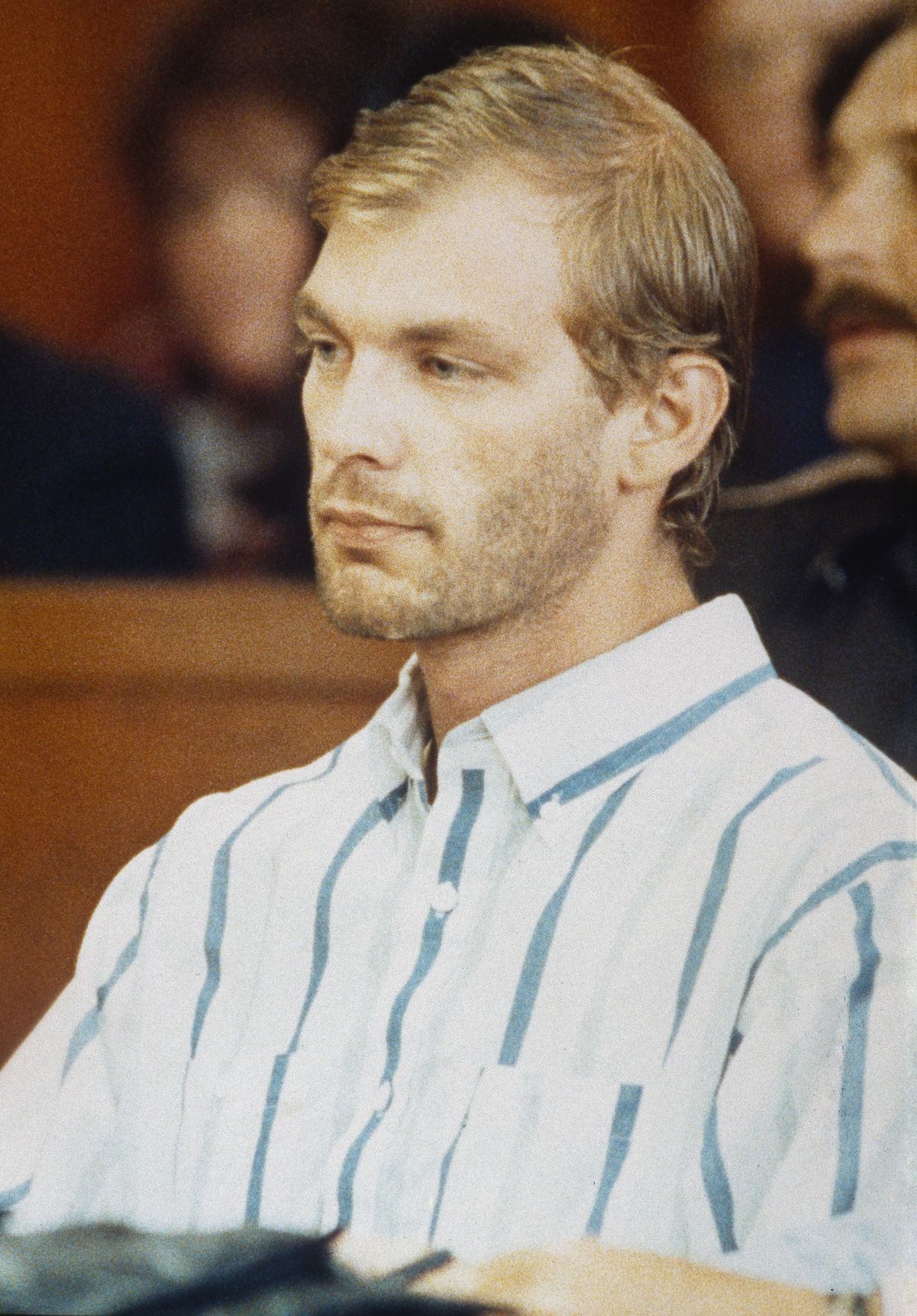
A boy was wandering the street in Milwaukee, drugged and naked.
Neighbors reported him in May 1991.
Police officers responded to the call.
They accepted the claim that the boy was an adult boyfriend having a seizure.
The boy was returned to the custody of the man who lived in the apartment.
Hours later, he was killed.
The exact words exchanged between police and the man at the door are not in the record.
What is in the record is the decision.
A 14-year-old boy was handed back to the man who would murder him.
The boy's family later spoke publicly about the police failure.
They said it should not have happened.
It is a single night in May 1991.
It is a single decision made by officers who responded.
It is the weight of that decision that still carries.
MAY 1991 — THE RETURN
The victim was a 14-year-old Laotian boy.
He was murdered in May 1991.
Neighbors reported the drugged, naked boy wandering the street.
Officers responded to the call.
They accepted the claim that the boy was an adult boyfriend having a seizure.
They returned him to the custody of the man who lived in the apartment.
The boy was killed hours later.
That is the documented sequence.
The exact time of death is not in the record.
The precise events between the return and the killing are not in the record.
What remains is the report of the return.
What remains is the fact of the death.

What remains is the family.
The victim's brother became a vocal advocate after the trial.
He spoke publicly about police negligence.
He spoke about the officers who had returned his brother to Dahmer's custody.
He spoke about what the family endured.
The brother was not alone in his anger.
The case became a central focus of public outrage.
The outrage centered on that single May night.
The outrage centered on the decision made by officers who responded.
How could this have been accepted?
How could a naked, drugged 14-year-old be an adult boyfriend?
How could the claim have held?
That would require the officers' own account.
The record does not give one.
THE TWO STORIES OF THE SAME NIGHT
The claim was that the boy was an adult boyfriend having a seizure.
That is what the officers accepted, according to the investigation summary.
What the officers believed in that moment is not established.
Only the claim they accepted is in the record.
The family read the same night differently.
Their public position, voiced by the victim's brother, was that police negligence led to the death.
Not because the officers intended harm.
But because they returned a 14-year-old boy to the man who killed him hours later.
The brother said it plainly, and he kept saying it.
The case became a central focus of public outrage.
The outrage was not about Dahmer alone.
It was about the return.

It was about who the police believed and who they did not.
A naked, drugged boy on the street.
An adult boyfriend having a seizure.
Two stories of the same night.
The official one held for hours.
The family's one held for decades.
The brother continued to speak about the need for reform after the trial.
He spoke about police negligence.
He spoke about what should have been done.
The record does not tell us what the officers felt.
It tells us what they did.
They accepted a claim.
They returned the boy.
The boy was killed hours later.
That is the documented sequence.
The rest is interpretation, grief, and a family's public demand for change.
Both stories exist in the same record.
Only one of them ended in death.
WHAT THE RECORD DOES AND DOESN'T SHOW
The documented record is narrow.
Police returned the boy to the man's custody after accepting the claim that he was an adult boyfriend having a seizure, according to the investigation summary.
The boy was killed hours later.
The victim's brother spoke publicly about police failure, according to those involved in the case.
That is what the record shows.
What the record does not show is any direct quote from the officers or from the man at the door that night.
That is not in the record.
What the record does not show is the exact internal reasoning of the officers who made the decision to leave.
That is not in the record either.
The officers' own words do not survive in any documented form.
Their reasoning does not survive either.
What remains is the sequence: the call, the response, the claim, the return, the death.
The family's public statements fill the space where the officers' account should be.
The brother's demand for accountability is documented.
The officers' explanation is not.
The viral story assumes intention.
The record does not establish intention.
It establishes a claim accepted and a boy returned.
It establishes a death hours later.
It establishes a family speaking into that silence.
Anything beyond that — what the officers thought, what they said to each other, what the man at the door told them — would require evidence.
That evidence is not in the record.
AND THE STORY STILL ISN'T OVER
The brother kept speaking.
He spoke about police negligence. He spoke about the need for reform.
The case became a touchstone. It remains a touchstone for discussions of police failure and racism in victim response.
The apartment building where the man lived came down in 1992. A demolition, a clearing of ground.
The man himself was convicted of 15 murders in Wisconsin. He pleaded guilty to a 16th in Ohio.
He was beaten to death by a fellow inmate in 1994. That is where the perpetrator's story ends.
The family's voice did not end there. It continued into the years after the trial, after the demolition, after the death.
What the brother said in those later years is part of the record. What he said is documented.
What is not established is anything beyond that. Any current legal or family status beyond what is stated is not in the record.
The questions raised remain open. They were open in May 1991. They remain open now.
A boy was returned. A boy was killed. A family spoke.
The building is gone. The man is gone. The brother's words remain.
That is what the record holds. That is what the record does not resolve.
Advertisement
You may also like
Seven deaths in seven days, and the letter demanding $1 million
The first capsule was taken on a Wednesday morning in September 1982. A 12-year-old girl in Elk Grove Village, Illinois, swallowed a Tylenol capsule…

A 7-year-old son slept through his mother's murder — and his father's story about a bushy-haired intruder
The July 4, 1954, house in Bay Village, Ohio, was quiet. Marilyn Sheppard, 31, a homemaker and former model, was found bludgeoned to death…
The morning walk that ended Gianni Versace's life on his Miami Beach steps
The café was the errand, not the destination. On July 15, 1997, Gianni Versace left his Miami Beach mansion, Casa Casuarina at 1116 Ocean…
A father read the taunting letters aloud in court — but the killer's name was still a secret
The father's voice filled the Bronx courtroom, reading words that were never meant for him. They were letters addressed to a newspaper columnist, signed…
He pleaded for their return on TV — two days later he confessed to killing them
The call came on the morning of August 13, 2018. Shanann Watts called her friend to say she could not reach her husband, Chris…

The phone call from a pharmacy that exposed the Manson murders' first clue
Somewhere in Los Angeles, in late 1969, a telephone rang inside a pharmacy. The call set in motion the first real clue in the…